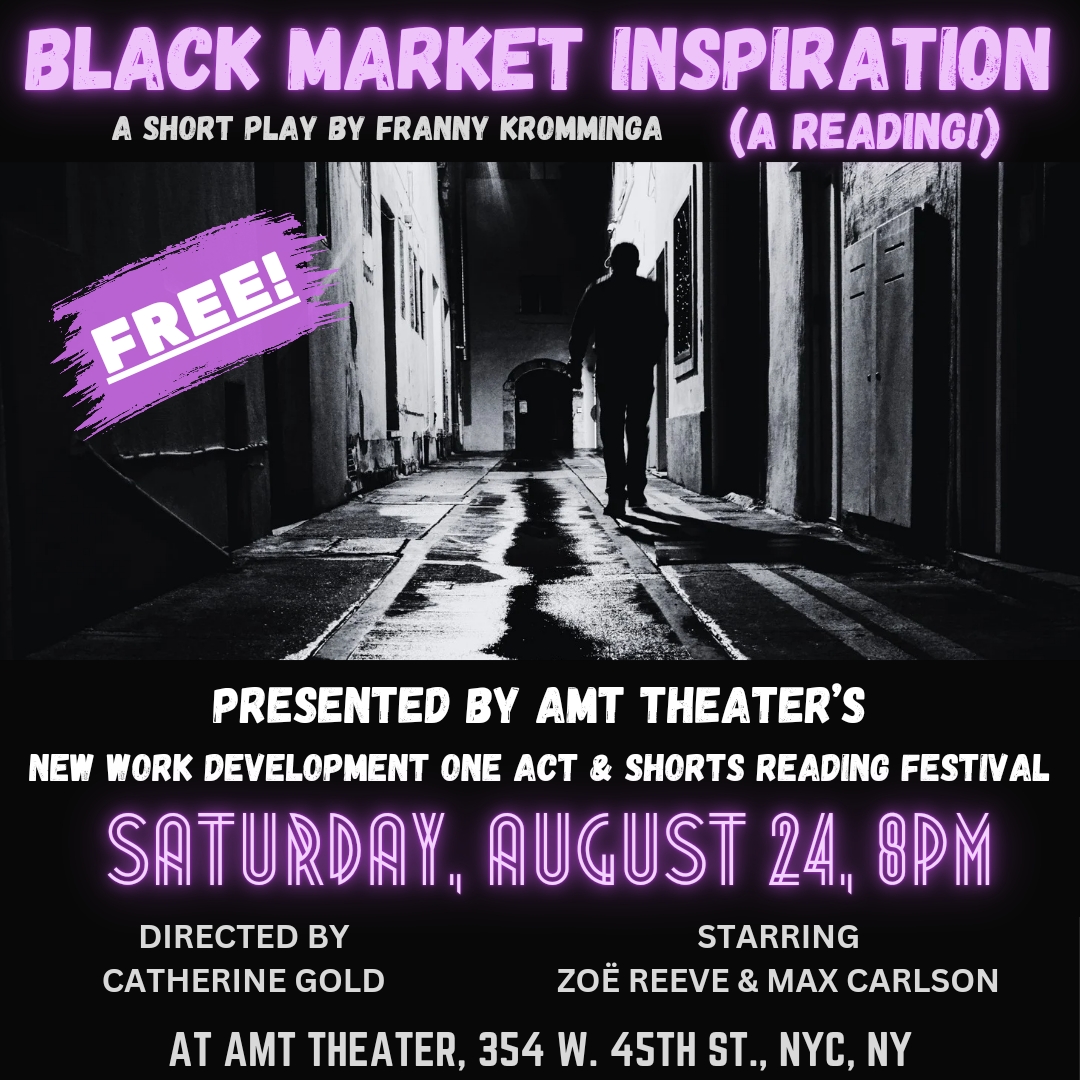
“Black Market Inspiration,” a Short Play

In January of 2020 (I know, right?) I was suddenly possessed by a weird little idea.

This happens to me fairly often, but the various ideas are rarely similar to one another. It’s always a moment of zingy clarity, like taking the first sip of an icy lemonade. It’s like a chilled refreshment arriving to solve a nagging thirst you weren’t even quite aware of yet.

In any case, this idea was a script. A snappy 10-minute two-hander of a play, in which the dialogue changes every performance–and no, it’s not improvised.

It was a typical late January day in Denver, Colorado: shallow drifts of tired snow draped the landscape, and nobody felt like doing just about anything, myself included. As a long-time Pinterest devotee, I was scrolling my feed, swiping away the crafts and clothes in favor of something a little less tangible: motivation. The wise and successful among us have published plenty of pithy proverbs over the years, and I was in dire need of inspiration. No quote quite encapsulated what I needed to feel in order to get going, however, and I kept searching, searching, searching for more.

That escalation of need, in which nothing you encounter is quite enough for you, and where there is a sort of substance that acts a substitute for genuine meaning… that reminded me of something else, which perhaps you might buy in a back alley somewhere. Stereotypically speaking.

Thus was born Black Market Inspiration, a play about the moment between inspiration and action, about when motivational quotes are just chronic avoidance in a pretty, prose-y package. There are two characters, a seller and a buyer, and lots of little plastic baggies full of white stuff–you know, little scrolls of white paper with quotes printed on them!

I wrote the whole thing in a day (admittedly… it is only 10 minutes long). And while the initial idea was the driving force, I’m equally delighted by what I would call the script mechanics of the piece: the script is made up of about 60% attributed quotes, and only a few of those are designed to remain static in every production of this play. The rest of the play can (and in my opinion, should) be memorized in terms of structure. This means the actor can then organically, in the moment, pull and read random quotes that are on the prop scrolls, and still be able to maintain the rising and falling action of the play. The script notes how to accomplish this, in context, via staging directions.

I chose to incorporate this element of unpredictability specifically because this is a PLAY, intended to be performed live. Sure, there’s a polished version that could be an excellent short film, and maybe I’ll experiment in that direction sometime, but the final product would lose all the charm of idiosyncratic experience, which is what live theater is all about. What an audience deserves is consistency, but what it wants is something one-of-a-kind, unrepeatable. This is why so many people love when something goes just a little bit wrong onstage, or why concert-goers collect set lists. There is magic (and marketability, now that you mention it) when you can combine consistent performance with a little bit of controlled mystery.

I have always loved when shows are able to tap into this unique energy; two examples from my musical-theatre-brain are The 25th Annual Putnam County Spelling Bee, and The Mystery of Edwin Drood. Both of these pieces utilize planned chaos: Spelling Bee brings up audience members to “compete,” and Drood, with the original novel left unfinished by author Charles Dickens, allows the audience to vote between several possible endings. This is by no means a new strategy, but I find it’s an important and delightful way to distinguish the value of live performance separately from recorded media.

So, I mentioned I wrote this in 2020, and it’s currently 2025… you may be wondering what happened between then and now.

I submitted it to a few short play competitions, and then the pandemic hit, and I let my nicely formatted document slumber in my Dropbox for four years. Then, in the summer of ’24, my director friend Catherine posted on Instagram, looking for playwright collaborators to submit to a competition/festival at AMT Theater in NYC. I happened to see her post, nearly submitted my script too late, and completely forgot about it afterwards, expecting another rejection. I was totally surprised to be informed that it had been selected after all, for the New Works Development Festival at AMT. My little kindergarten-age script would finally learn to read receive a reading.

That reading took place in August 2024, and I actually had the wherewithal to record it. The chutzpah to edit and publish, however, only arrived last week. Enjoy!

With enormous thanks to AMT Theater and my terrific team:
DIRECTOR: Catherine Gold
PERSON 1: Zoë Reeve
PERSON 2: Max Carlson
Standard

Rehearsal Sketches from Santa Fe Opera Apprentice Scenes, Summer 2023

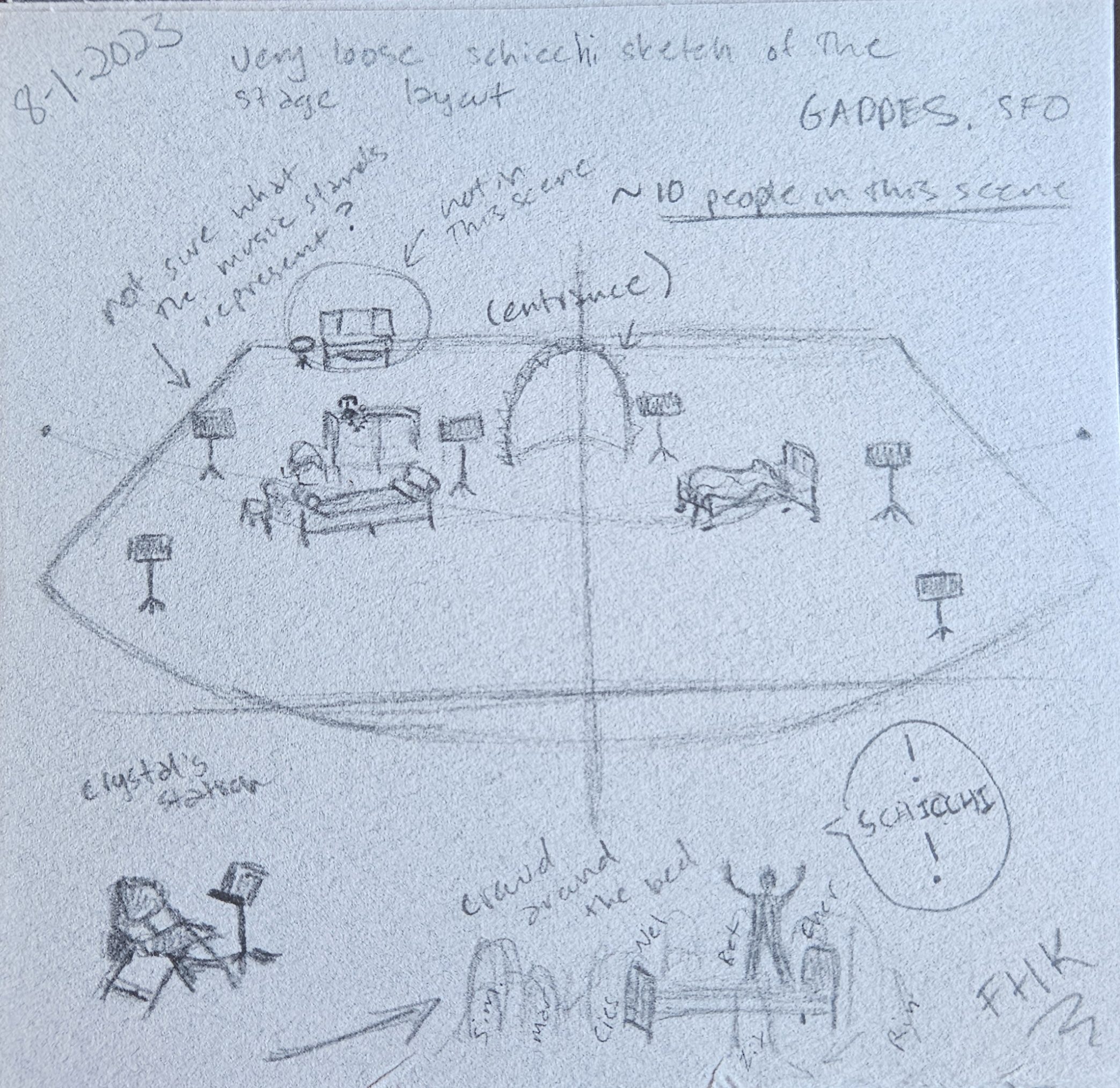
One thing I enjoy doing at rehearsals is sketching.

Whether it’s during my 15 minute break, or throughout a long day of observation, there’s usually a convenient opportunity to pull out my little sketchbook, at least for a few minutes. It’s a perfect activity for rehearsals: it’s nearly silent, it keeps me engaged with the onstage happenings, and it can be instantly plopped on the ground if my cue comes up. Plus, the actors who are actually occupying the stage at the moment are often staying in the same or similar positions for long durations of time–an ideal setup to practice gestural sketches.

The publication of this collection of sketches is much delayed! They’re from my most recent summer at the Santa Fe Opera, where I performed as a supernumerary (the “Mélisande doppelgänger”) in the Debussy opera Pelléas et Mélisande, and observed rehearsals for the Apprentice Scenes Program. These sketches are all from the scenes directed by the wonderful Crystal Manich that summer, who so kindly let me sit in and watch! I am always grateful to be invited into a rehearsal room; there are skills to be learned and practiced every time, and I try to make the most of it.

In these sketches, I had a few goals:
-practice quickly sketching objects from life
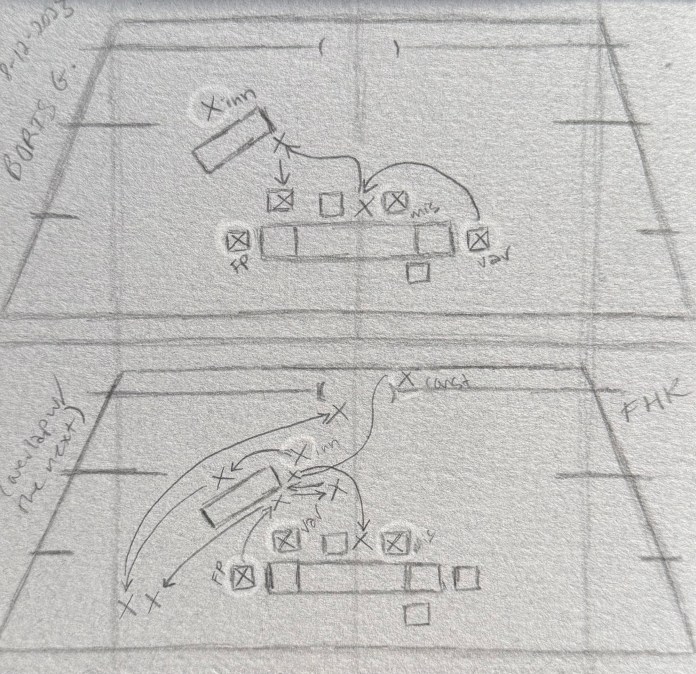
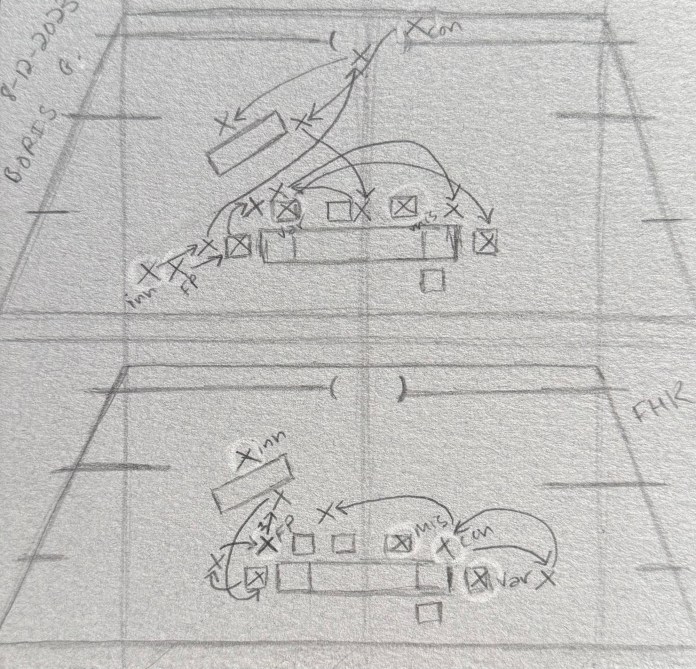
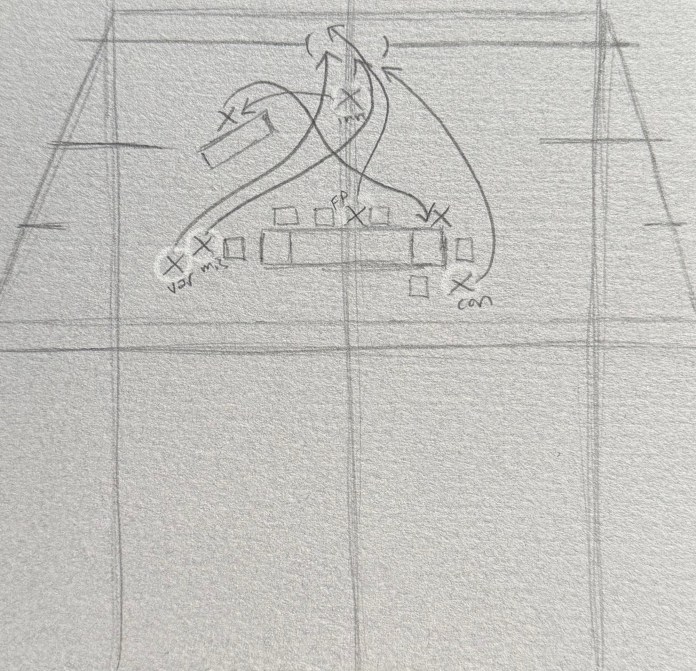
-practice taking multi-character blocking notation on the same page
-practice proportional representation of a stage area

While these sketches are quick, informal, and use quite a bit of shorthand, I believe I accomplished my goals–further, I believe I could easily recreate the staging of these scenes based on the sketches alone, two years later (precise stage business and use of props may be another story, however).

Each slideshow gallery contains the sketches from one scene, and is accompanied by information on the collaborators whose work or physical image contributed to sketch source material. The programs for all the Apprentice Scenes that year can be found here as well. Some of the physical drawings have been gifted away, but some remain in my records, and so the photos weren’t all taken at once, and may have some variation in lighting and quality. I also like to sketch on a non-white base paper when possible, but I’ve discovered this doesn’t always provide starkly visible contrast to pencil markings, unfortunately! All caveats aside, I’m glad to finally share them.

Enjoy!


Gianni Schicchi

Giacomo Puccini | Giovacchino Forzano
“Era uguale la voce…Addio, Firenze”

Gianni Schicchi | Joel Balzun
Lauretta | Lydia Grindatto
Zita | Michelle Mariposa
Ciesca | Emma Rose Sorenson
Nella | Nicole Elyse Keeling
Rinuccio | Lawrence Barasa
Gherardo | Garrett Evers
Marco | Brandon Bell
Simone | Luke Harnish
Betto | Younggwang Park

Conductor | Mark Morash
Stage Director | Crystal Manich
Pianist/Coach | Blair Salter
Costume Designer | Azaria Jade Rubio
Assistant Costume Designer | Matthew Palacios
Wigs & Make-Up Designer | Court Winterborne
Lighting Designer | Will Loconto

The stage from a tilted front perspective, with two sketches of the rehearsal atmosphere.
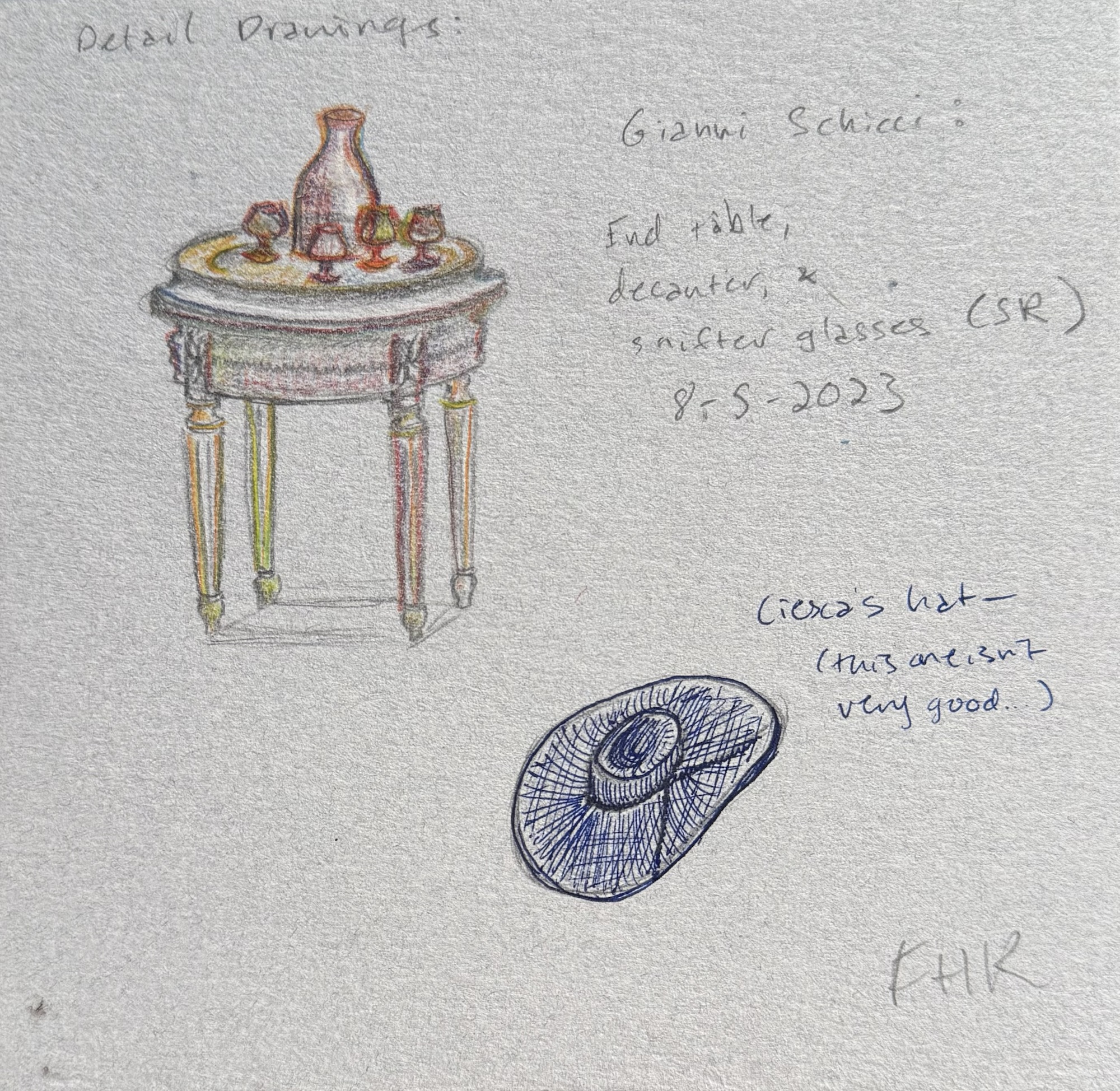
Detail drawings of furniture and rehearsal costumes.
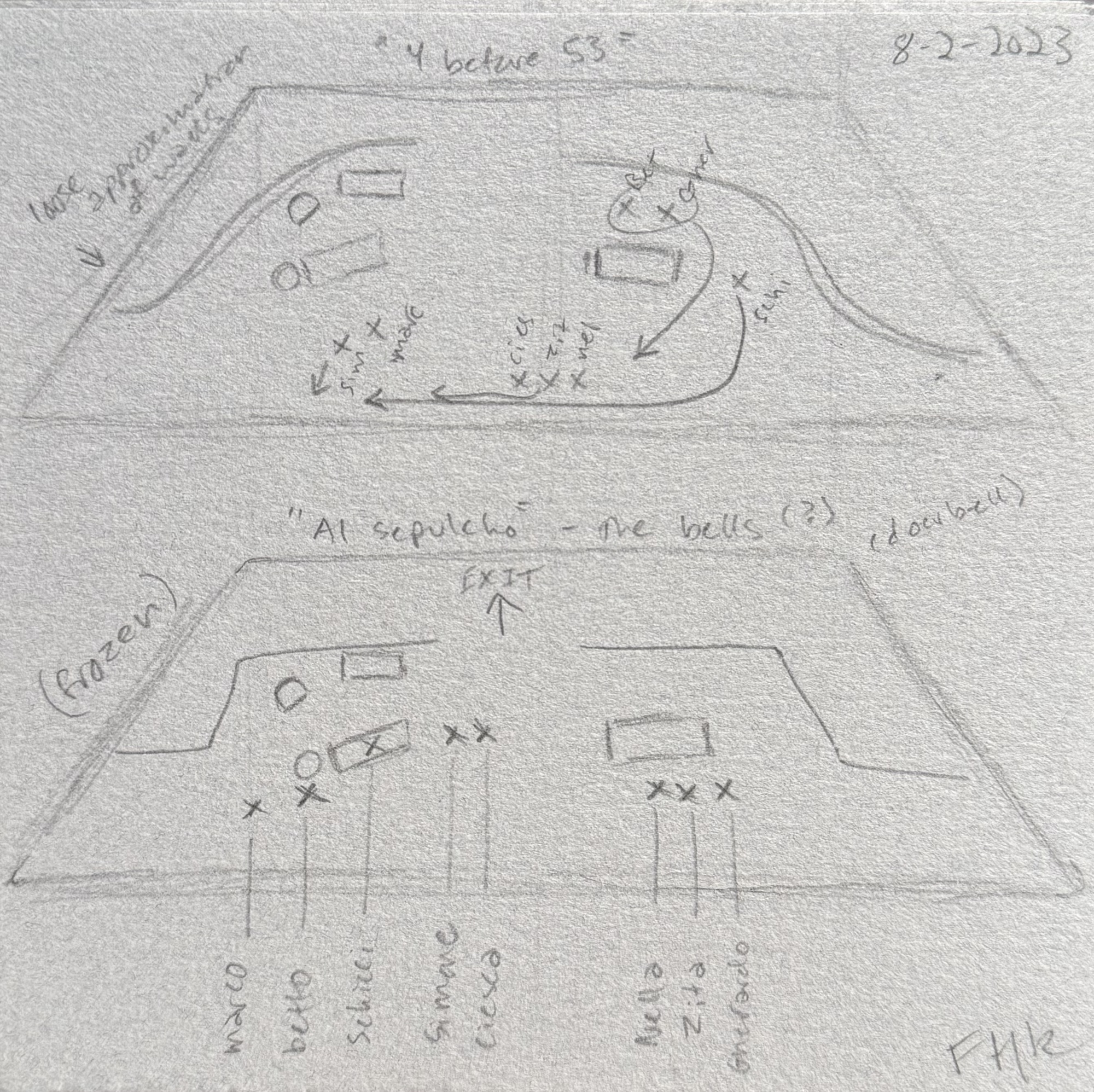
Top of the scene: the family discusses Gianni Schicchi.
The scene progresses; Schicchi arrives and the plan unhatches.
The scene continues; the family and Schicchi anticipate success.
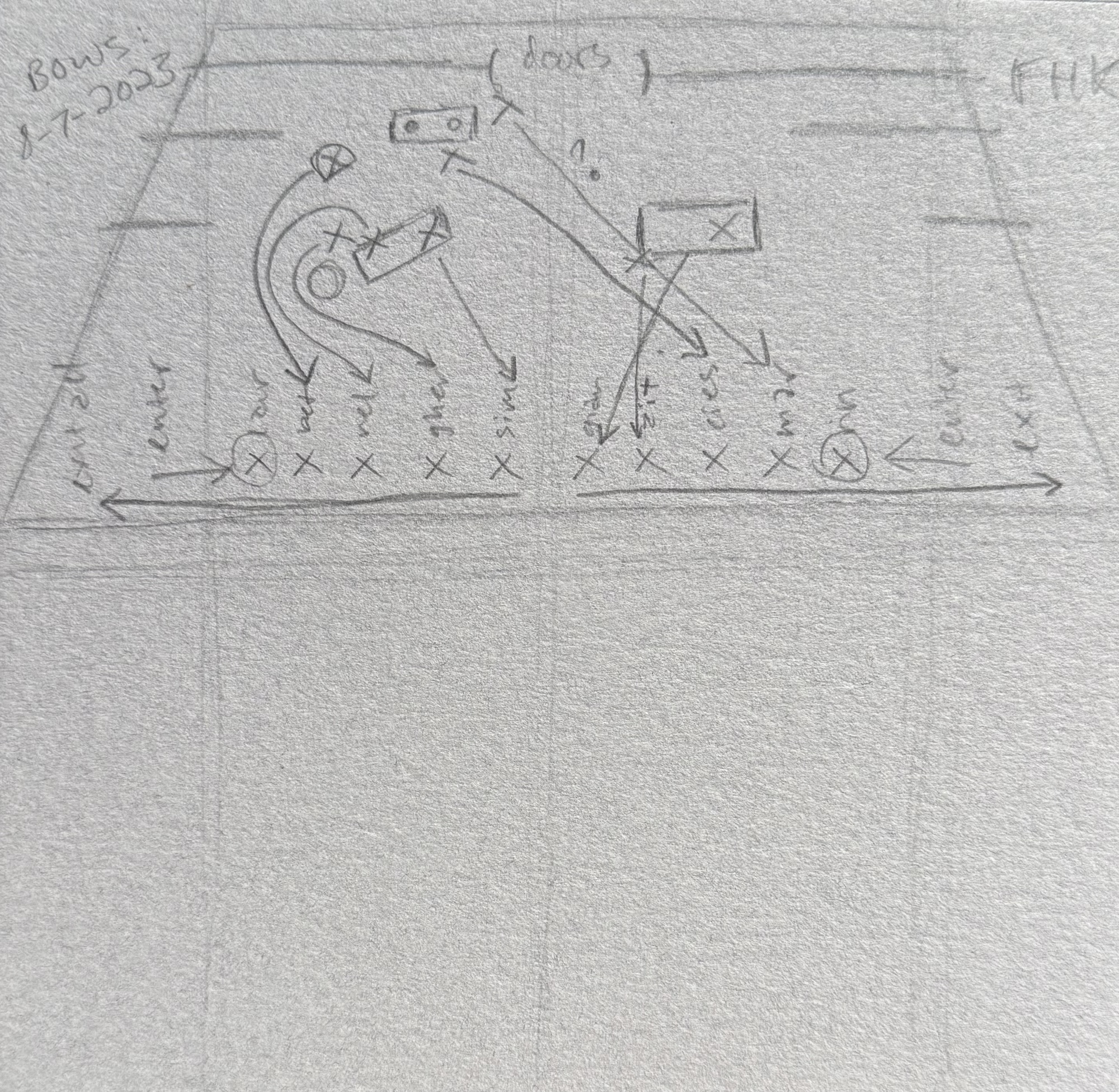
Bows!

La bohème

Detail drawings of a moment of staging and some furniture.
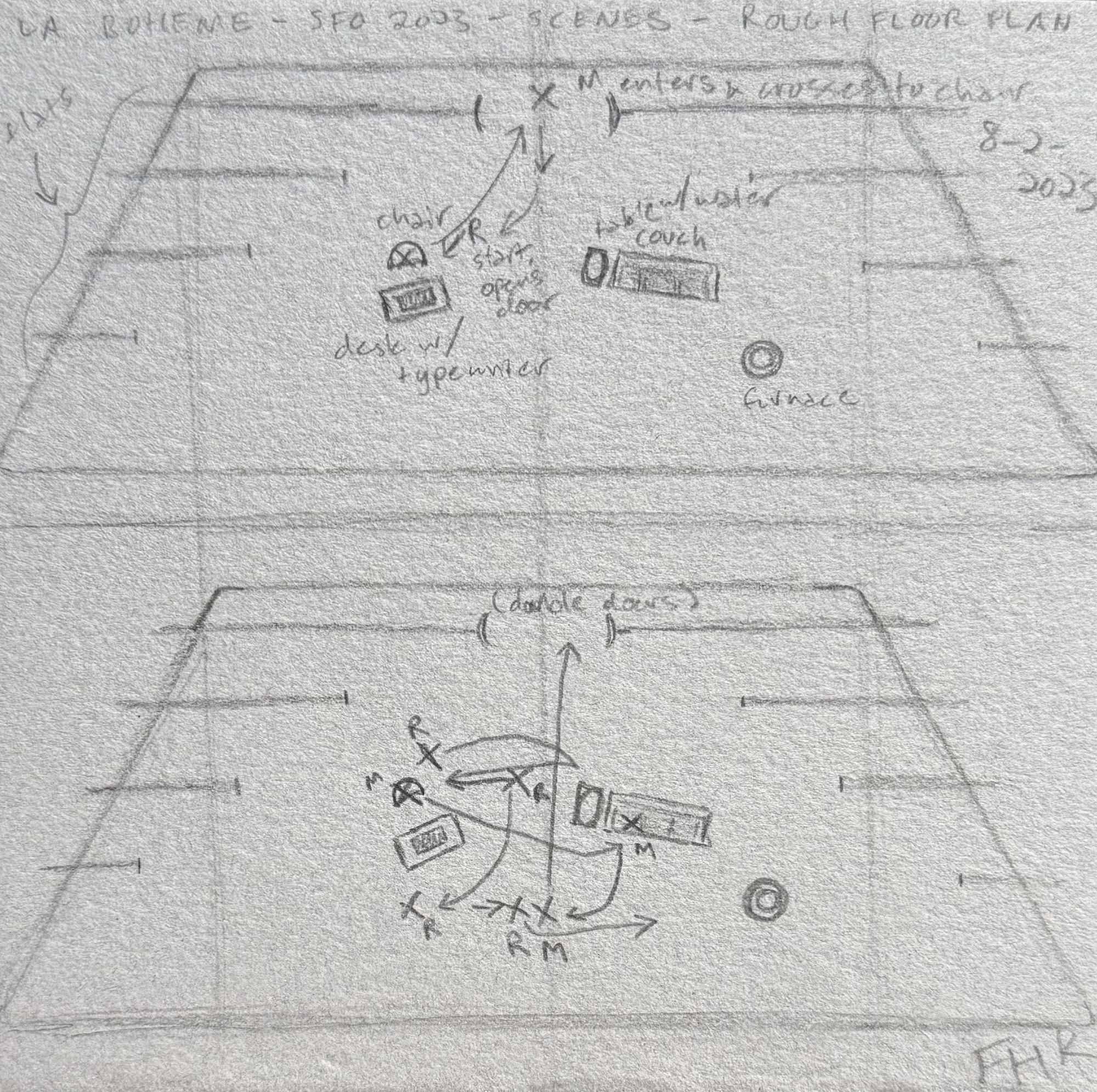
The scene begins; Rodolfo’s life is changed when Mimi walks in.
We move through two arias and a duet; the scene ends with the lovers leaving, full of hope.

Giacomo Puccini | Luigi Illica and Giuseppe Giacosa
End of Act I

Mimì | Caitlin Gotimer
Rodolfo | Daniel O’Hearn (Guest Artist)
Schaunard | Spencer Reichman (Off Stage)
Coline | Christian Simmons (Off Stage)
Marcello | Sam Dhobhany (Off Stage)

Conductor | Robert Tweten
Stage Director | Crystal Manich
Pianist/Coach | Anna Smigelskaya
Costume Designer | Aurora Azbill
Wigs & Make-Up Designer | Joshua N. Wisham
Lighting Designer | Eric Dahlgren


Boris Godunov

Modest Mussorgsky | Modest Mussorgsky
Quintet

Innkeeper | Gretchen Krupp
Varlaam | Le Bu
Misail | Spencer Hamlin
False Prince | Samuel White
Nikitic | Dylan Gregg

Conductor | Alden Gatt
Stage Director | Crystal Manich
Pianist/Coach | Anna Smigelskaya
Costume Designer | Gray Covert
Wigs & Make-Up Designer | Braxton Cooper
Lighting Designer | Brianna Maruco

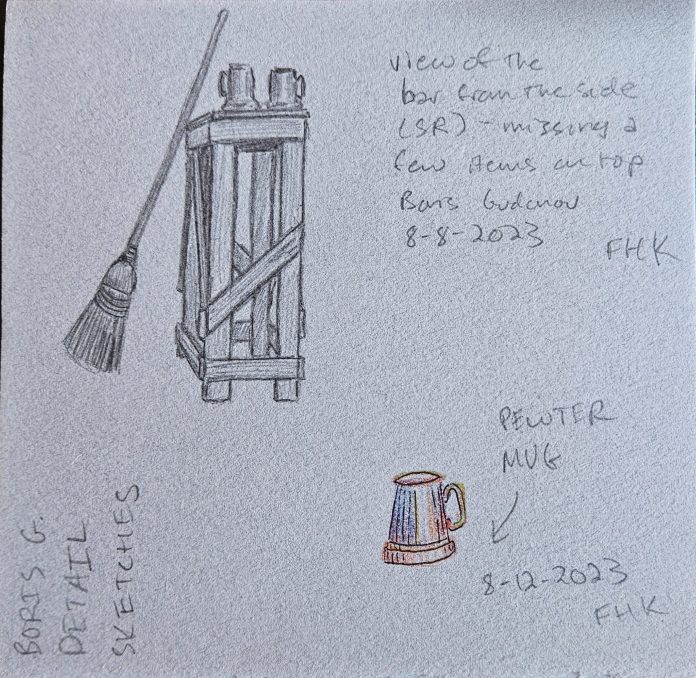
Detail drawings of props and furniture.
The initial layout of the scene.
The scene begins; the innkeeper starts opening up shop.
The scene continues; different folks start to mingle around the table.
The scene progresses; some of the visitors are harboring secrets.
Chaos and confusion as someone is not who he says he is!

Sweeney Todd

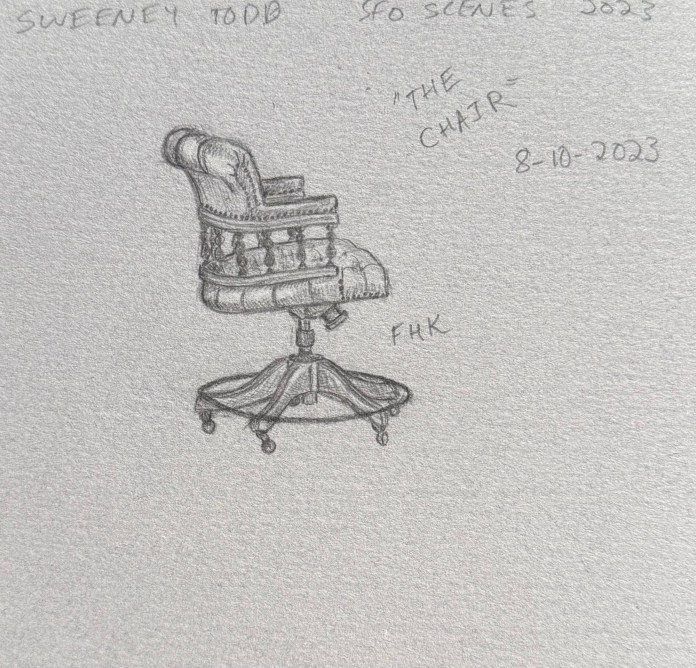
Detail drawing of Sweeney’s barber chair.
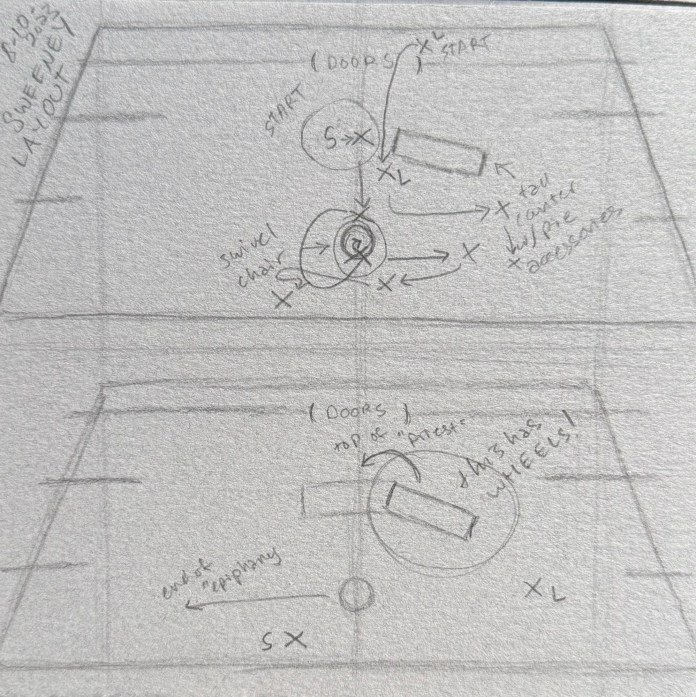
The layout of the set and start of “Epiphany.”
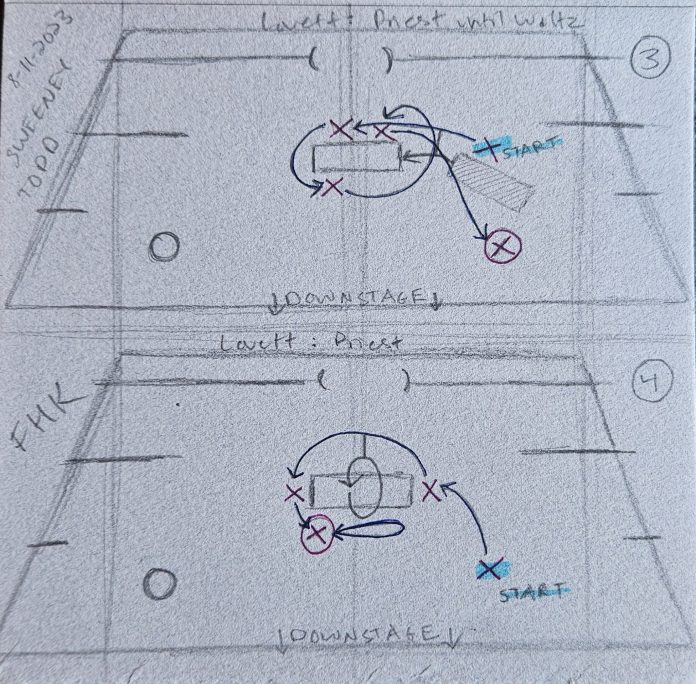
Mrs. Lovett’s brilliant idea turns into a playfully violent duet.
Solo Lovett track, starting with “Epiphany.”
Solo Lovett track continues, starting “A Little Priest.”
Solo Lovett track, finishing the scene.

Stephen Sondheim | Stephen Sondheim
Epiphany and A Little Priest

Sweeney Todd | Spencer Reichman
Mrs. Lovett | Rebekah Daly

Conductor | Robert Tweten
Stage Director | Crystal Manich
Pianist/Coach | Carol Anderson
Costume Designer | Emma Rose Harrison
Wigs & Make-Up | Designer Jax Cornett
Lighting Designer | Brianna Maruco


And if you made it this far… consider asking me to be a part of your theatrical team; you’ll get sketches out of it, for sure.

Standard

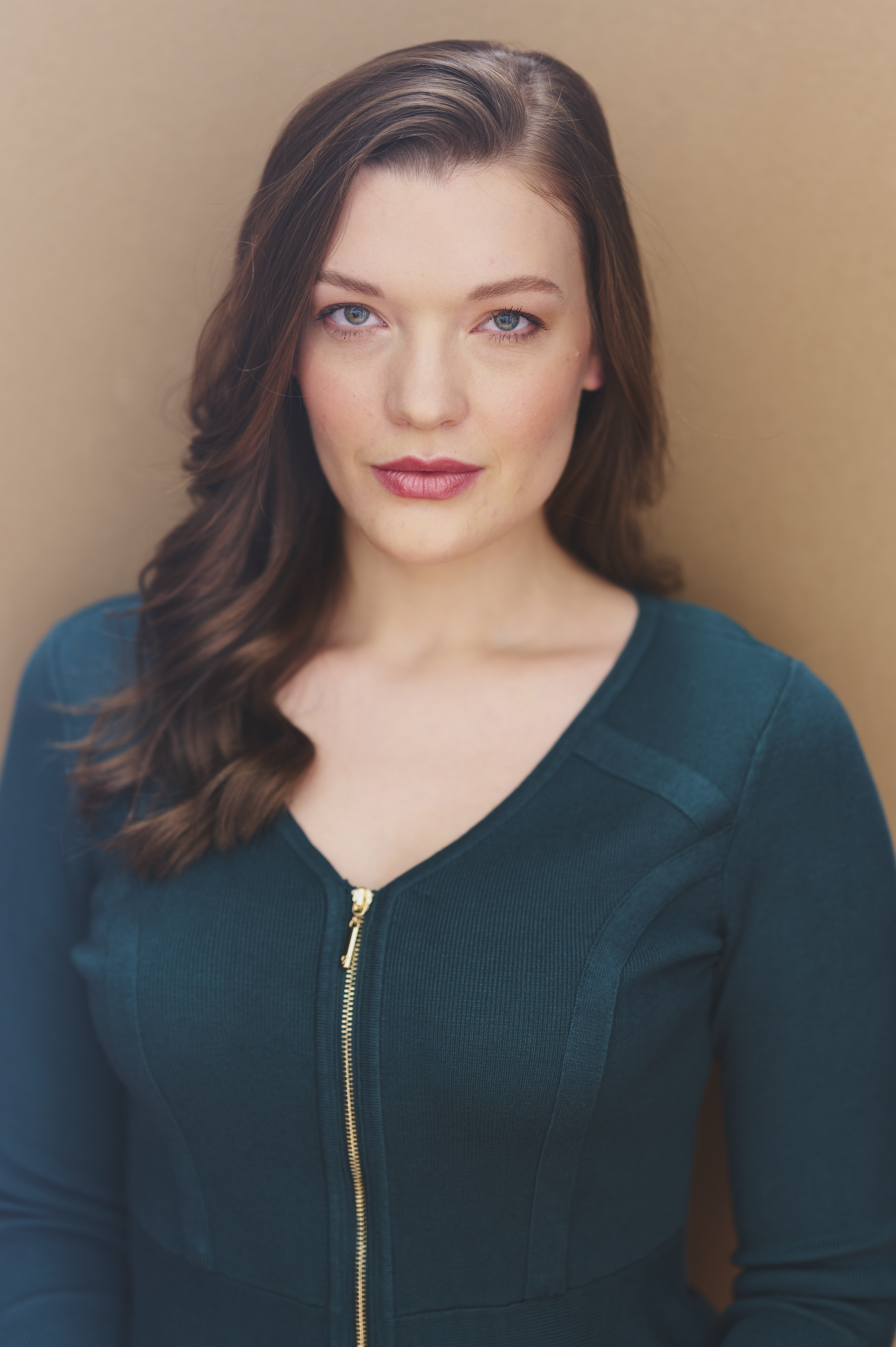
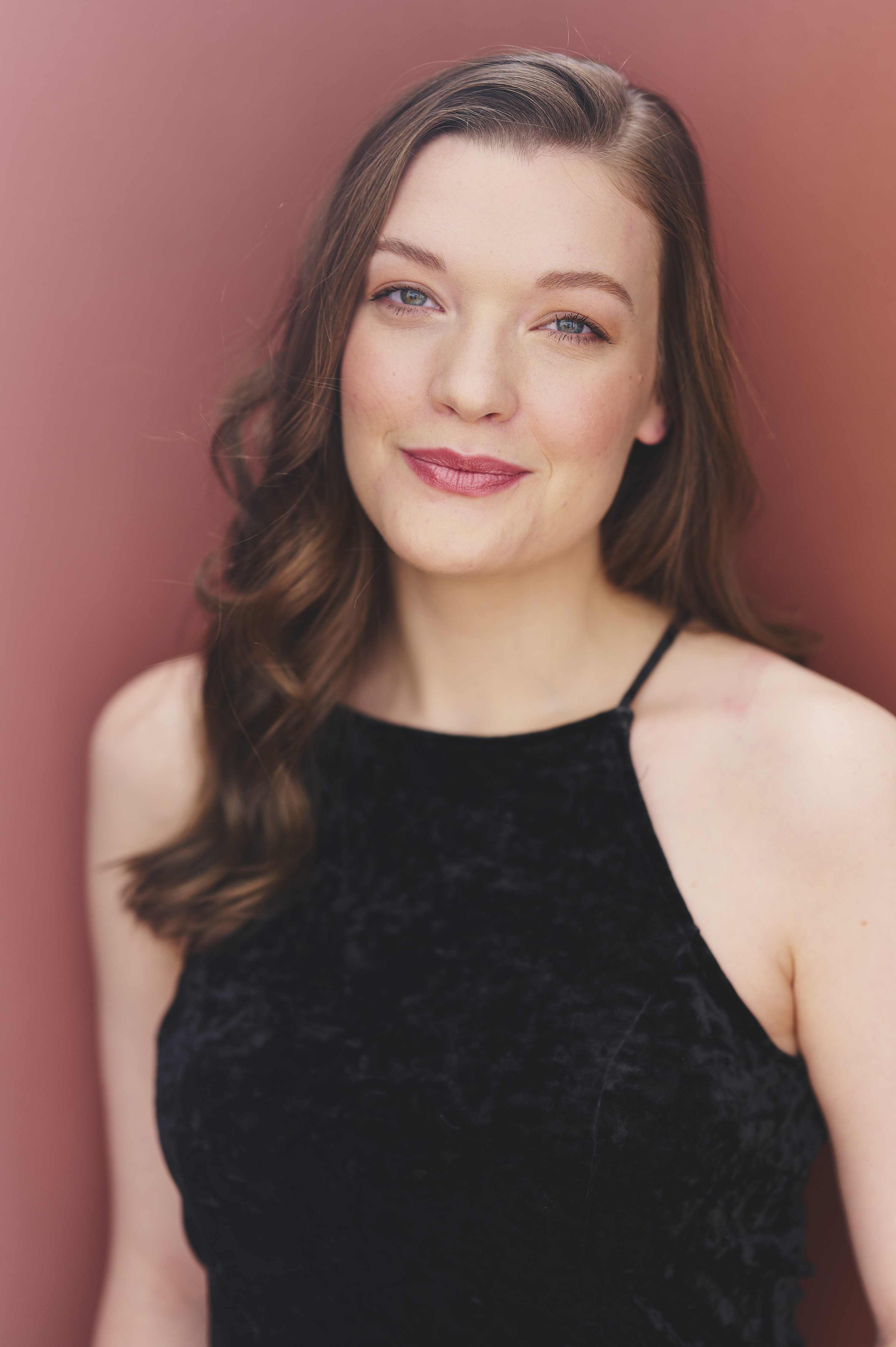
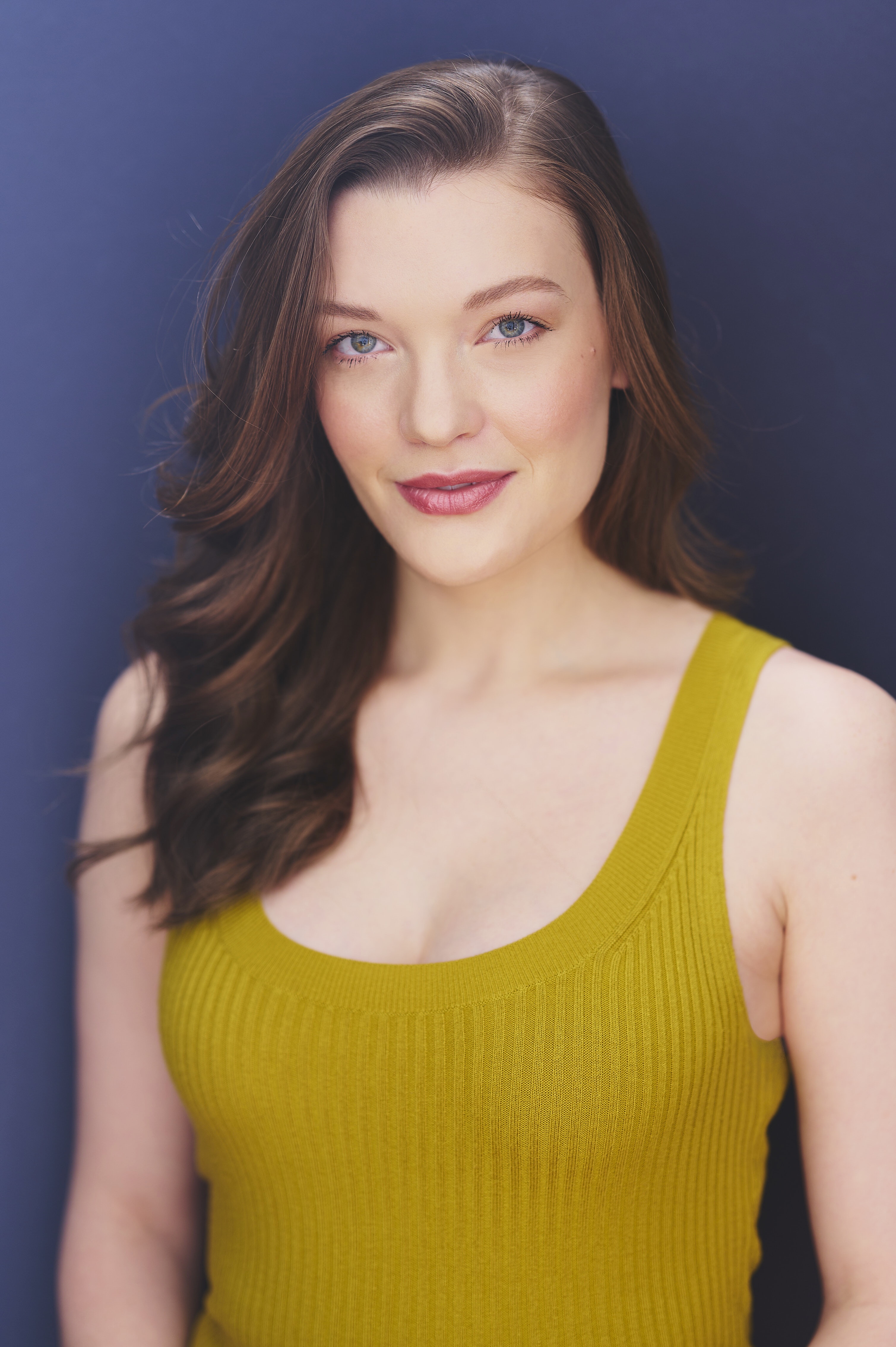
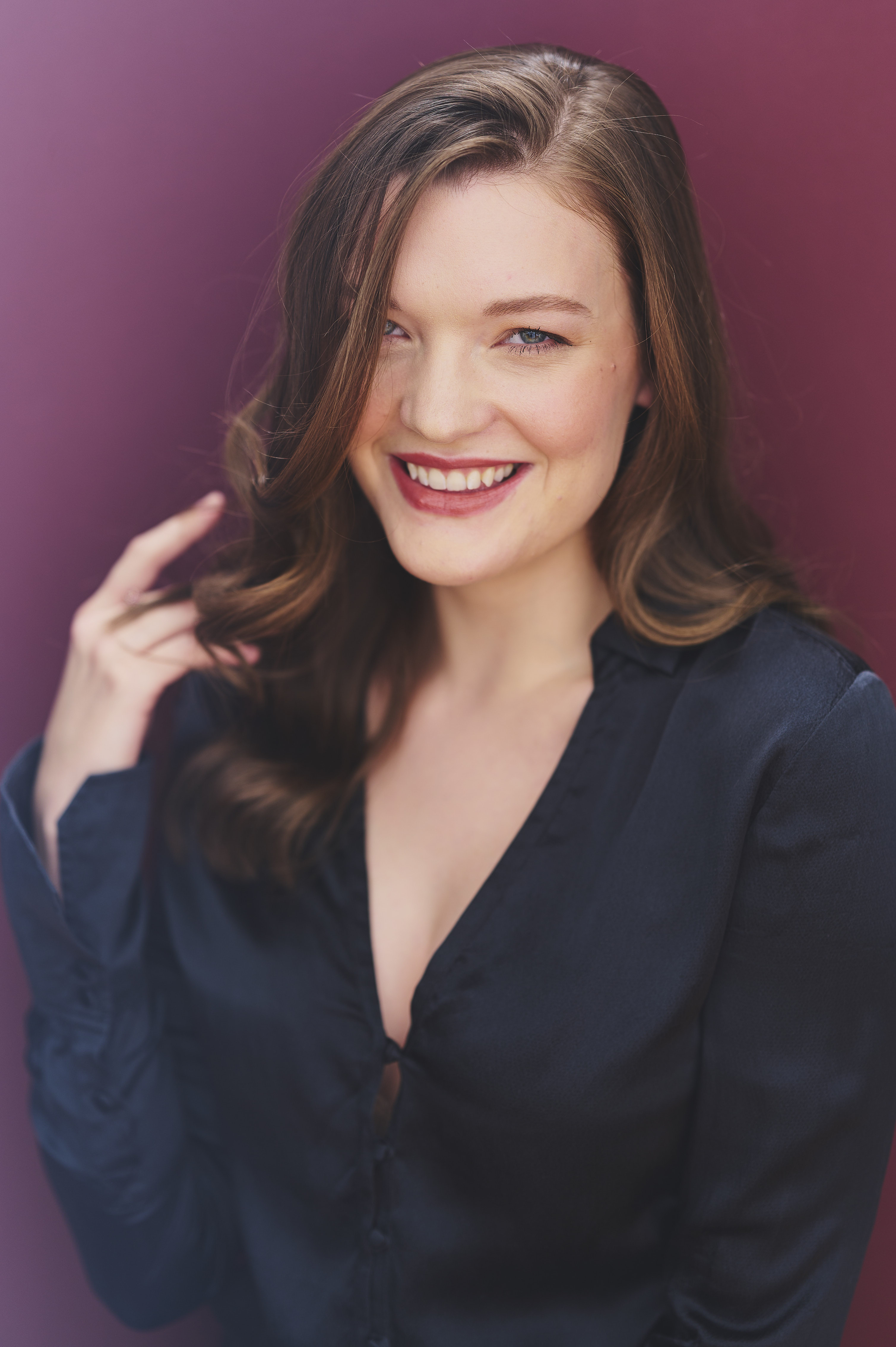
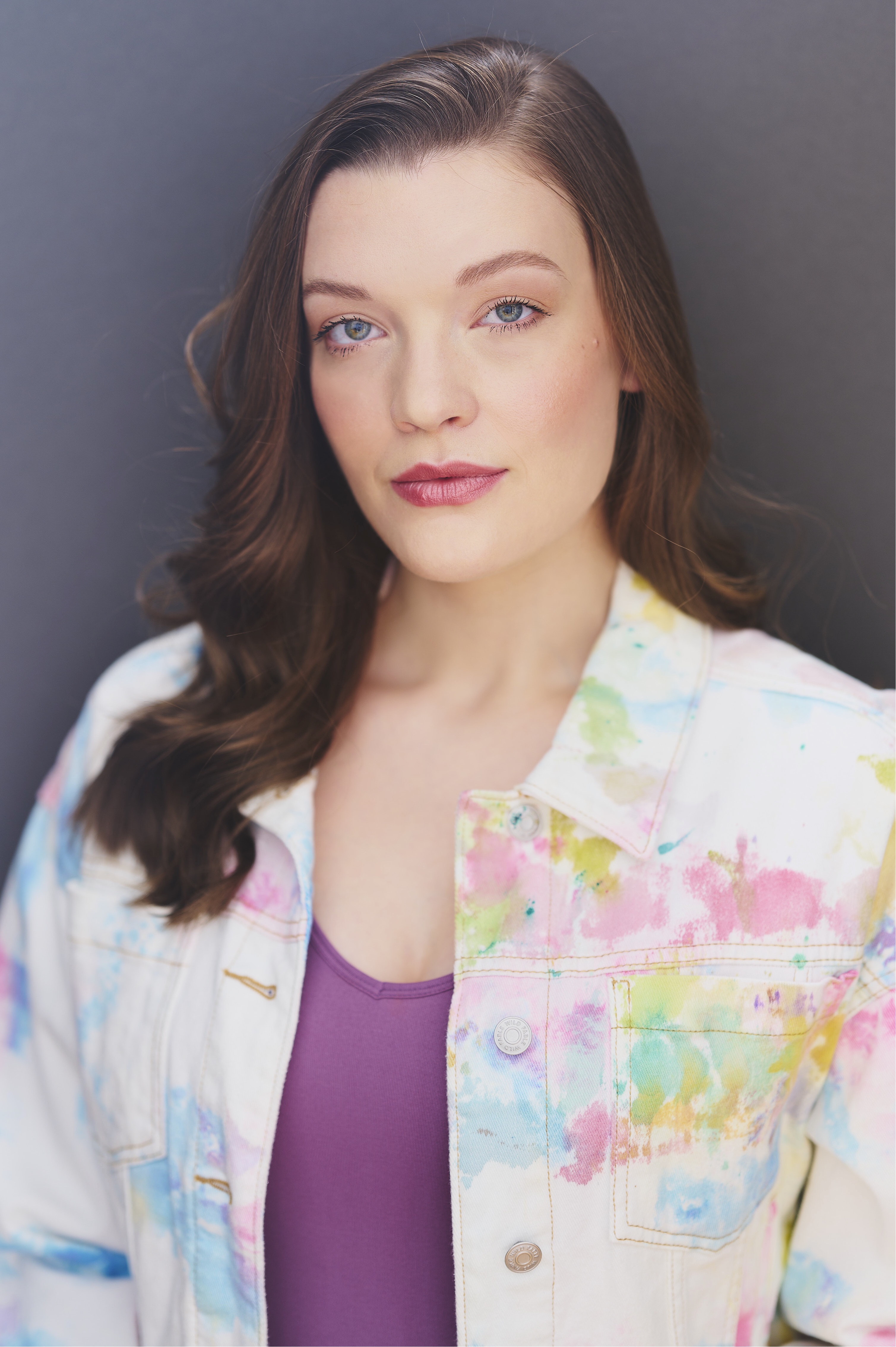
I got new headshots from Ricky Gee Photo recently, and I’m just sharing them here because I’m totally delighted with them!

What do these “say” to you, when you look at them? What are your first impressions of each and/or all? I am always seeking outsider input as to how I’m perceived; it’s vital research to do in the entertainment business!

Headshots!

Image

Dress Rehearsal Attendee

Today, I get to sit in on a dress rehearsal for the first time in over 18 months.

I’m thrilled, of course, to see live performance; I’m even more thrilled, arguably, to see bustling technicians finishing up the final details of a changeover and hear a grating drill securing loose screws. Eavesdropping on the preparations is almost like a tacit invitation to pretend I also belong in this space today. Almost.

I’m sitting in the balcony, front row center. I am alone in the section, and I’ve chosen one of the best seats in the house. The minutes tick by as I wait, through flickered lights and muttered checklists, for the show to begin. It’s a working rehearsal, so of course it won’t be perfect–but that’s exactly why I came to see this one, to compare the changes I’ll notice when opening night comes in a few days. The process is more magical–to my biased view–than the end result alone.

Sitting here, I find I can’t quite muster appropriate excitement for the performance… instead, I can only think about how dearly I want to be more than just a spectator.

I think about sitting in the house to observe shows I’ve designed, shows I’ve understudied—hours and hours of observing, marking scripts, laughing to give the actors just a hint of audible encouragement. Then, afterwards, popping backstage for notes, or to gather some props for tweaking. How I’d love just to do that.

Then I think, oh, but to be backstage, that would be enough. Wearing black clothes, strapped with tie line and gaff tape and hairpins, invisible except when backlit by electric blue lights… it would be a step toward enough, it would be way more enough than sitting here, an outsider.

Clarity hits: no, I don’t want to be backstage… I want to be backstage, and then onstage, traversing the carefully crafted barriers between real and myth, living two lives and two stories simultaneously, emerging from a glow-taped labyrinth into the blinding stage lights only to whirl around and exit through a forest of curtains and drops once more. I want to be that chameleonite whose hide changes based on her surroundings: one character in the spotlight, and another in the blackout. I want to be an agent of transition, hopping the stepping stones of a story, reaching out my hand for an audience to grasp, calling “come with me!”

Today, however, all I can do is sit, and watch, and try to enjoy the show. It’s more enough than not being here at all. It’s a step toward enough.

And I’ll be sure to applaud, loudly.

Standard