Zephyr: The West Wind Blows

ZEPHYR: an elegant and zesty word, derived from the name of the Greek god of the western wind (Zephyros), known in English as a warm breeze that ushers in the summertime, and also in some Russian-speaking countries as a tasty marshmallow-meringue-like confection.

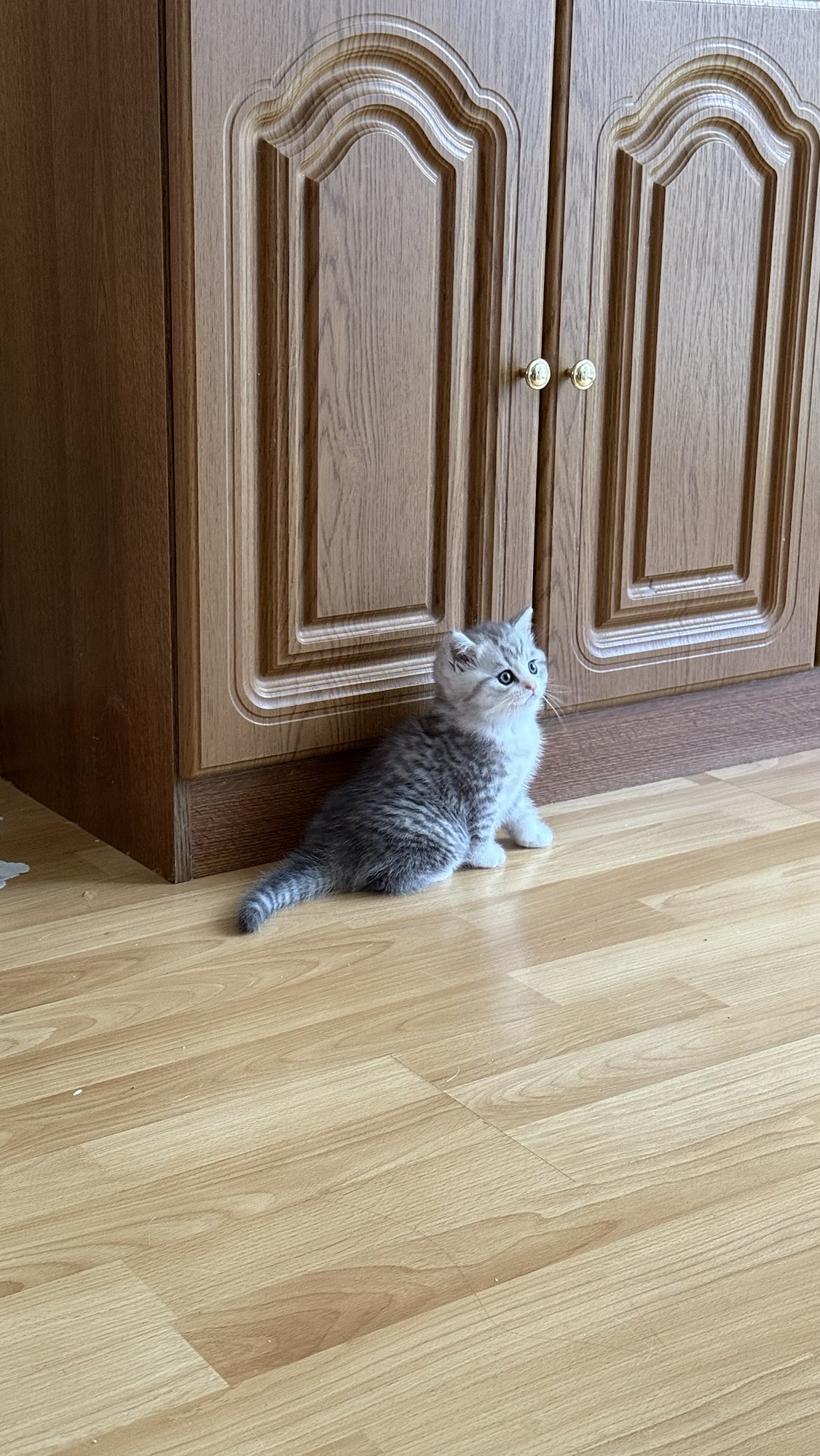
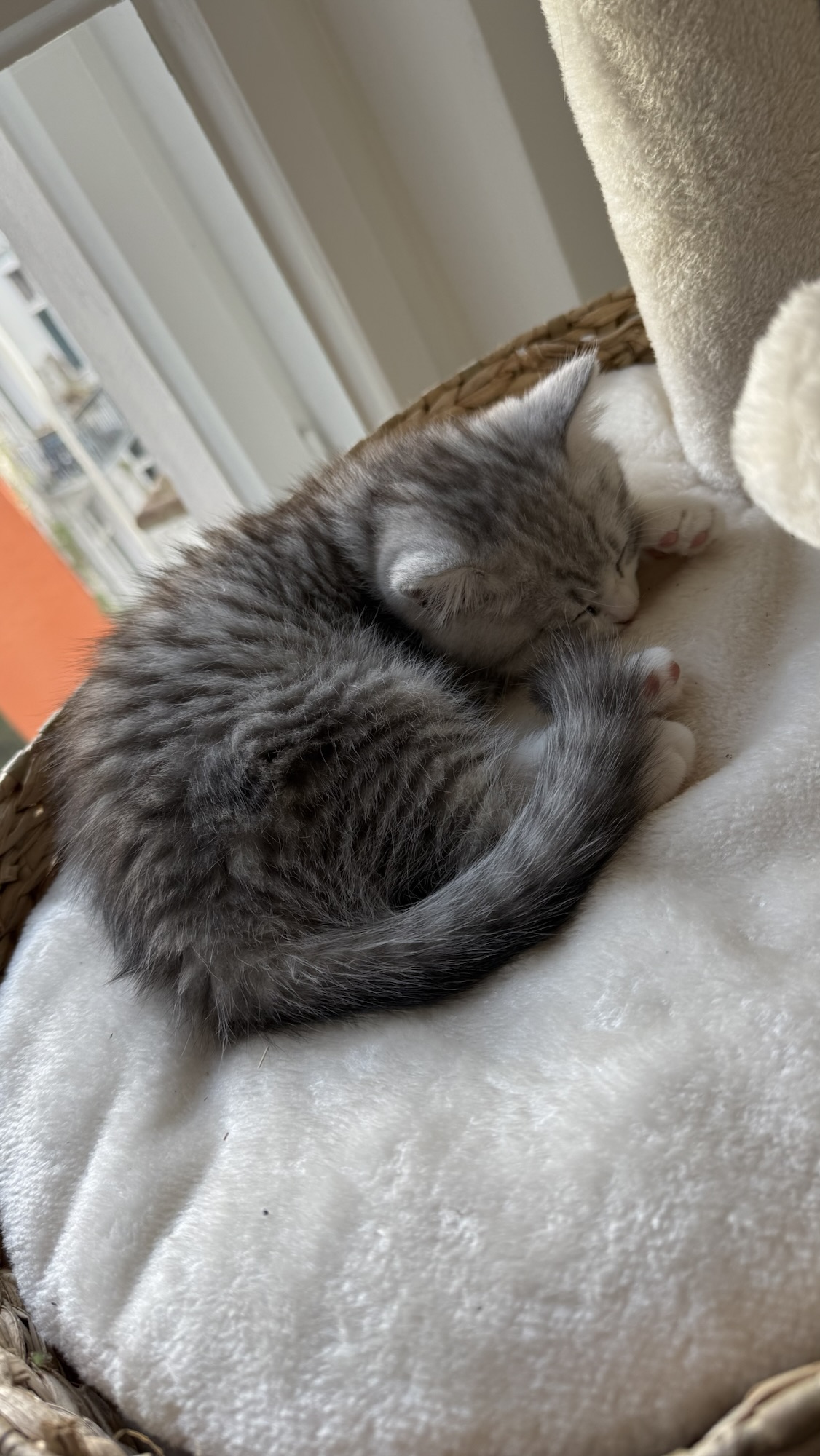
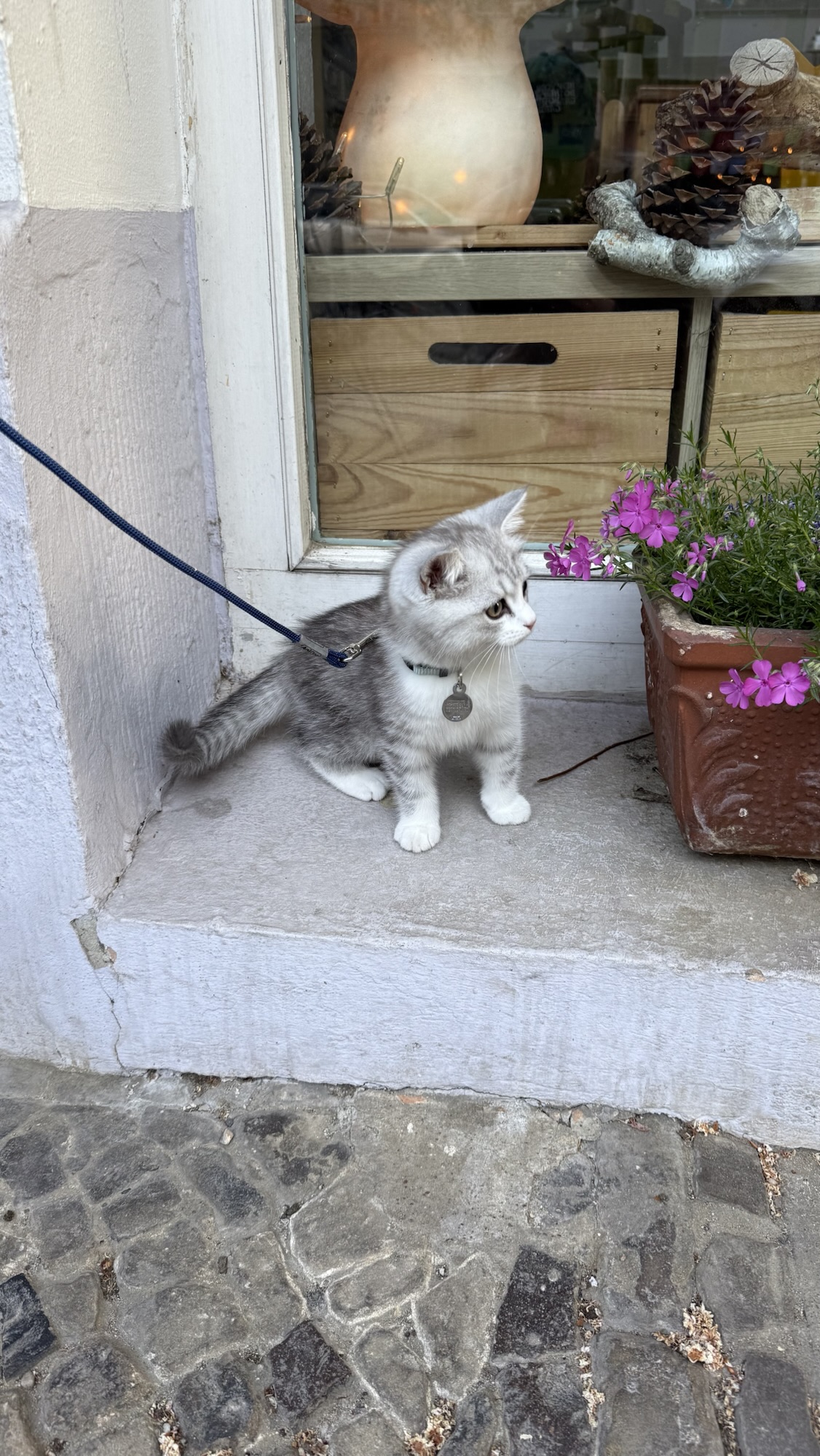
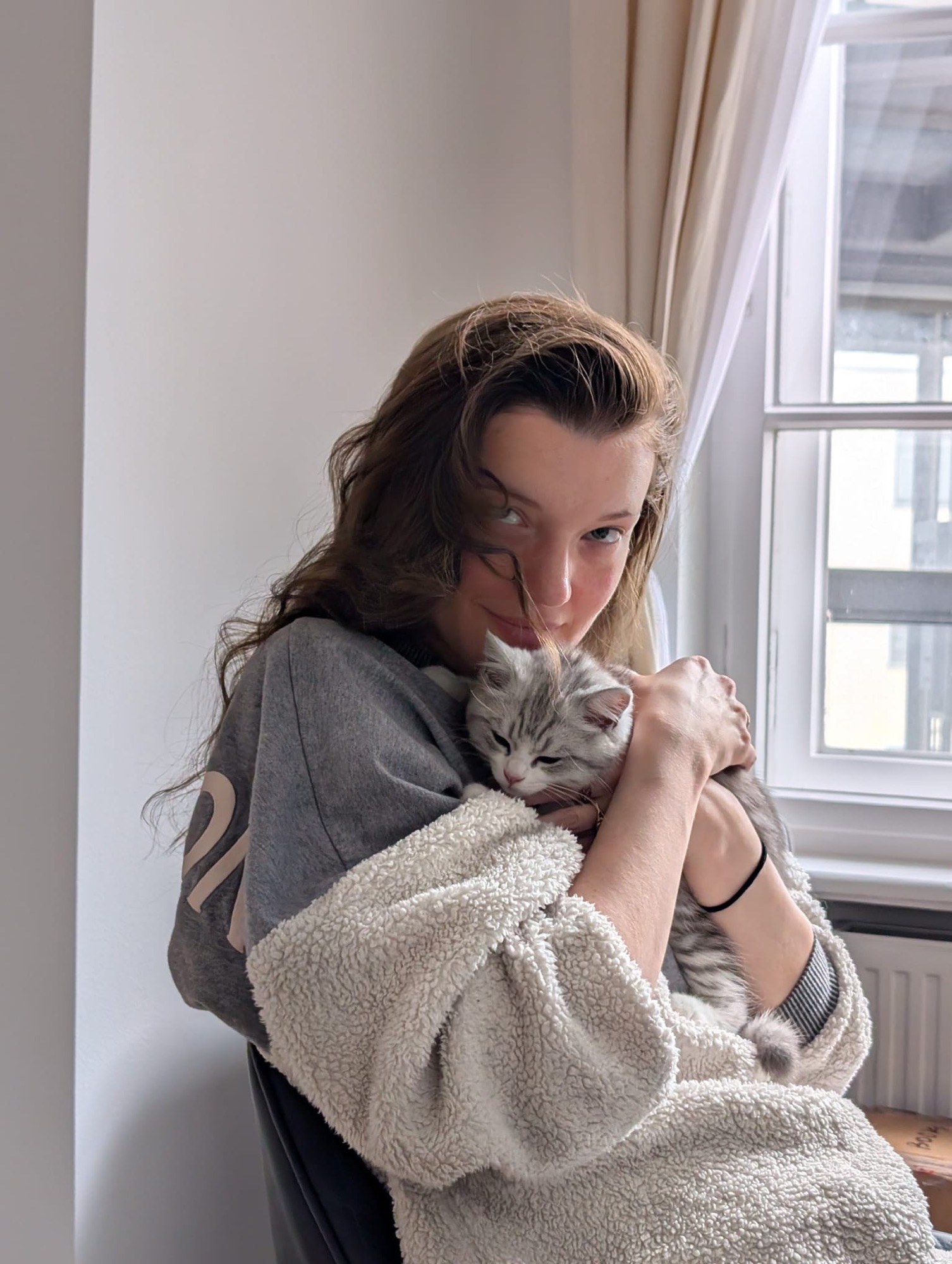
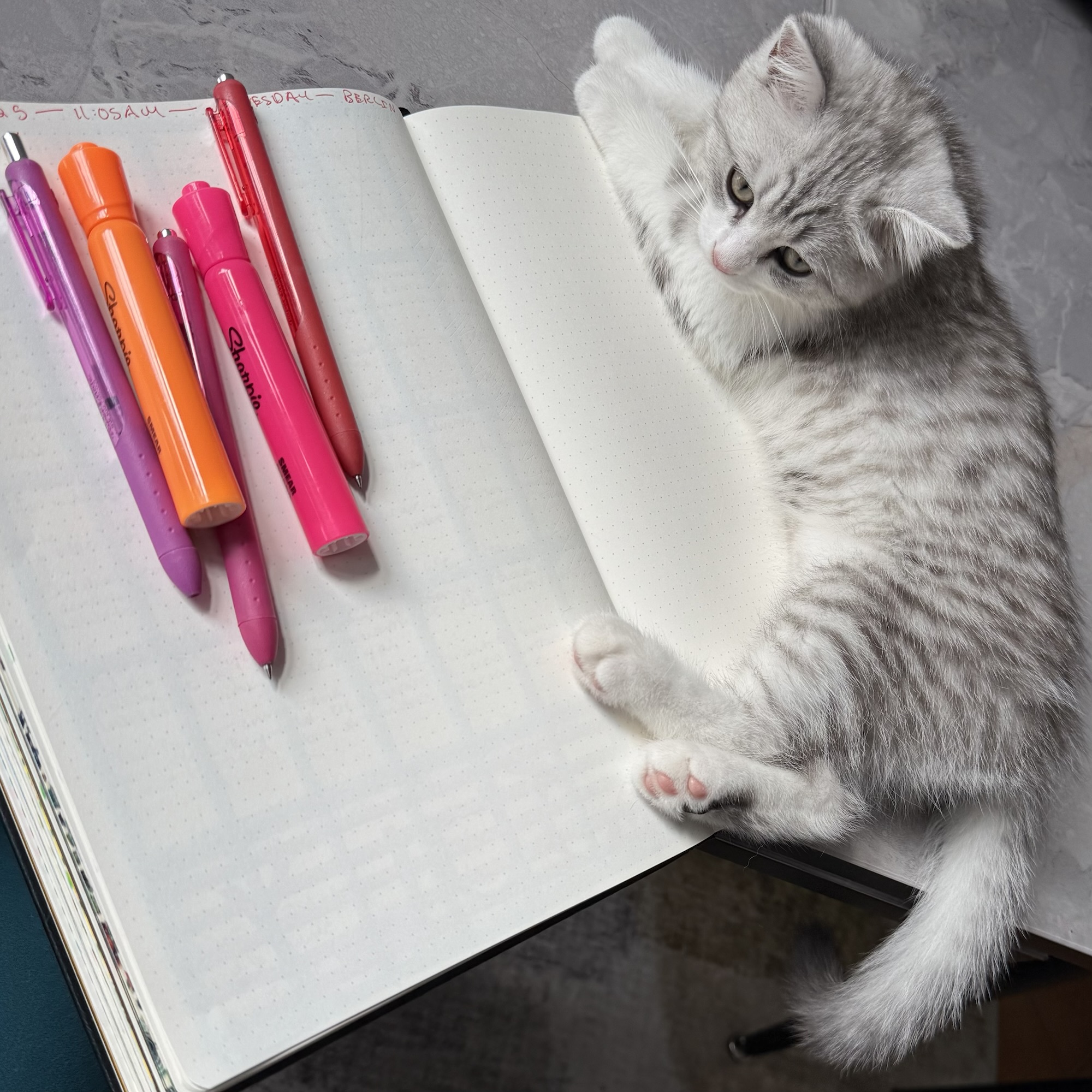
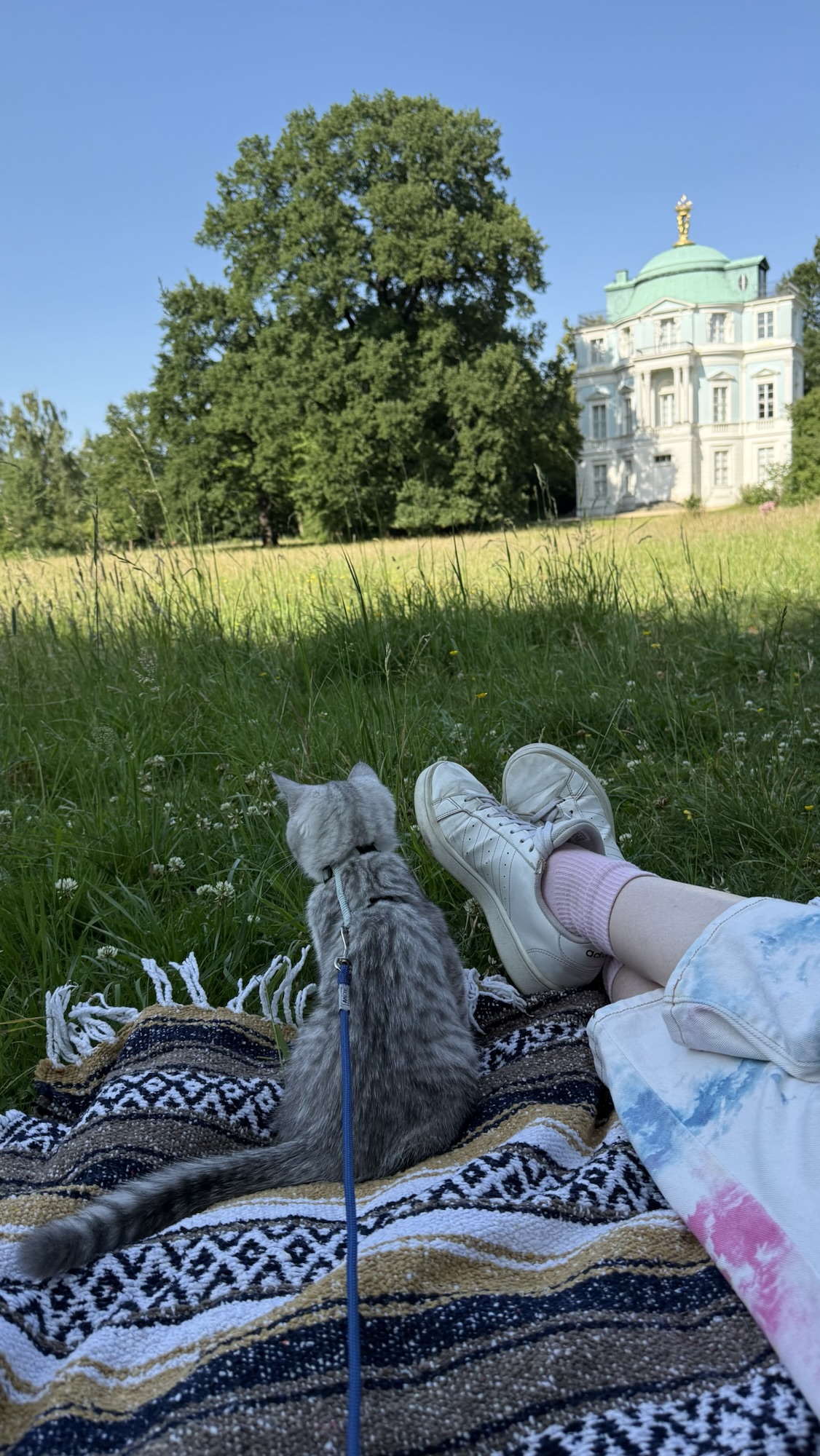
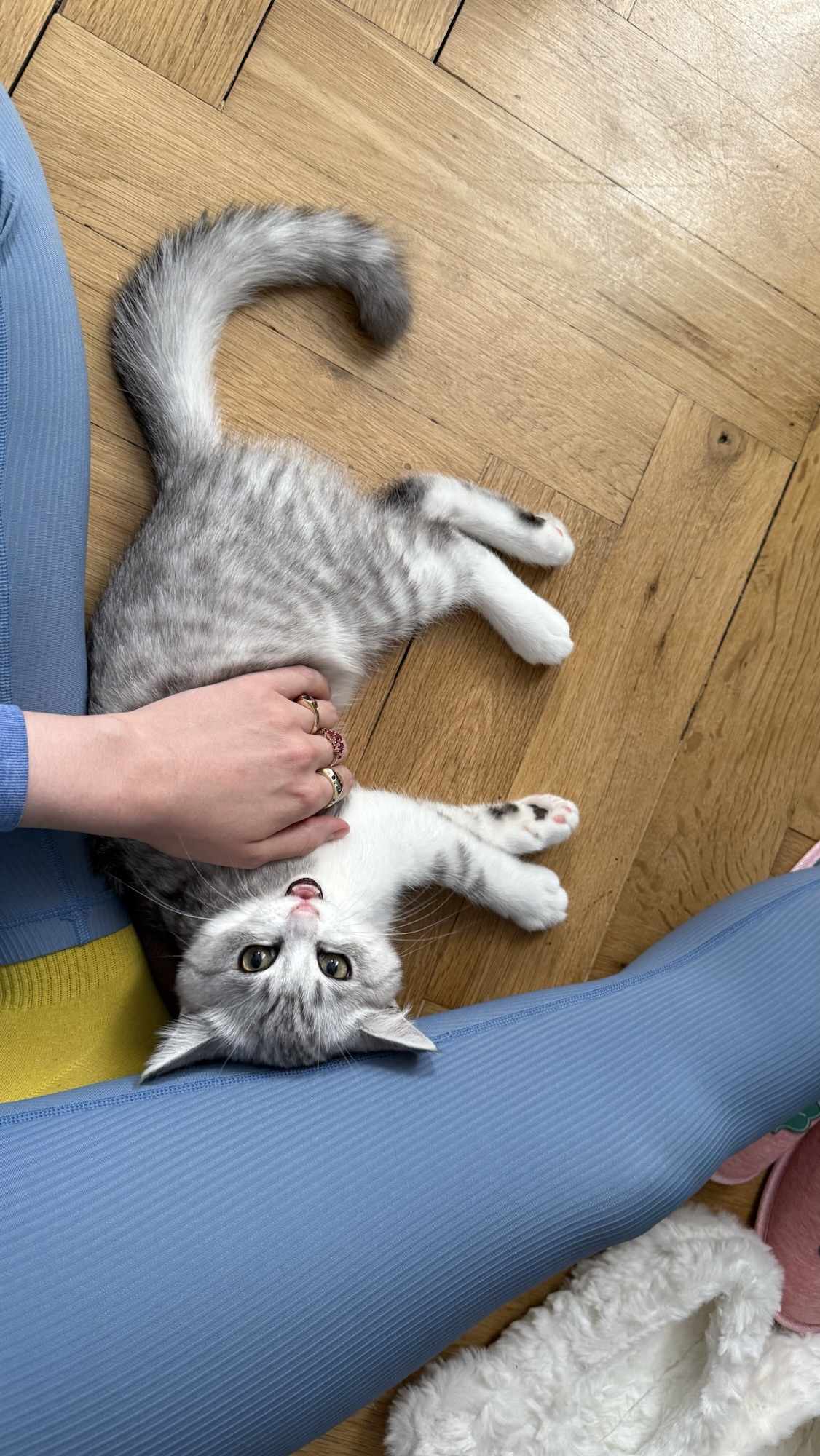
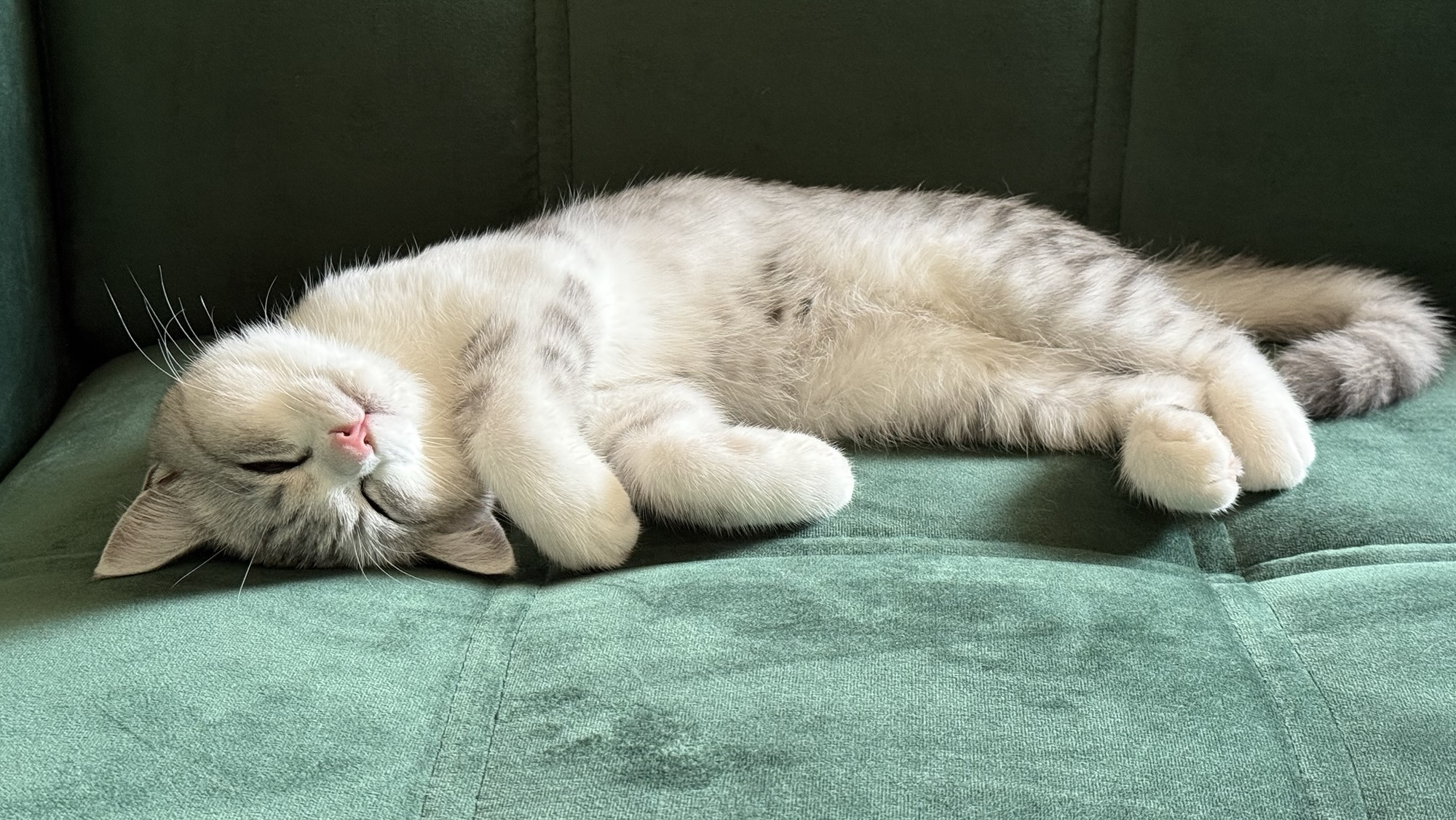
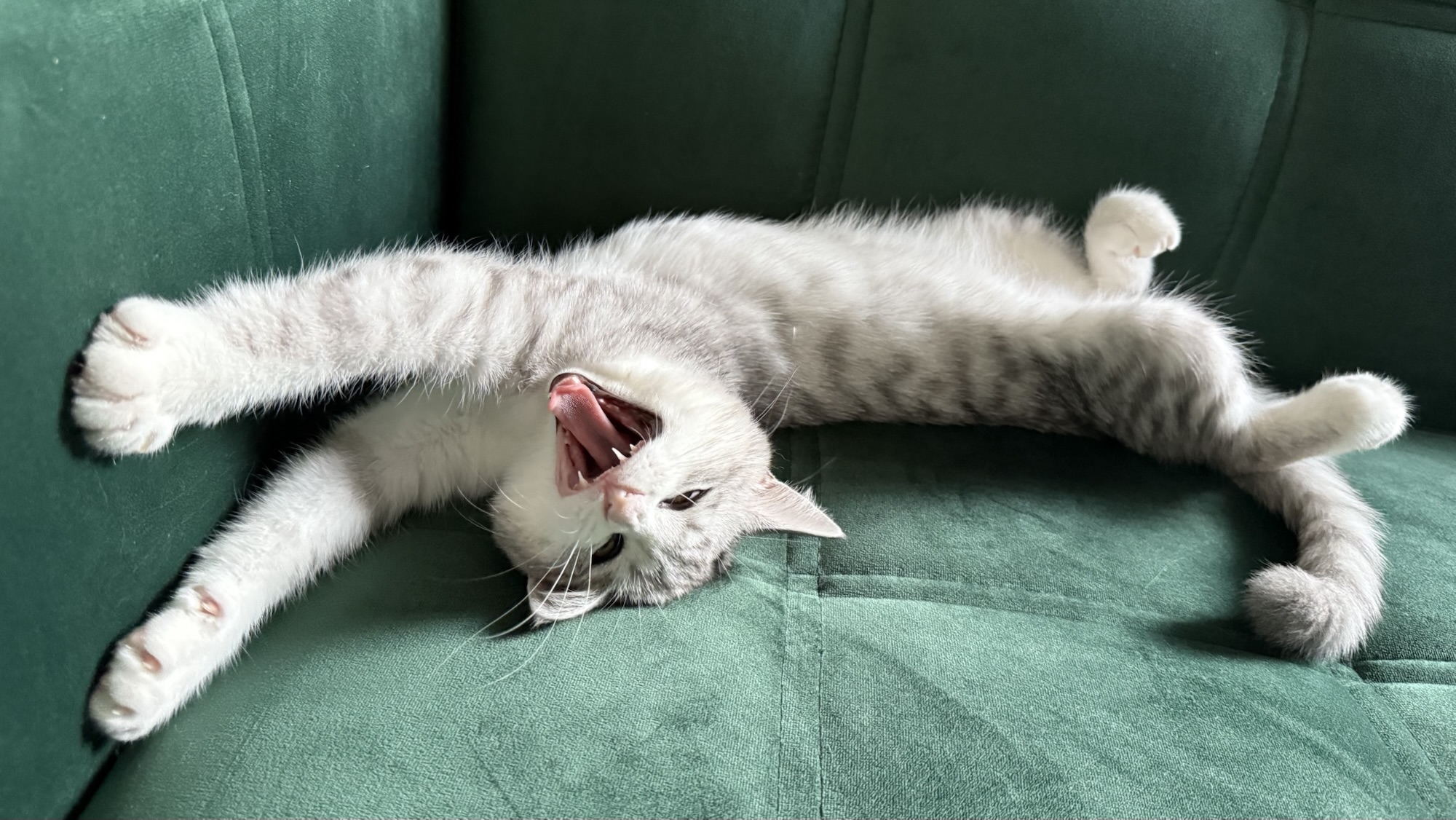
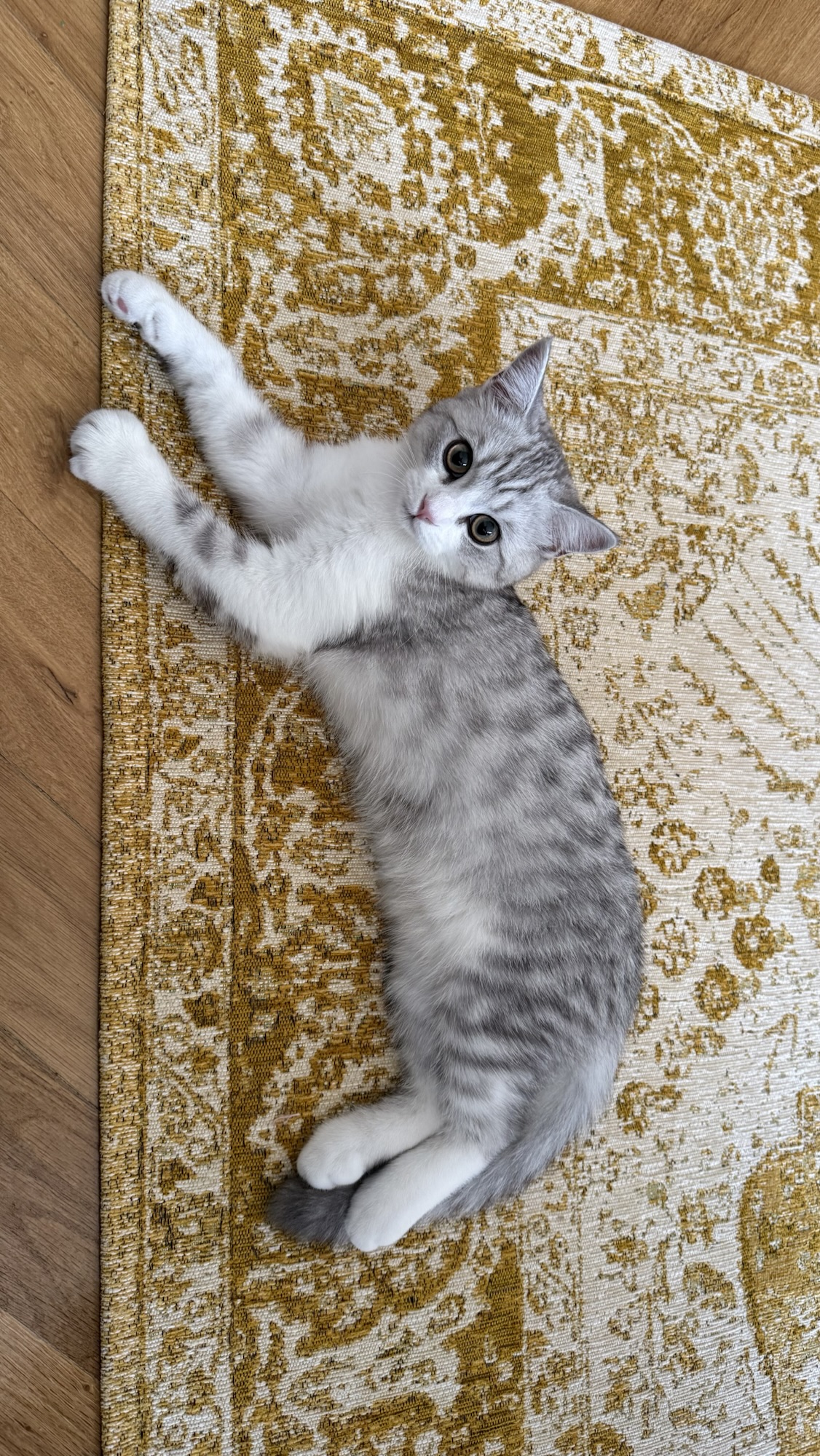
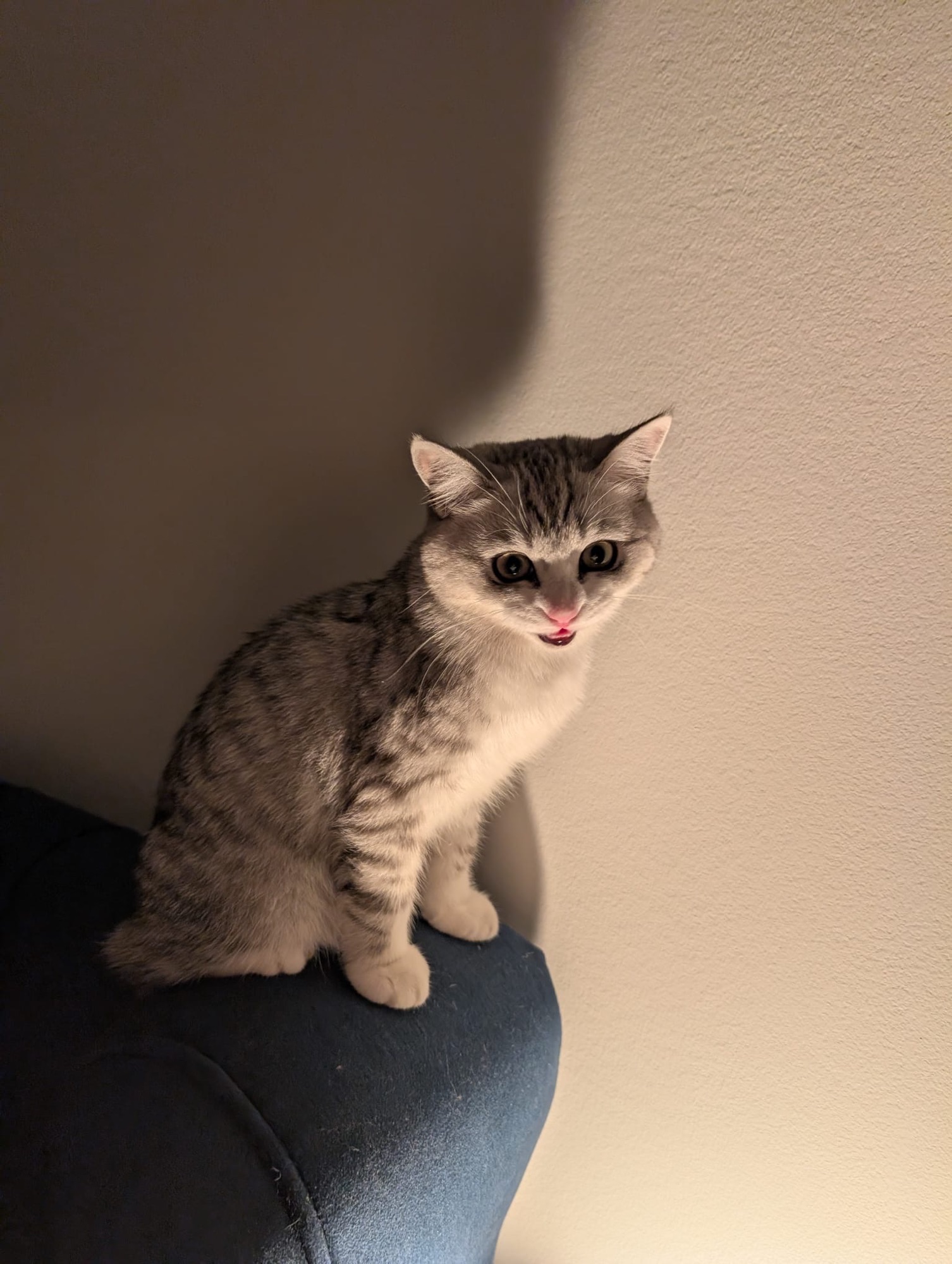
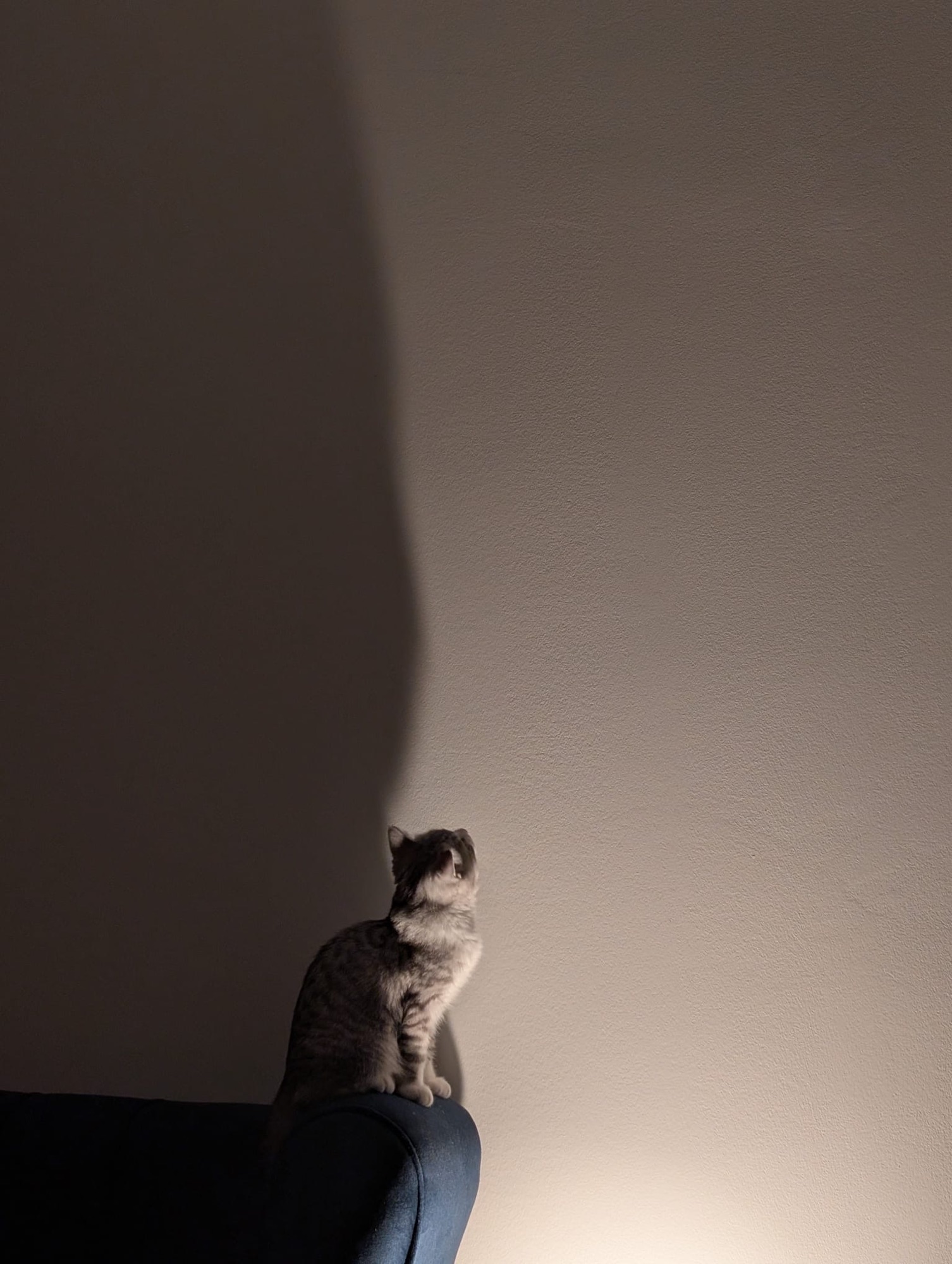
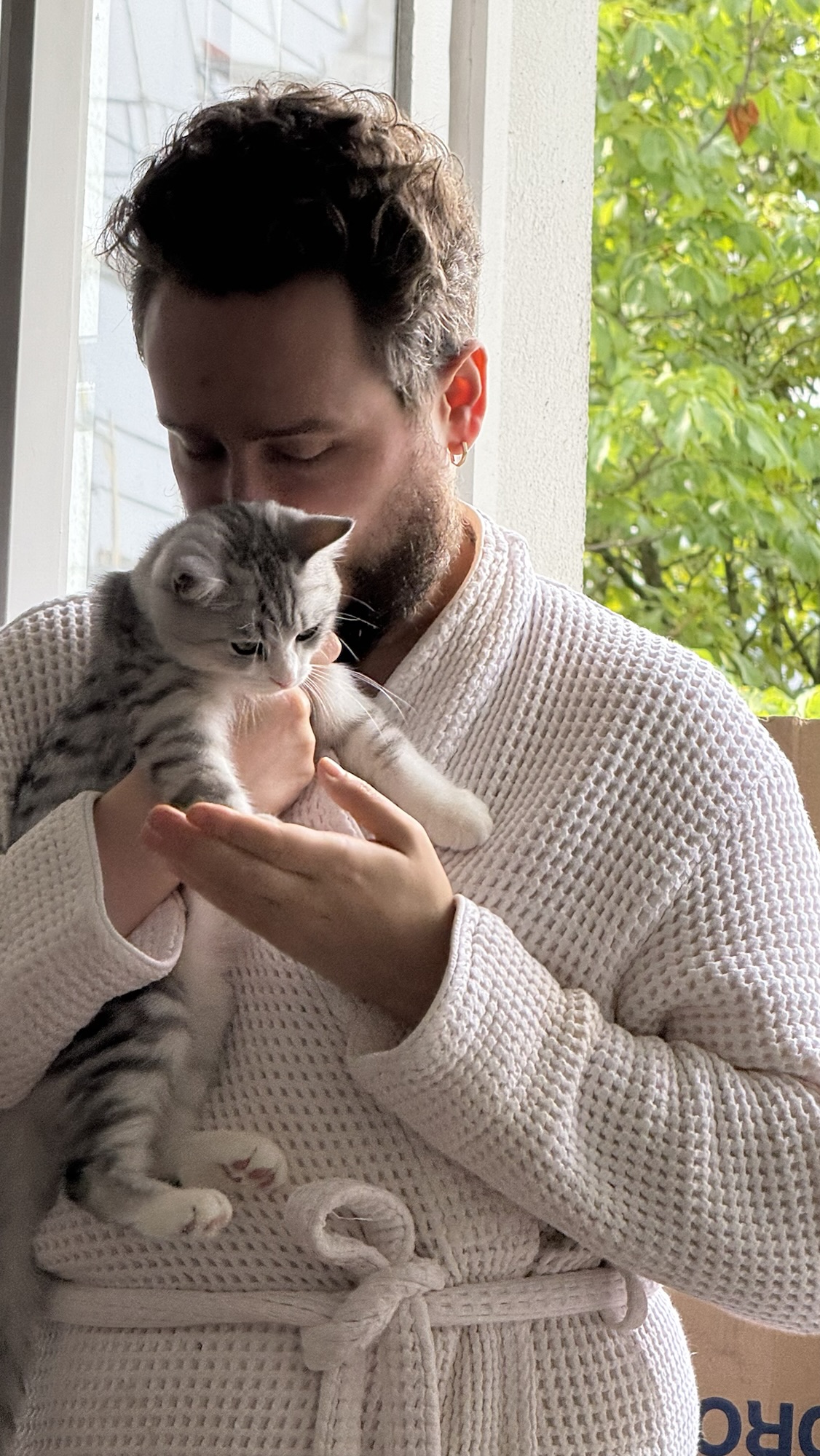
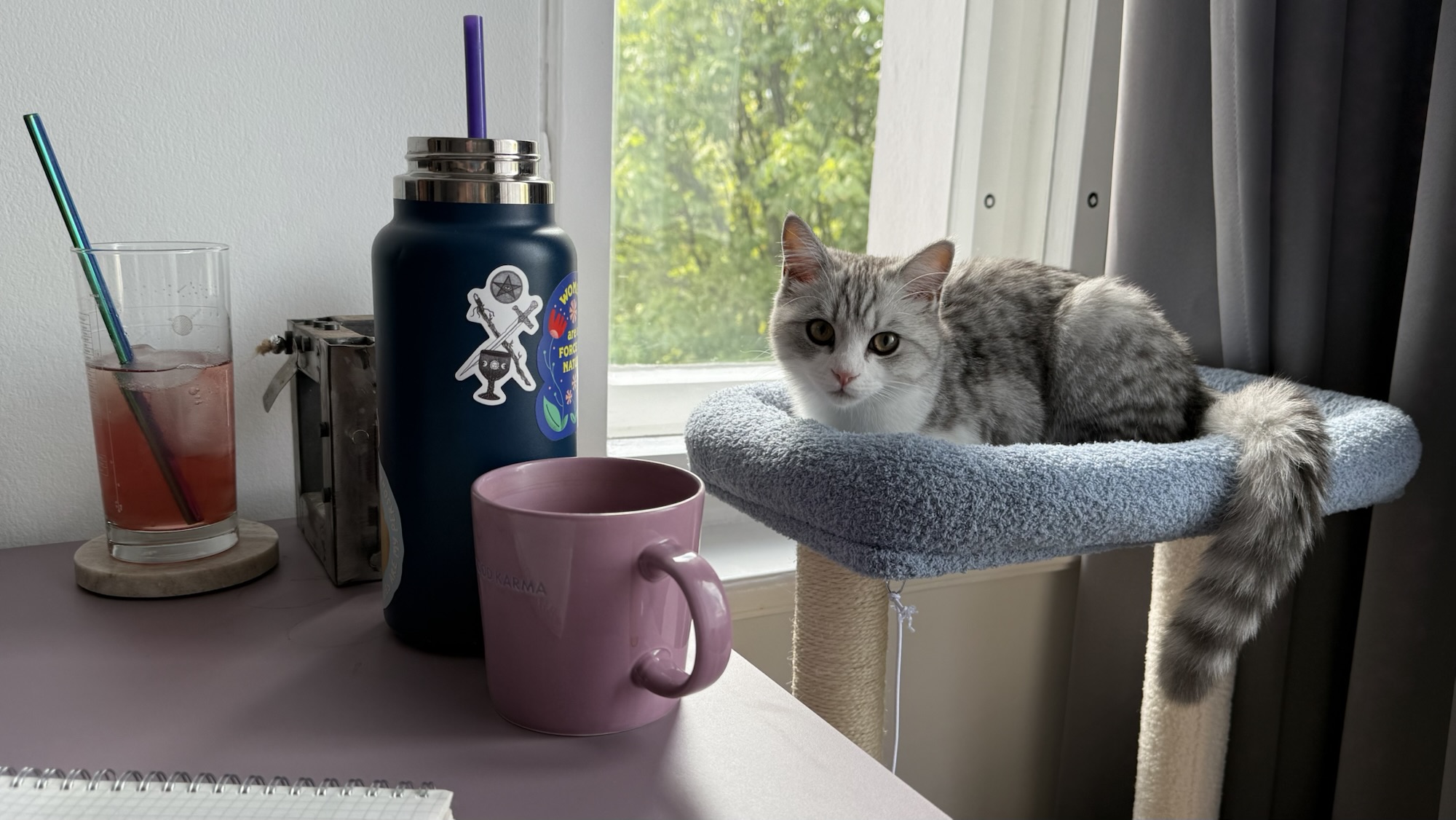
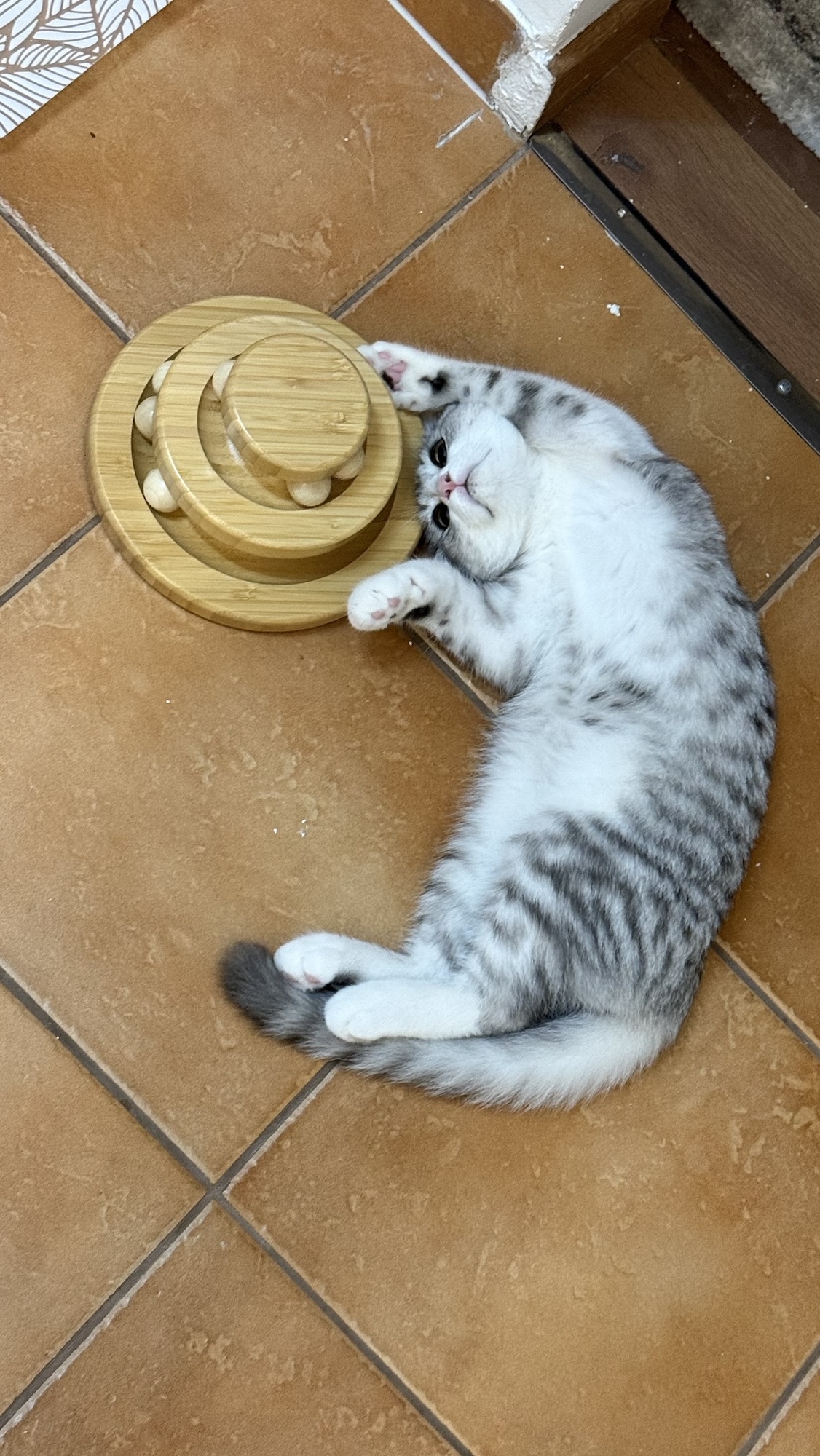
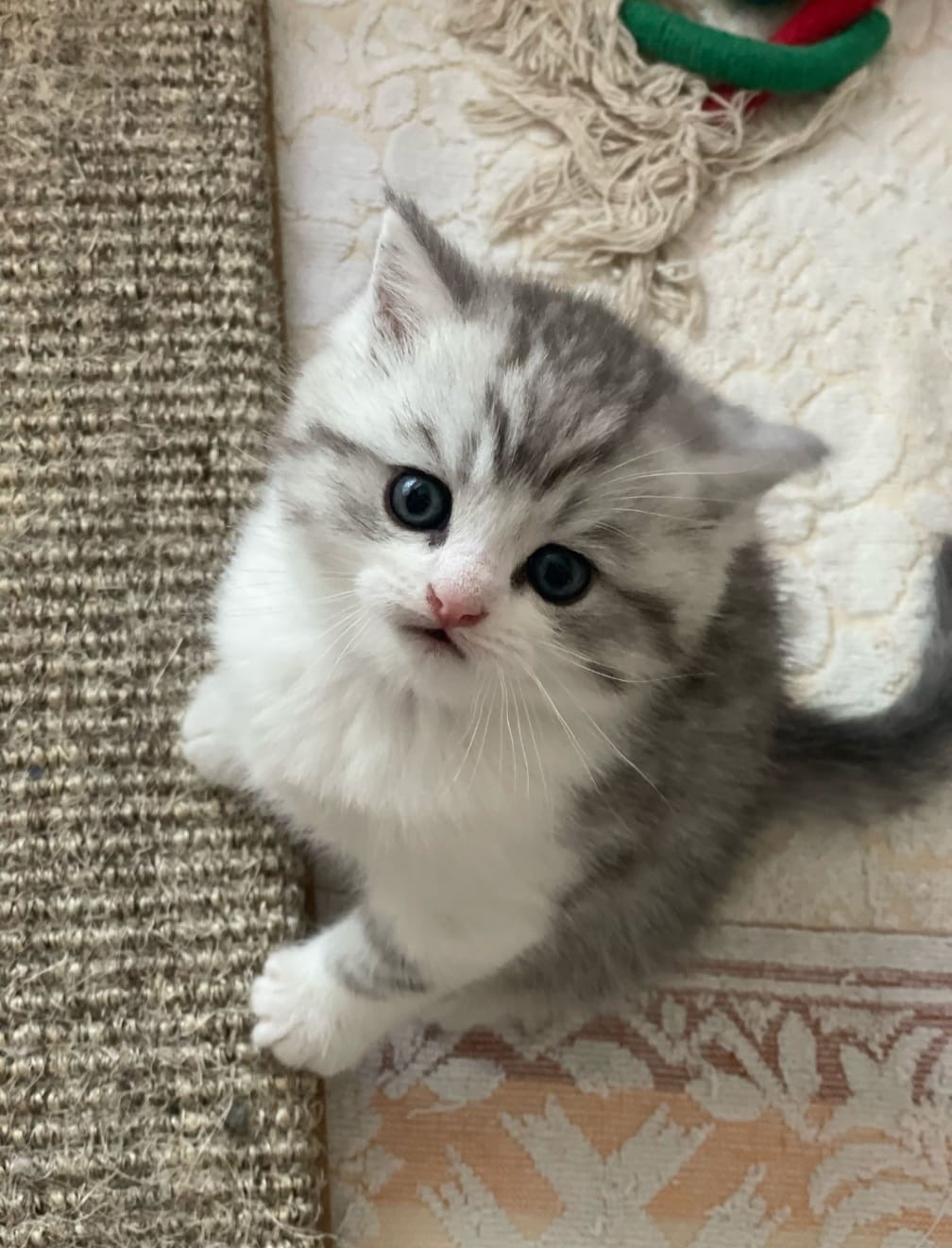
As of May 12, 2025, it is also the name of the most adorable cat on earth.

(Is this post just an excuse to share some of the best cat pics I’ve ever taken…? Yes. If that’s all you’re interested in, shamelessly scroll down to the gallery below. Please also follow his social media account @ZephyrusGregarius for endless cuteness.)

HOW WE MET ZEPHYR: When Tom & I moved to Berlin, Germany late last summer, we had originally been contracted to occupy a specific apartment that is located close to his workplace. I won’t get into the whole exasperating story, but we ended up being prevented from moving into that apartment for more than EIGHT months beyond when our rental was supposed to begin, and eventually, we gave up on the place entirely.

We ended up finding somewhere else totally new, and it’s been a perfect fit for us in so many ways. It also comes with landlords we can personally interact with rather than a predatory and disorganized leasing agency, thank goodness. In fact, on the very evening of the day we got the keys, we received a friendly text from them:

“Your application mentioned you’re hoping to get a cat sometime–our mother happens to have two 5-week old kittens, and she is looking for a home for one: would you be interested?”

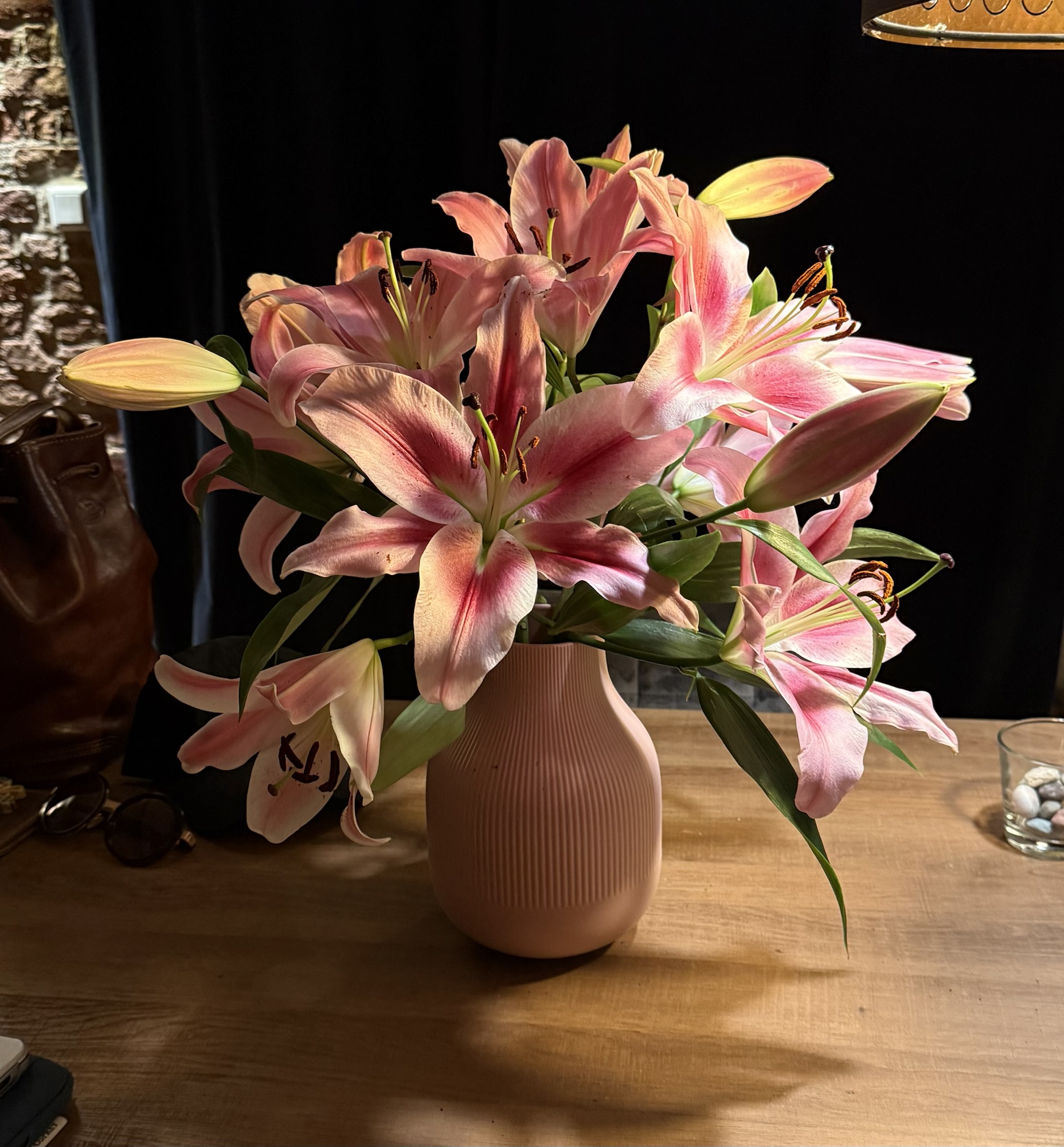
This message was accompanied by photos of a precious little storm cloud of a kitten, so cute that it hurt your heart to look at him. He looked like he was AI-generated. I had never understood the cuteness aggression phenomenon, until seeing this cat. The heavens seemed to be cracking open with a housewarming blessing from Freya herself. Even the bouquet of stargazer lilies (my favorite flower) on our then-dining-room-table were effervescing; they seemed to be saying goodbye for now, knowing we wouldn’t have lilies in our home again for quite some time.

As Tom remarked: “no sooner have we gained our temple, than we are provided with its god.”

His name came about because he IS like the western breeze, welcoming us to a new season of warmth. His birthday is March 9th (a Pisces baby) and he was safely ensconced in his–our–new home only four weeks after we moved in ourselves. He’s affectionate, curious, mischievous, and utterly charming. We had been waiting for the universe to gift us with a cat when the time was right, and our patience has definitely paid off; the literal day we found ourselves finally able to support a kitten’s lifestyle, he blew into our lives!

At less than six months old as of this writing, he’s still very much a kitten, and it’s been wonderful to watch him grow up, and to catch glimpses of the perfect cat he will become. BUT ENOUGH TEXT! PICS NOW!
Standard

Rehearsal Sketches from Santa Fe Opera Apprentice Scenes, Summer 2023

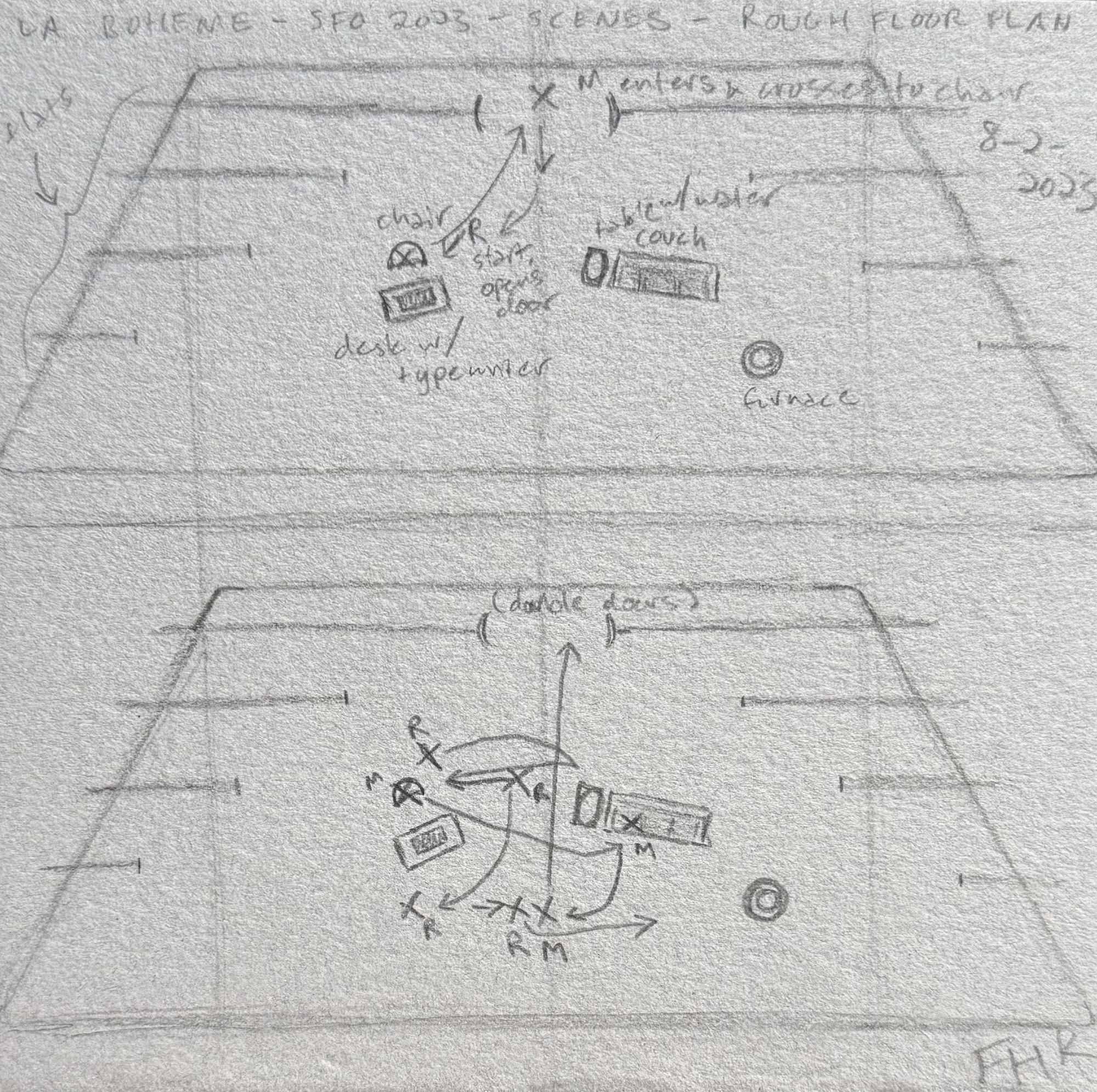
One thing I enjoy doing at rehearsals is sketching.

Whether it’s during my 15 minute break, or throughout a long day of observation, there’s usually a convenient opportunity to pull out my little sketchbook, at least for a few minutes. It’s a perfect activity for rehearsals: it’s nearly silent, it keeps me engaged with the onstage happenings, and it can be instantly plopped on the ground if my cue comes up. Plus, the actors who are actually occupying the stage at the moment are often staying in the same or similar positions for long durations of time–an ideal setup to practice gestural sketches.

The publication of this collection of sketches is much delayed! They’re from my most recent summer at the Santa Fe Opera, where I performed as a supernumerary (the “Mélisande doppelgänger”) in the Debussy opera Pelléas et Mélisande, and observed rehearsals for the Apprentice Scenes Program. These sketches are all from the scenes directed by the wonderful Crystal Manich that summer, who so kindly let me sit in and watch! I am always grateful to be invited into a rehearsal room; there are skills to be learned and practiced every time, and I try to make the most of it.

In these sketches, I had a few goals:
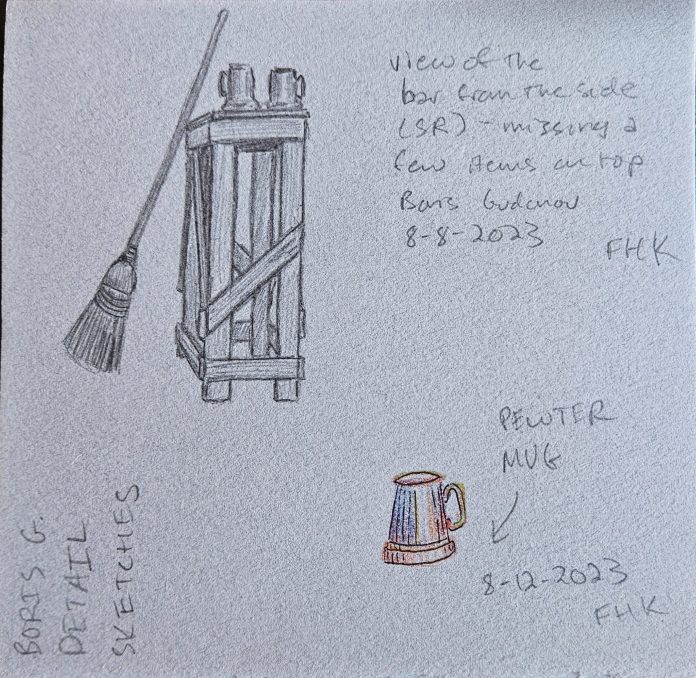
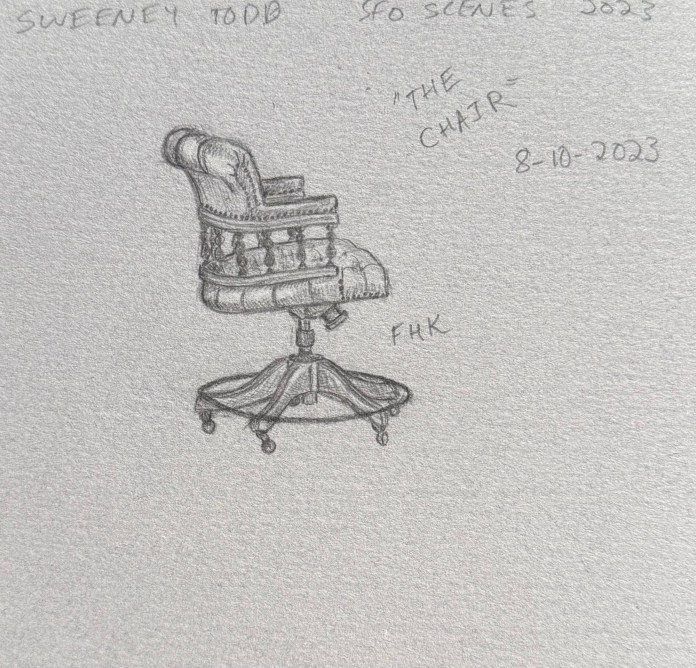
-practice quickly sketching objects from life
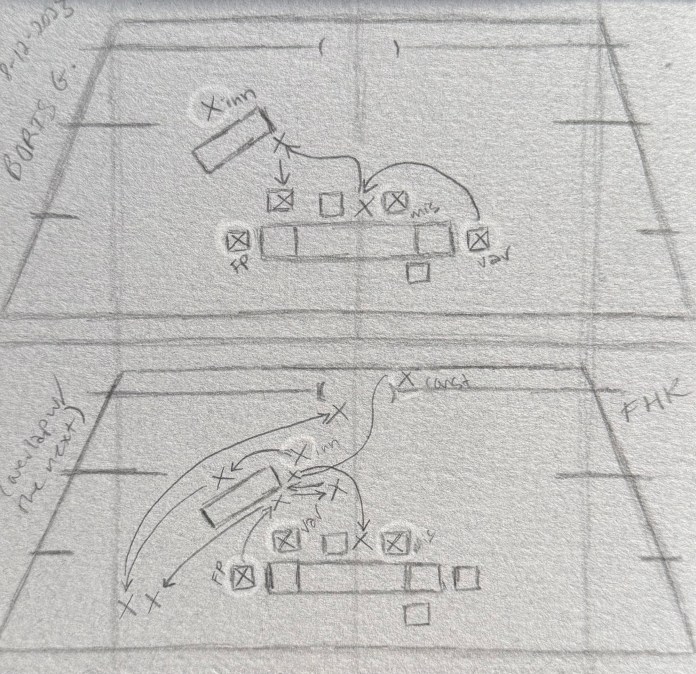
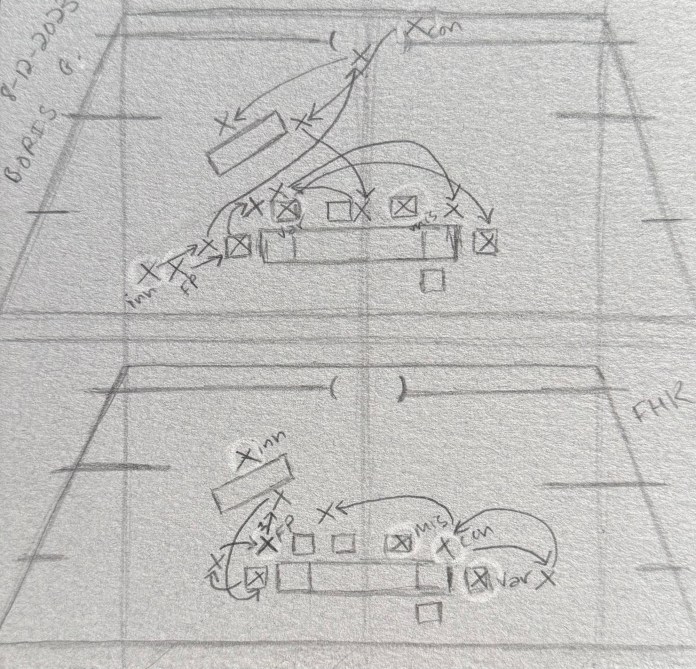
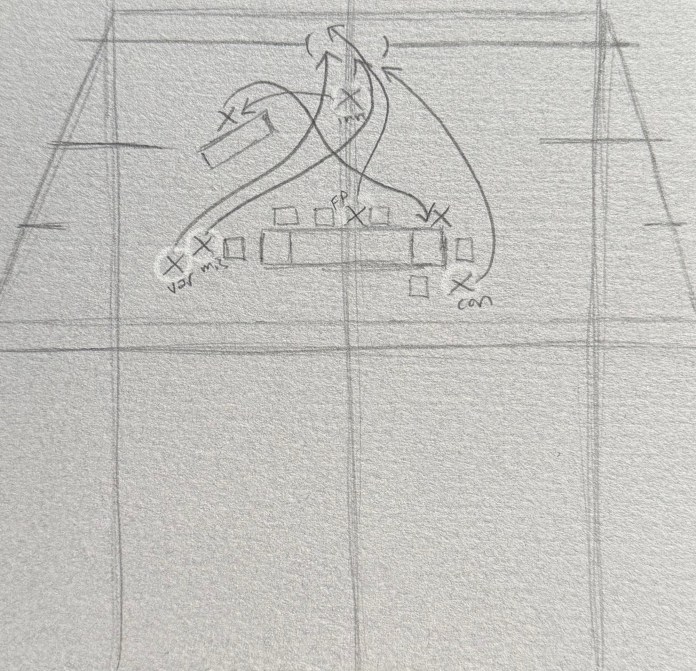
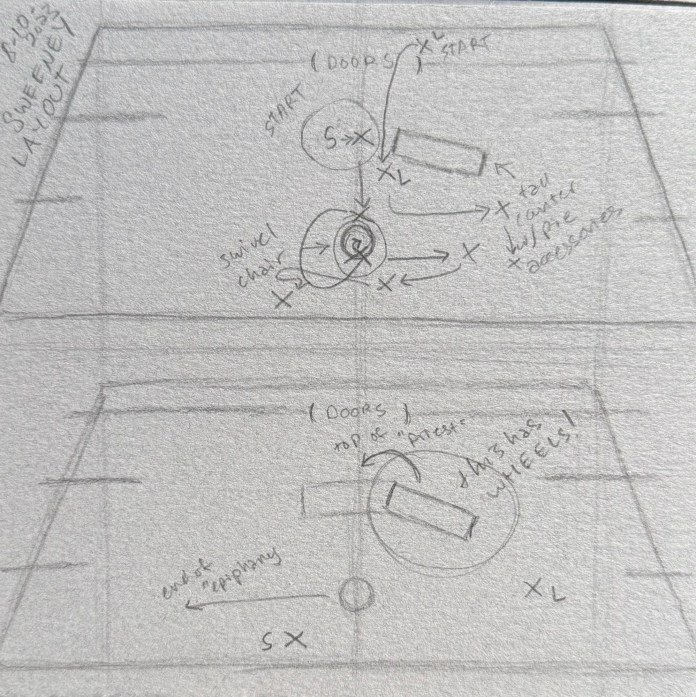
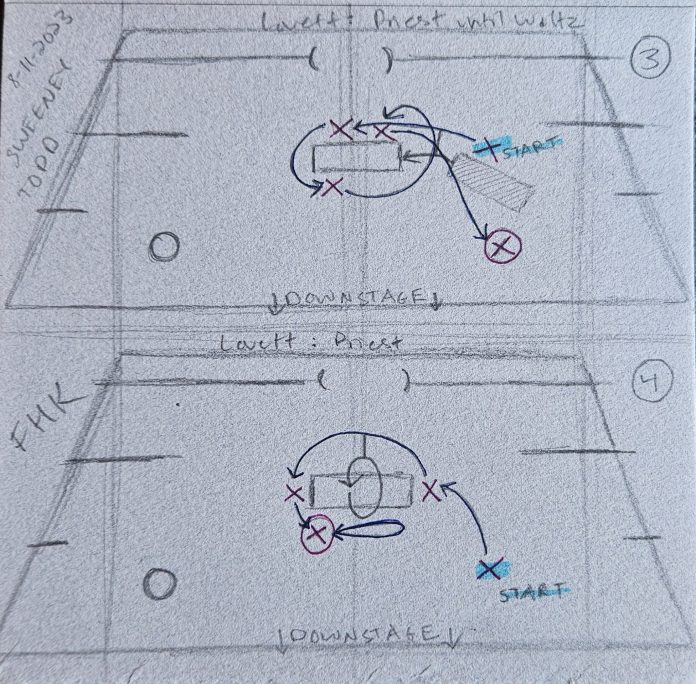
-practice taking multi-character blocking notation on the same page
-practice proportional representation of a stage area

While these sketches are quick, informal, and use quite a bit of shorthand, I believe I accomplished my goals–further, I believe I could easily recreate the staging of these scenes based on the sketches alone, two years later (precise stage business and use of props may be another story, however).

Each slideshow gallery contains the sketches from one scene, and is accompanied by information on the collaborators whose work or physical image contributed to sketch source material. The programs for all the Apprentice Scenes that year can be found here as well. Some of the physical drawings have been gifted away, but some remain in my records, and so the photos weren’t all taken at once, and may have some variation in lighting and quality. I also like to sketch on a non-white base paper when possible, but I’ve discovered this doesn’t always provide starkly visible contrast to pencil markings, unfortunately! All caveats aside, I’m glad to finally share them.

Enjoy!


Gianni Schicchi

Giacomo Puccini | Giovacchino Forzano
“Era uguale la voce…Addio, Firenze”

Gianni Schicchi | Joel Balzun
Lauretta | Lydia Grindatto
Zita | Michelle Mariposa
Ciesca | Emma Rose Sorenson
Nella | Nicole Elyse Keeling
Rinuccio | Lawrence Barasa
Gherardo | Garrett Evers
Marco | Brandon Bell
Simone | Luke Harnish
Betto | Younggwang Park

Conductor | Mark Morash
Stage Director | Crystal Manich
Pianist/Coach | Blair Salter
Costume Designer | Azaria Jade Rubio
Assistant Costume Designer | Matthew Palacios
Wigs & Make-Up Designer | Court Winterborne
Lighting Designer | Will Loconto

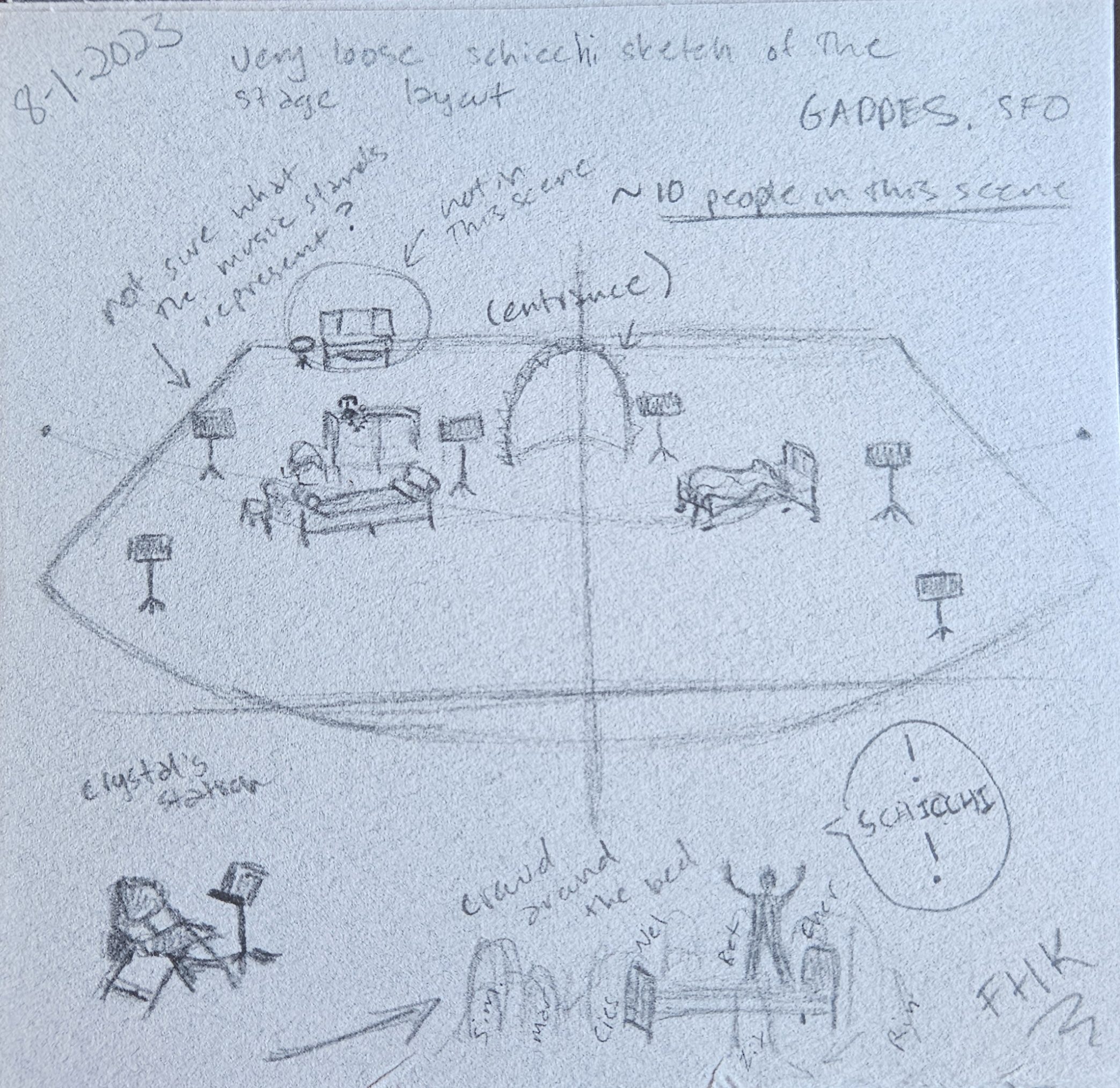
The stage from a tilted front perspective, with two sketches of the rehearsal atmosphere.
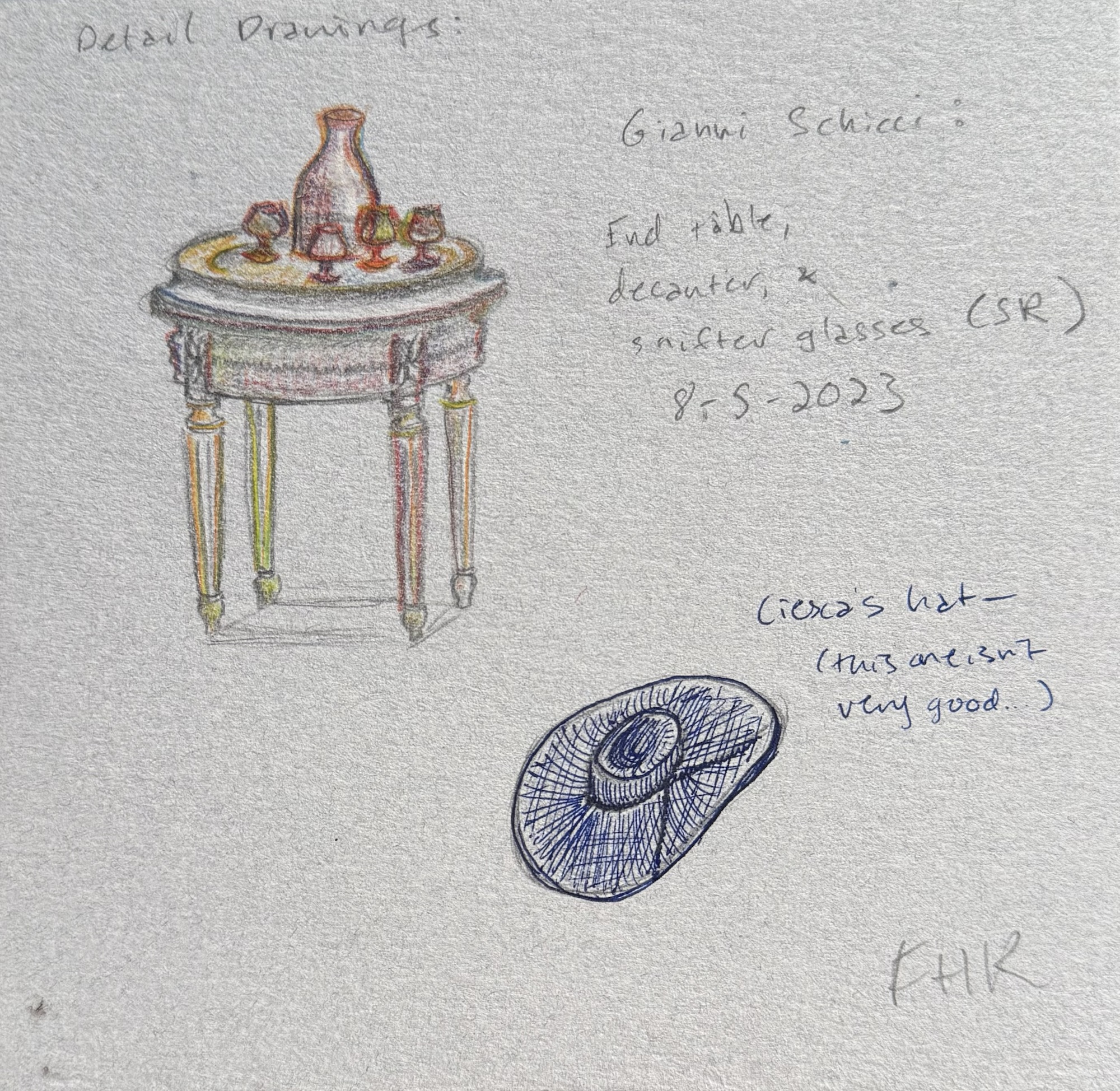
Detail drawings of furniture and rehearsal costumes.
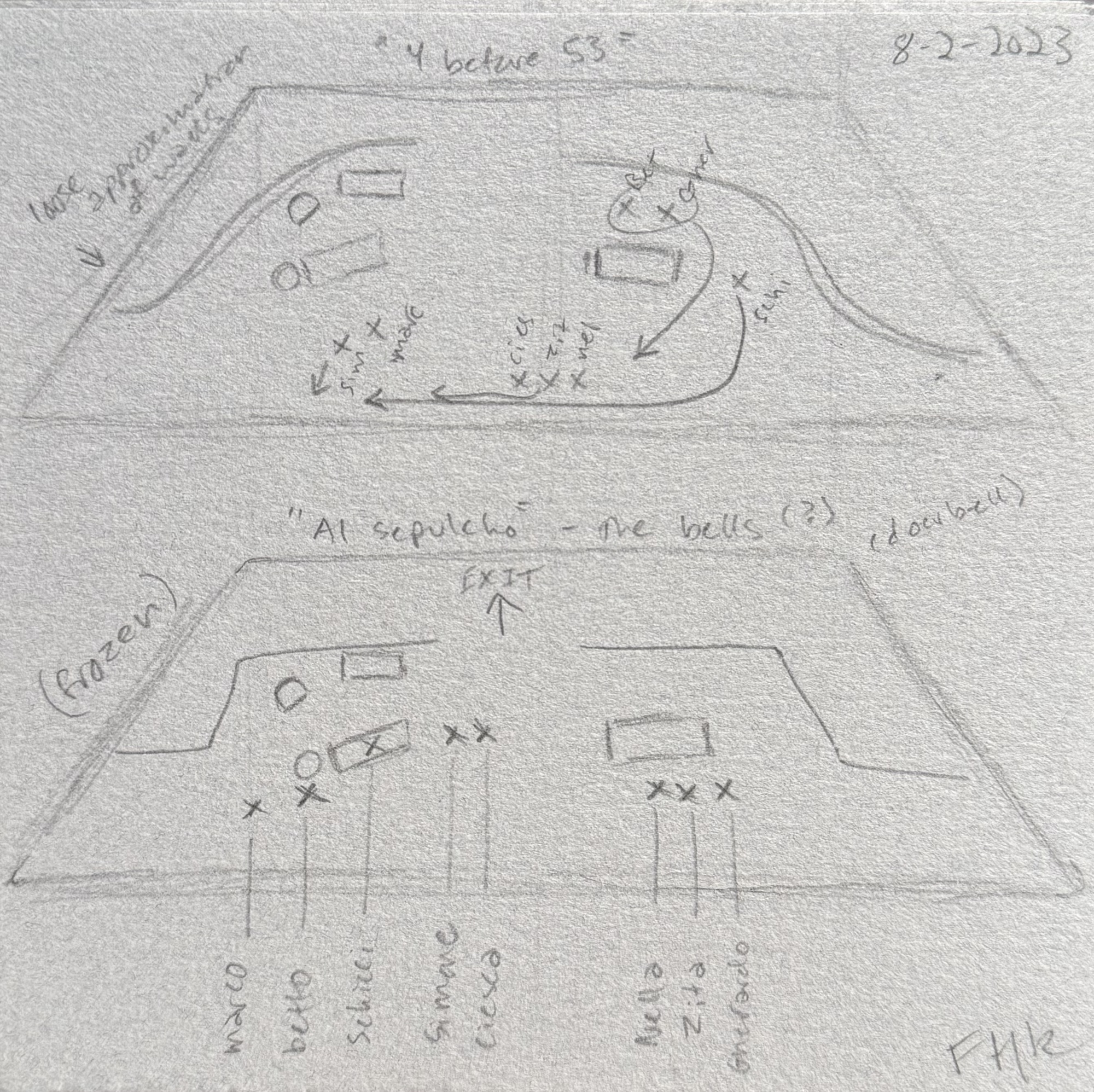
Top of the scene: the family discusses Gianni Schicchi.
The scene progresses; Schicchi arrives and the plan unhatches.
The scene continues; the family and Schicchi anticipate success.
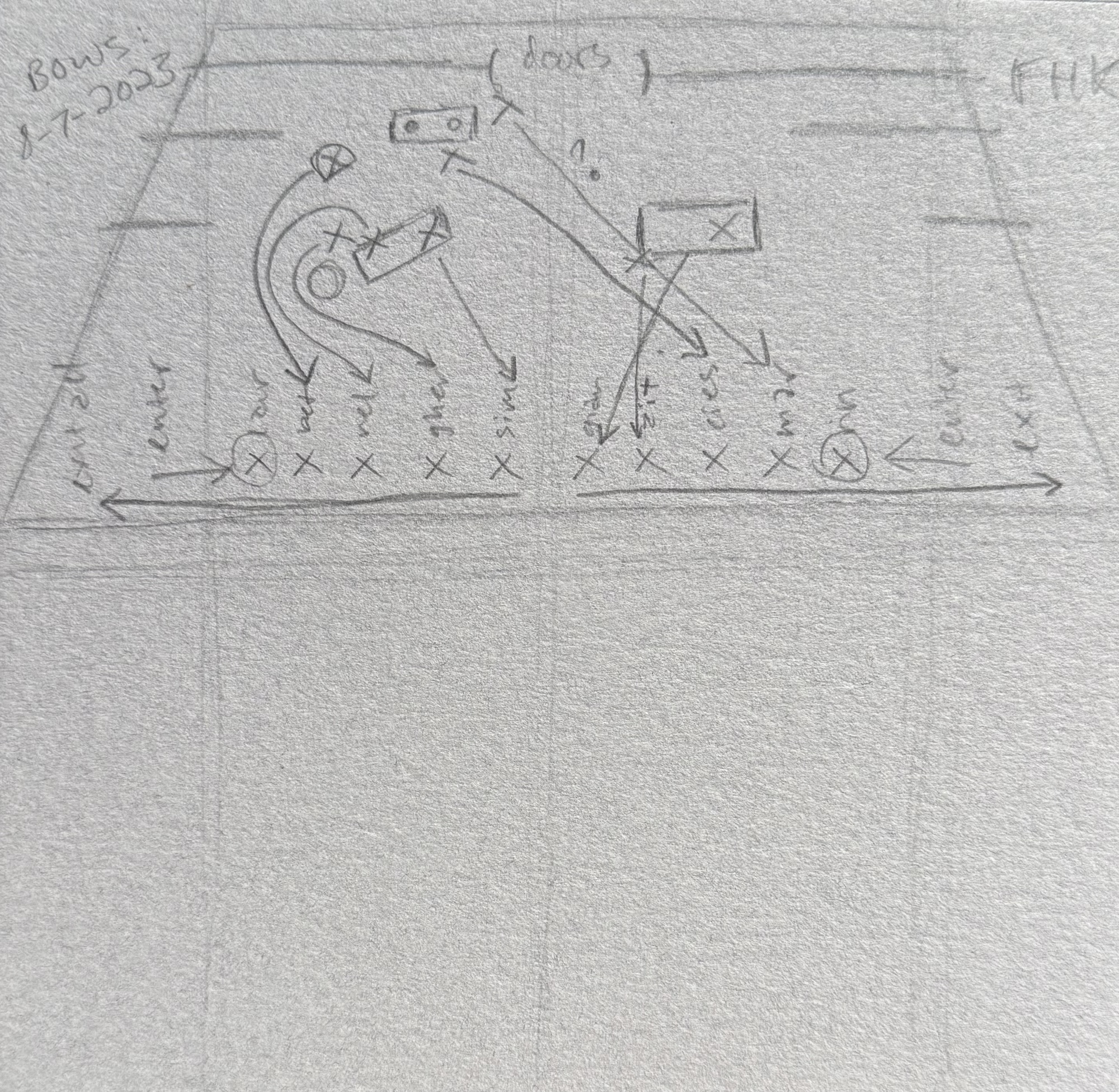
Bows!

La bohème

Detail drawings of a moment of staging and some furniture.
The scene begins; Rodolfo’s life is changed when Mimi walks in.
We move through two arias and a duet; the scene ends with the lovers leaving, full of hope.
Giacomo Puccini | Luigi Illica and Giuseppe Giacosa
End of Act I

Mimì | Caitlin Gotimer
Rodolfo | Daniel O’Hearn (Guest Artist)
Schaunard | Spencer Reichman (Off Stage)
Coline | Christian Simmons (Off Stage)
Marcello | Sam Dhobhany (Off Stage)

Conductor | Robert Tweten
Stage Director | Crystal Manich
Pianist/Coach | Anna Smigelskaya
Costume Designer | Aurora Azbill
Wigs & Make-Up Designer | Joshua N. Wisham
Lighting Designer | Eric Dahlgren


Boris Godunov

Modest Mussorgsky | Modest Mussorgsky
Quintet

Innkeeper | Gretchen Krupp
Varlaam | Le Bu
Misail | Spencer Hamlin
False Prince | Samuel White
Nikitic | Dylan Gregg

Conductor | Alden Gatt
Stage Director | Crystal Manich
Pianist/Coach | Anna Smigelskaya
Costume Designer | Gray Covert
Wigs & Make-Up Designer | Braxton Cooper
Lighting Designer | Brianna Maruco

Detail drawings of props and furniture.
The initial layout of the scene.
The scene begins; the innkeeper starts opening up shop.
The scene continues; different folks start to mingle around the table.
The scene progresses; some of the visitors are harboring secrets.
Chaos and confusion as someone is not who he says he is!

Sweeney Todd

Detail drawing of Sweeney’s barber chair.
The layout of the set and start of “Epiphany.”
Mrs. Lovett’s brilliant idea turns into a playfully violent duet.
Solo Lovett track, starting with “Epiphany.”
Solo Lovett track continues, starting “A Little Priest.”
Solo Lovett track, finishing the scene.

Stephen Sondheim | Stephen Sondheim
Epiphany and A Little Priest

Sweeney Todd | Spencer Reichman
Mrs. Lovett | Rebekah Daly

Conductor | Robert Tweten
Stage Director | Crystal Manich
Pianist/Coach | Carol Anderson
Costume Designer | Emma Rose Harrison
Wigs & Make-Up | Designer Jax Cornett
Lighting Designer | Brianna Maruco


And if you made it this far… consider asking me to be a part of your theatrical team; you’ll get sketches out of it, for sure.

Standard

Black vinyl flooring greets my boots, all specked with city dust
Containing flecks of concrete, stone, dirt, grime, and gritty rust:
But only a little bit of grit sticks upon my shoe,
And I track it through the gridded streets, off to somewhere new.
The soles of my feet carry a record of time and place
That keeps me grounded, so to speak, in this liminal space.

The Liminal

Image

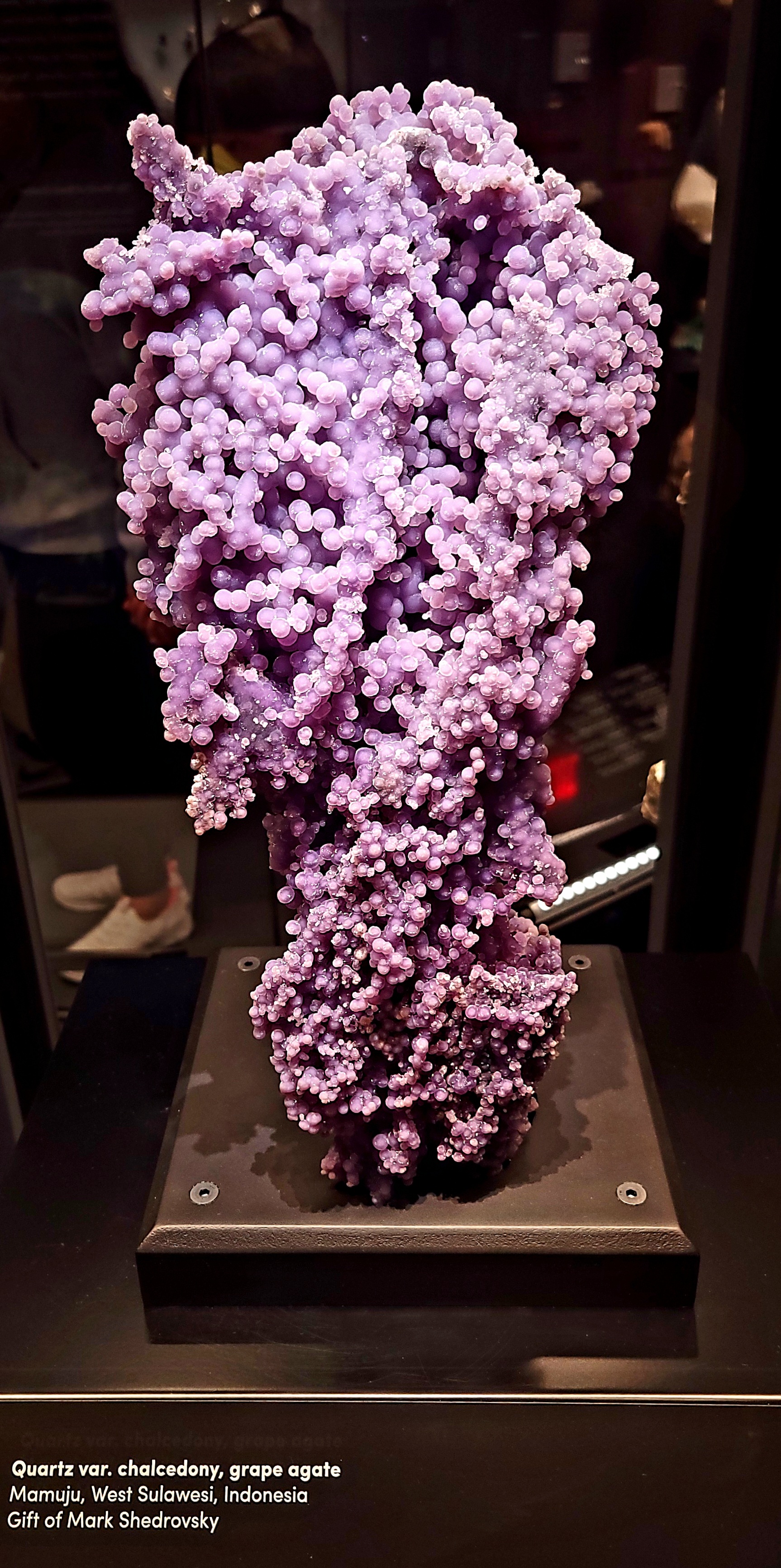
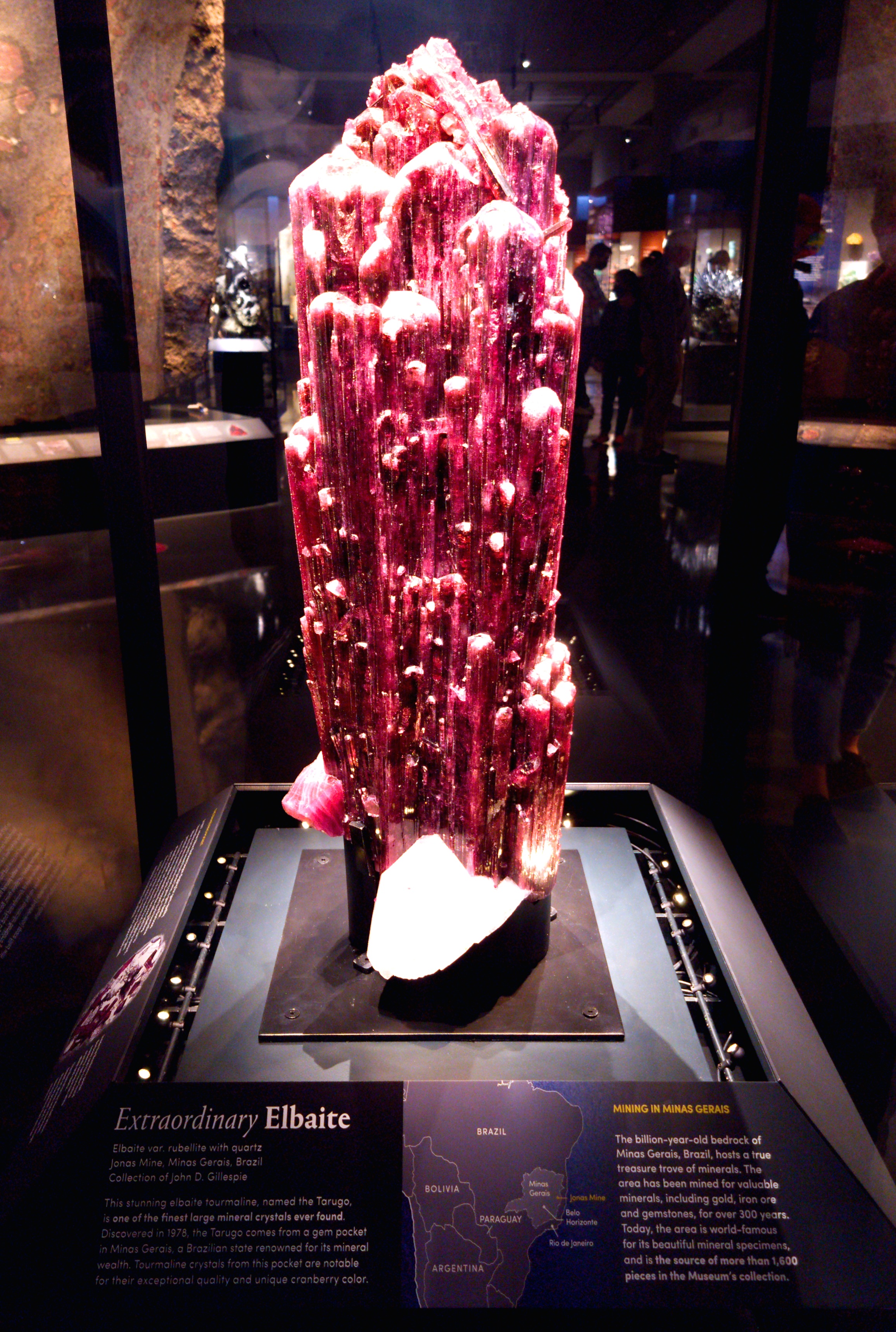
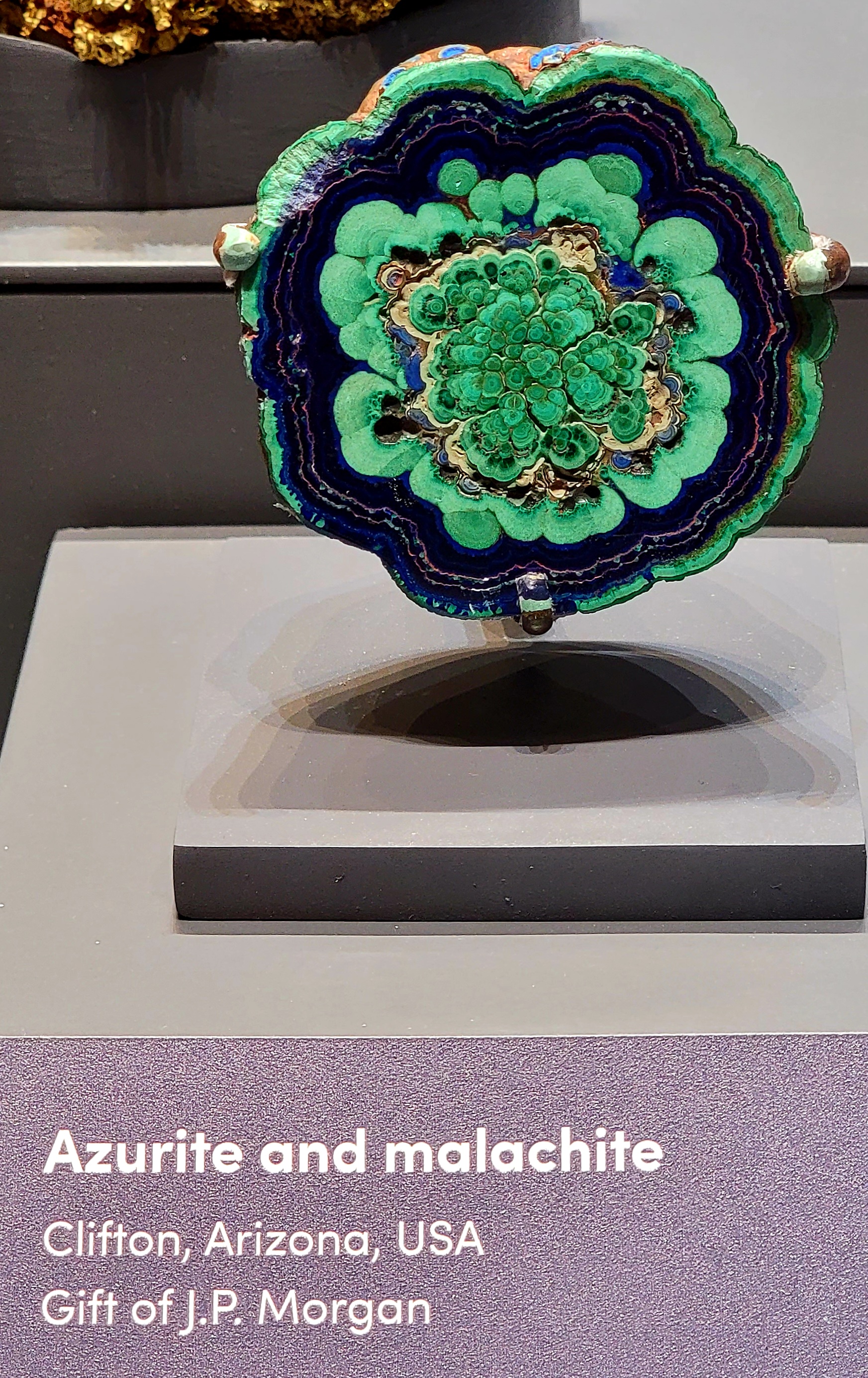
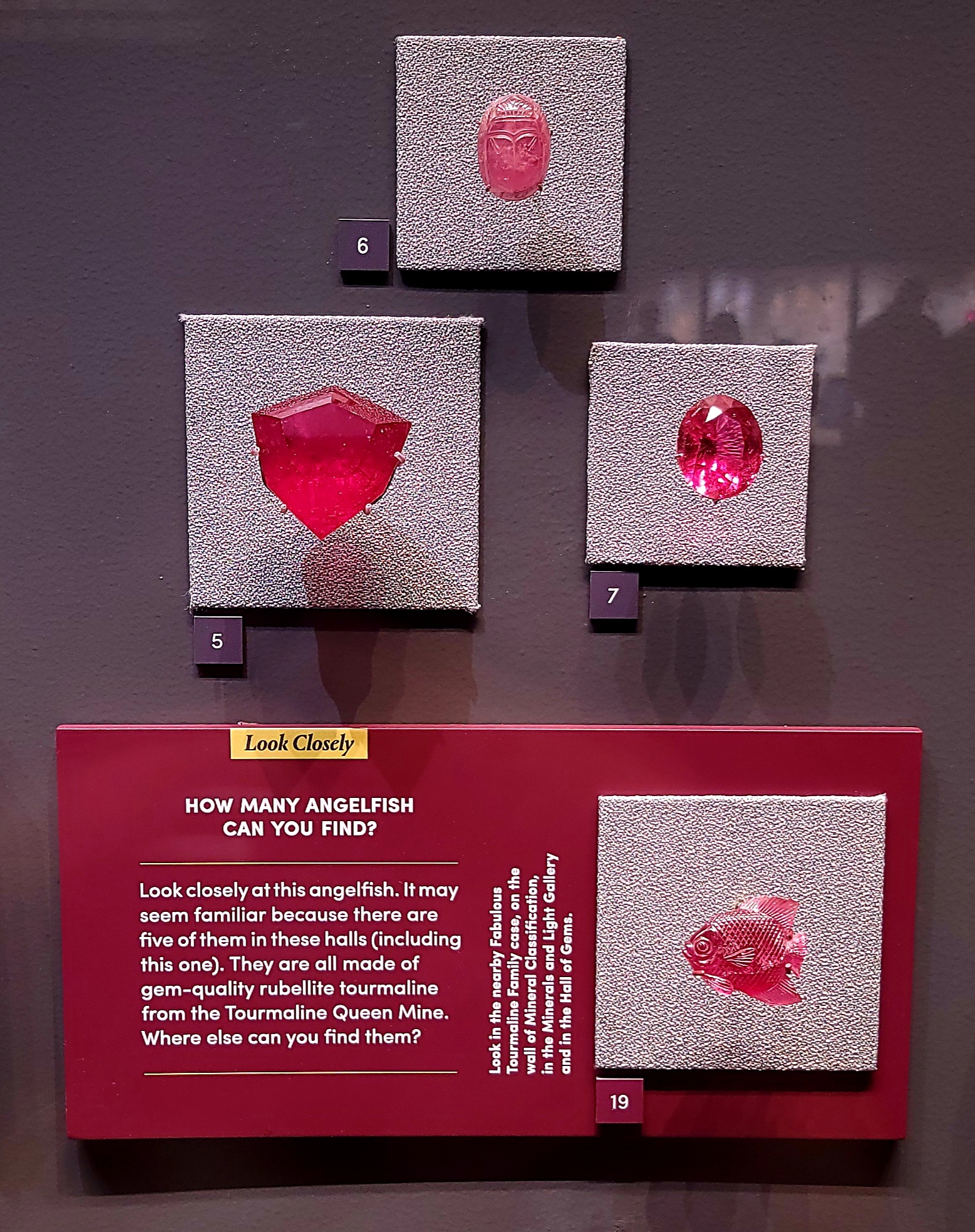
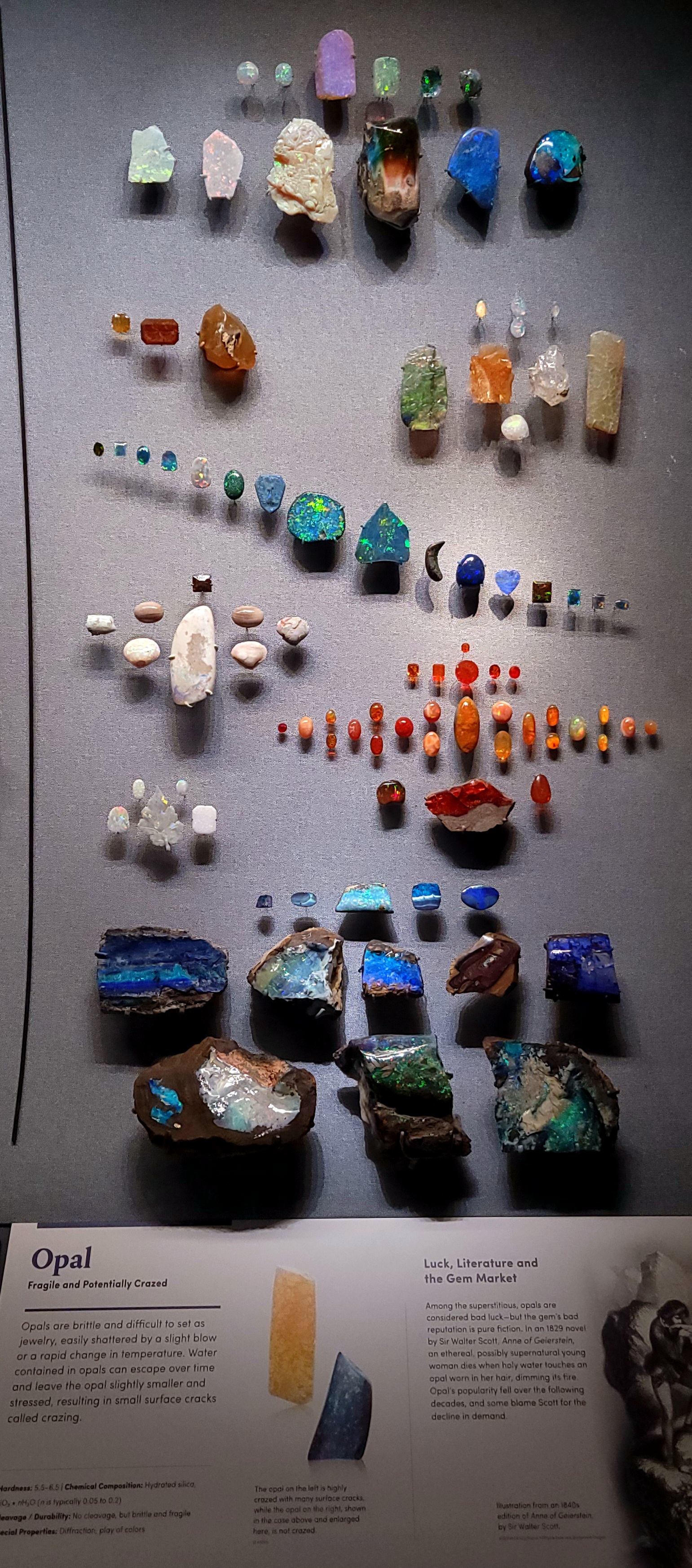
Illuminating Sparkle & Rock-Solid Foundation: The new Allison and Roberto Mignone Halls of Gems and Minerals at the American Museum of Natural History in NYC

I love rocks. Anyone who knows me can tell you this. I have loved them since I was a small child, poring over the geology pages of my children’s encyclopedia, lingering over the glossy images of fluorite, quartz, and sapphire. I remember studying field guides for fun, and effortlessly acing my science quizzes on volcanoes and tectonics. As an adult, I have a tiny gem collection of my own, and have become a bit of a connoisseur of gem and mineral displays of both the educational and commercial variety. I have seen the Smithsonian’s dazzling array, looked at every booth at the Denver Gem & Rock Show, combed Oregon beaches for loose agates, devotedly searched for a rare color-change garnet suitable for my engagement ring, and more. I always enjoy a gem & mineral display, but at this point it takes some real oomph to stand out.

The new Mignone Halls of Gems and Minerals at the American Museum of Natural History did not disappoint.

I and my partner chose to visit on April 22, 2022, which happened to be Earth Day—a fact we’d forgotten would mean attending the museum with dozens of school field trips and science-minded families. The added crowd turned out to be pleasant, however, as we got to see how people of all ages, particularly impressionable ages, interacted with the new exhibit. I couldn’t help but grin at each child’s reverent ”ooooooh,” uttered upon seeing a spectacular sparkle. Gems, ever fascinating, were very popular on Earth Day.

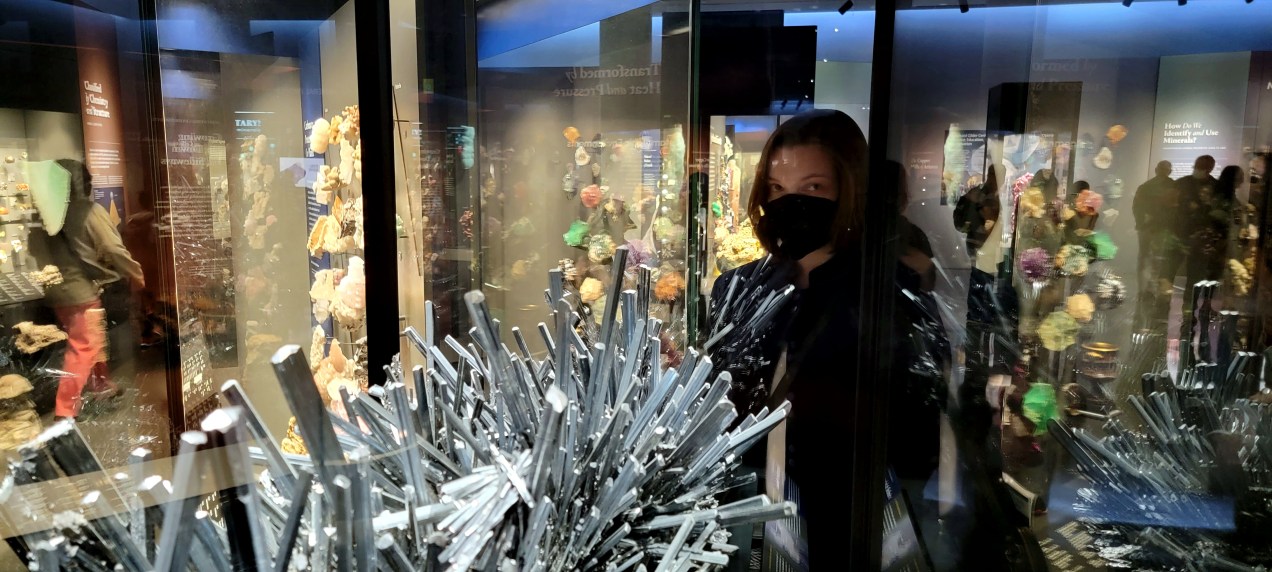
When you enter the exhibit as it currently stands, you’re immediately greeted by a colossal pair of amethyst geodes, cracked open and glittering deep violet. It’s a charming photo opportunity and serves as a bold welcome, showing visitors what is to be expected ahead.

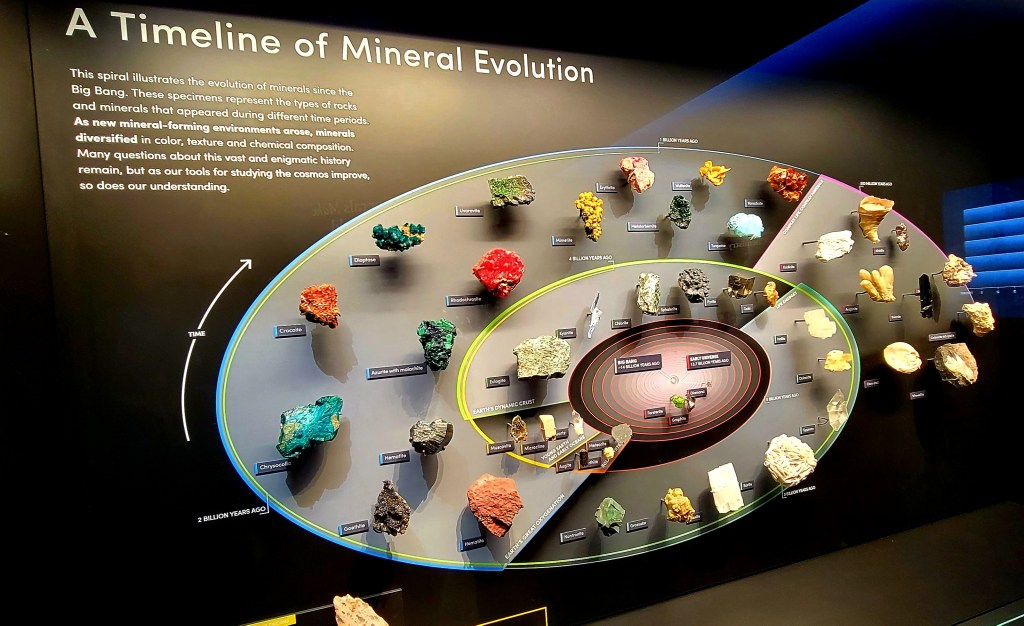
After the geode entrance display, we turned to the left, and it’s there that my great opinion began to form; the Mignone Halls are the only exhibit I have seen to include the concept of Mineral Evolution, which describes the changes through time from the Big Bang to now that chemically allowed new minerals to form. This provides a fantastic context for understanding what minerals really are and how they came to be, and I haven’t seen it so clearly laid out in any other setting.

The exhibit is also sure to point out the necessity of minerals to the existence of life, and how some minerals only exist because of life. I have rarely seen the vitality of minerals demonstrated so concisely, and of course accompanied by twinkling specimens and memorable anecdotes.

Further, the Halls outline the industrial, historical, and cultural importance of minerals and gems. Rocks and minerals are inseparable from human history, and gems have been objects of desire and fascination since before recorded history. Something I admired was that these displays professed the importance of function and form equally; self-adornment has held just as much value, culturally, as making tools.

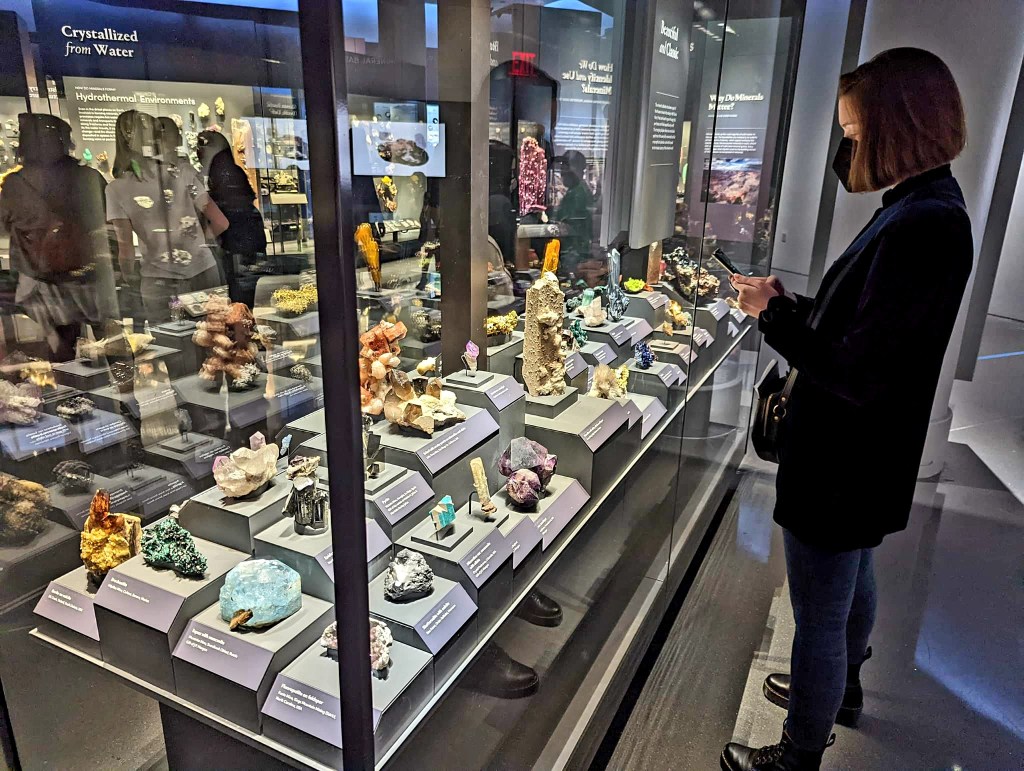
Throughout the Halls, we learn enough for a college course in geology; I would know, I took one. This includes but is not limited to: chemical classification of minerals, how to identify different minerals in the field, crystal growth & structure, social & environmental costs of gem mining, erosion & weathering, fluorescence, organic & synthetic gems, light & refraction, minerals local to the NYC area, Moh’s hardness, history of salt and its uses, plate tectonics, etc. This is all delightfully accessorized with enormous specimens, some of which we are even encouraged to touch. Interactive displays help to cement the day’s learning and add a playful element to it, and seemed to be enjoyed by kids and adults alike. Lastly, we are treated to a fully-stocked jewel-box alcove simply clustered with some of the finest gemstones ever found and faceted.

Entrance to the Mignone Halls of Gems and Minerals is included with general admission to the museum, and I highly recommend a visit. We wandered the space for about three hours, having fun admiring the specimens and trying to guess what they were before checking their information on the placards below. The whole exhibit is thick with information, some of it easier to absorb if you’ve had prior introduction to scientific concepts, particularly chemistry. A visitor can easily spend hours reading up on rocks, or enjoy a gleaming stroll through the treasure hoard; if gemstones happen to hypnotize you, you’ll be a happy visitor indeed.

Standard

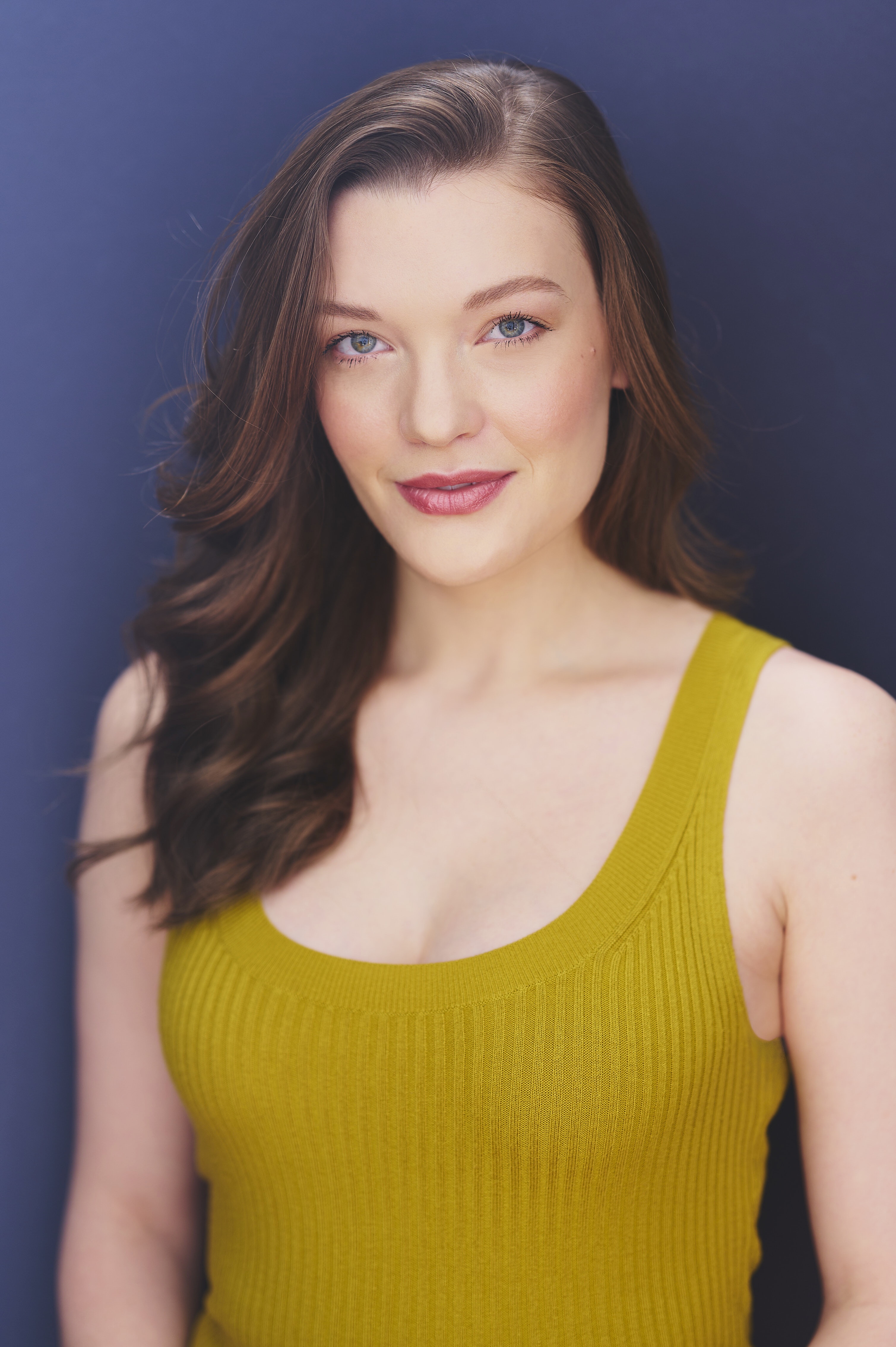
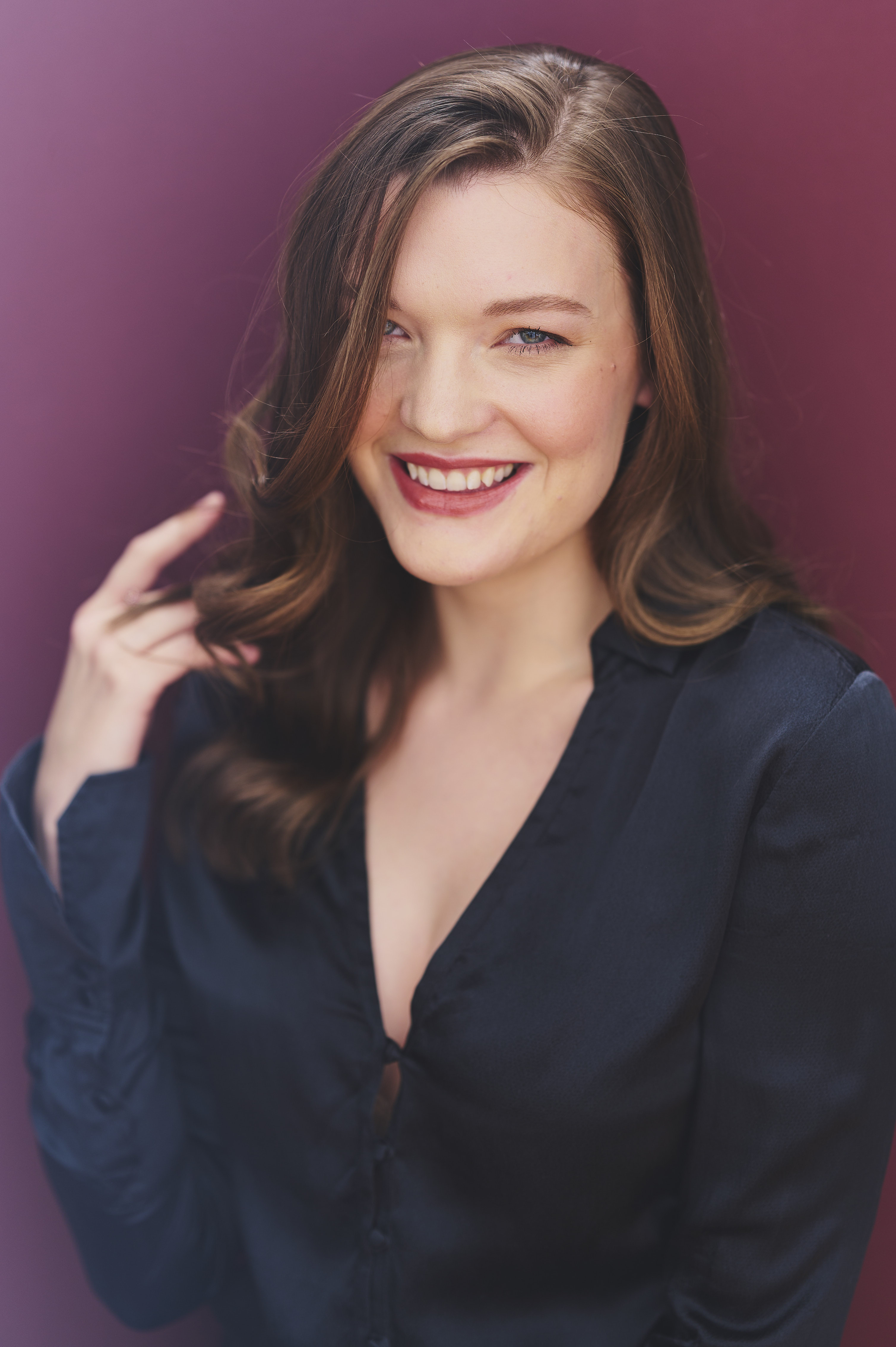
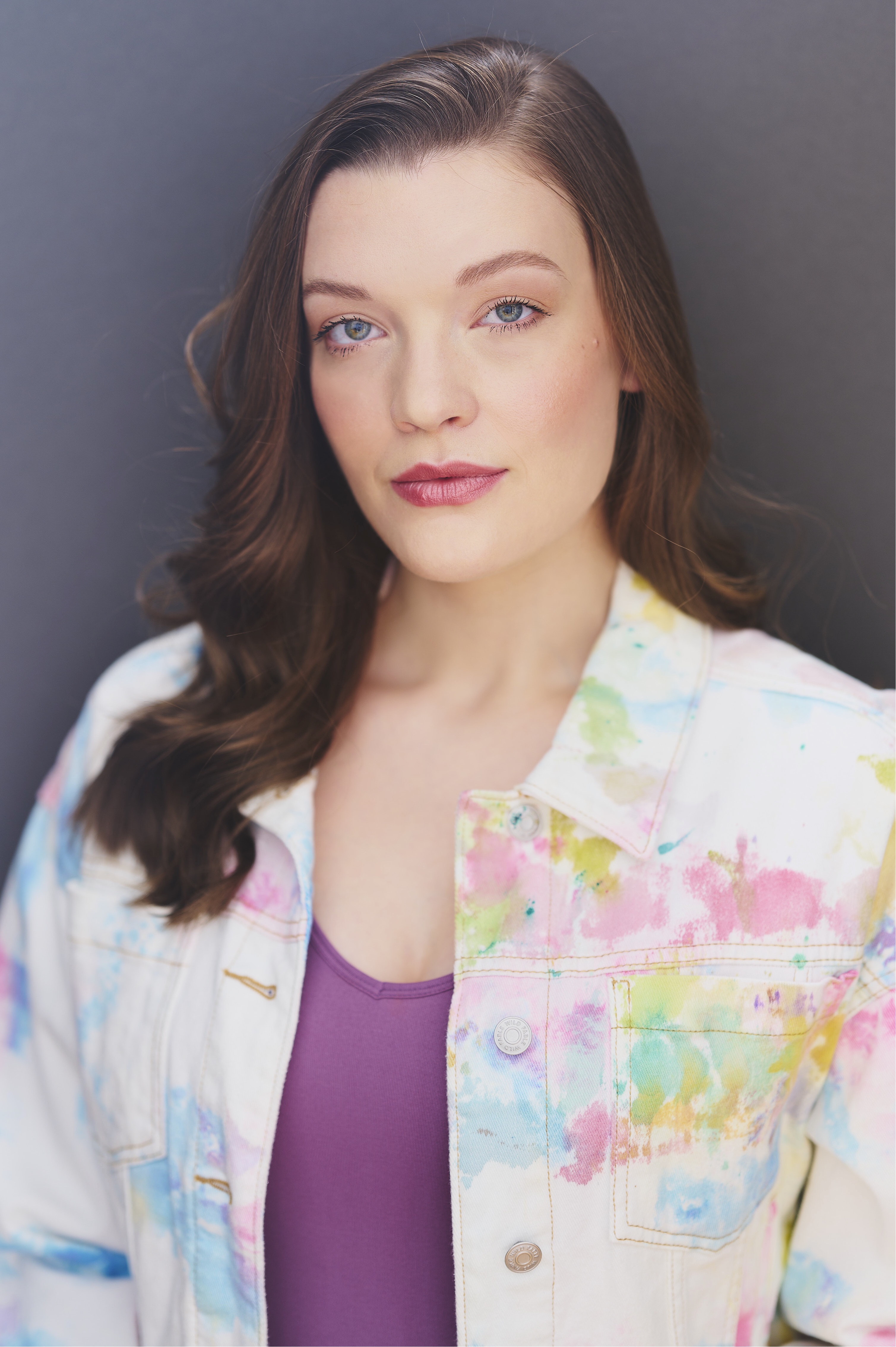
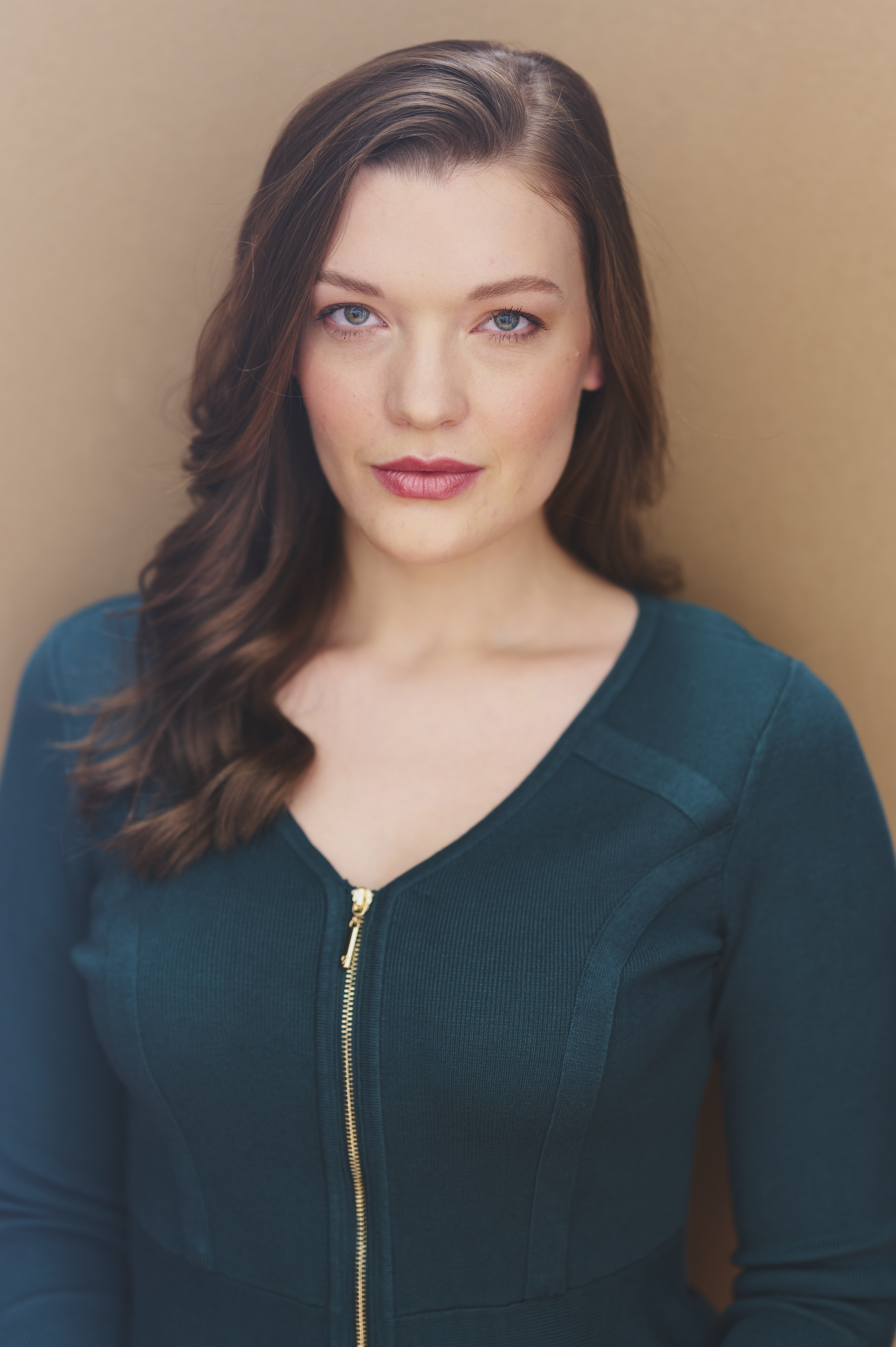
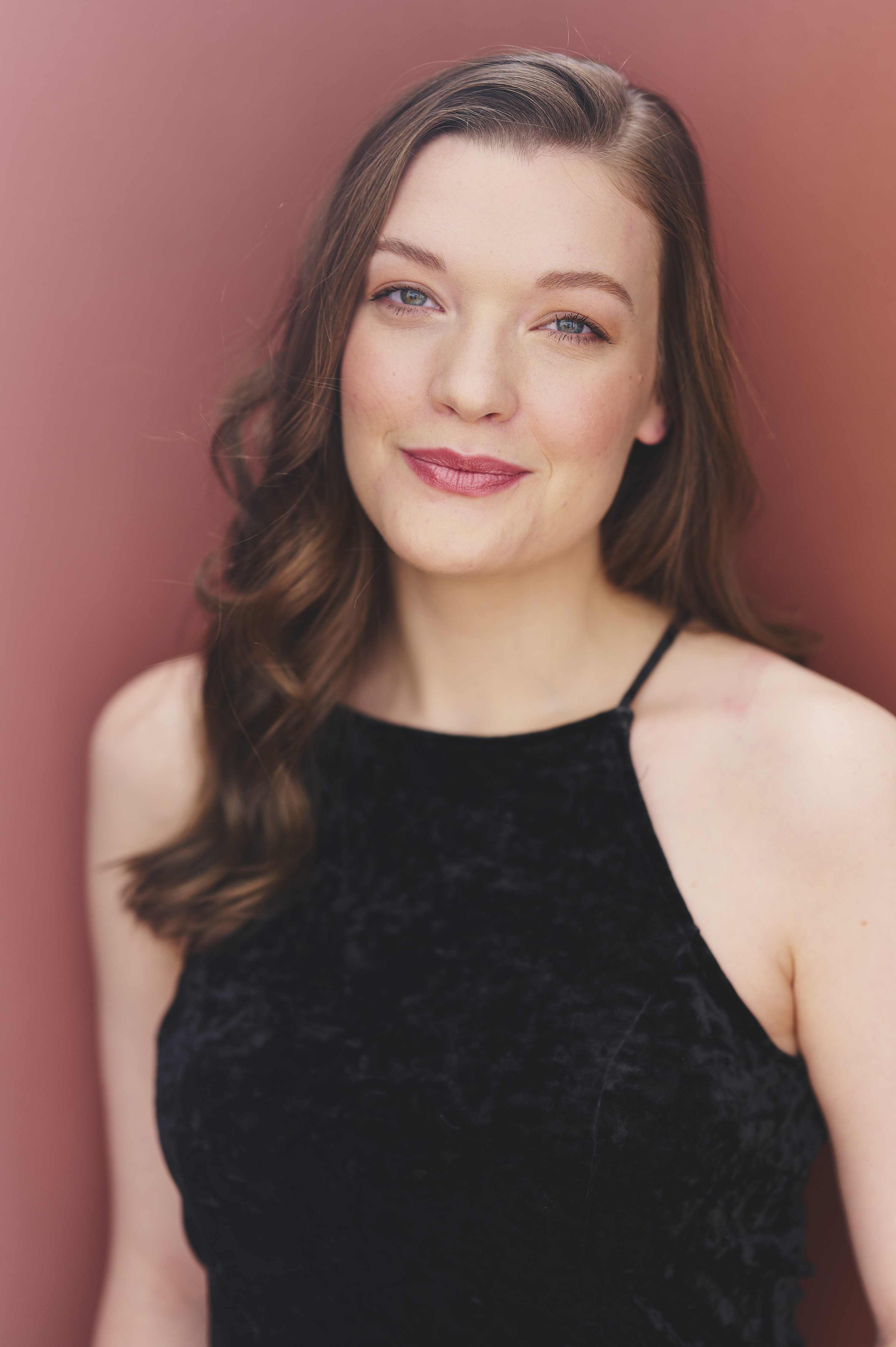
I got new headshots from Ricky Gee Photo recently, and I’m just sharing them here because I’m totally delighted with them!

What do these “say” to you, when you look at them? What are your first impressions of each and/or all? I am always seeking outsider input as to how I’m perceived; it’s vital research to do in the entertainment business!

Headshots!

Image