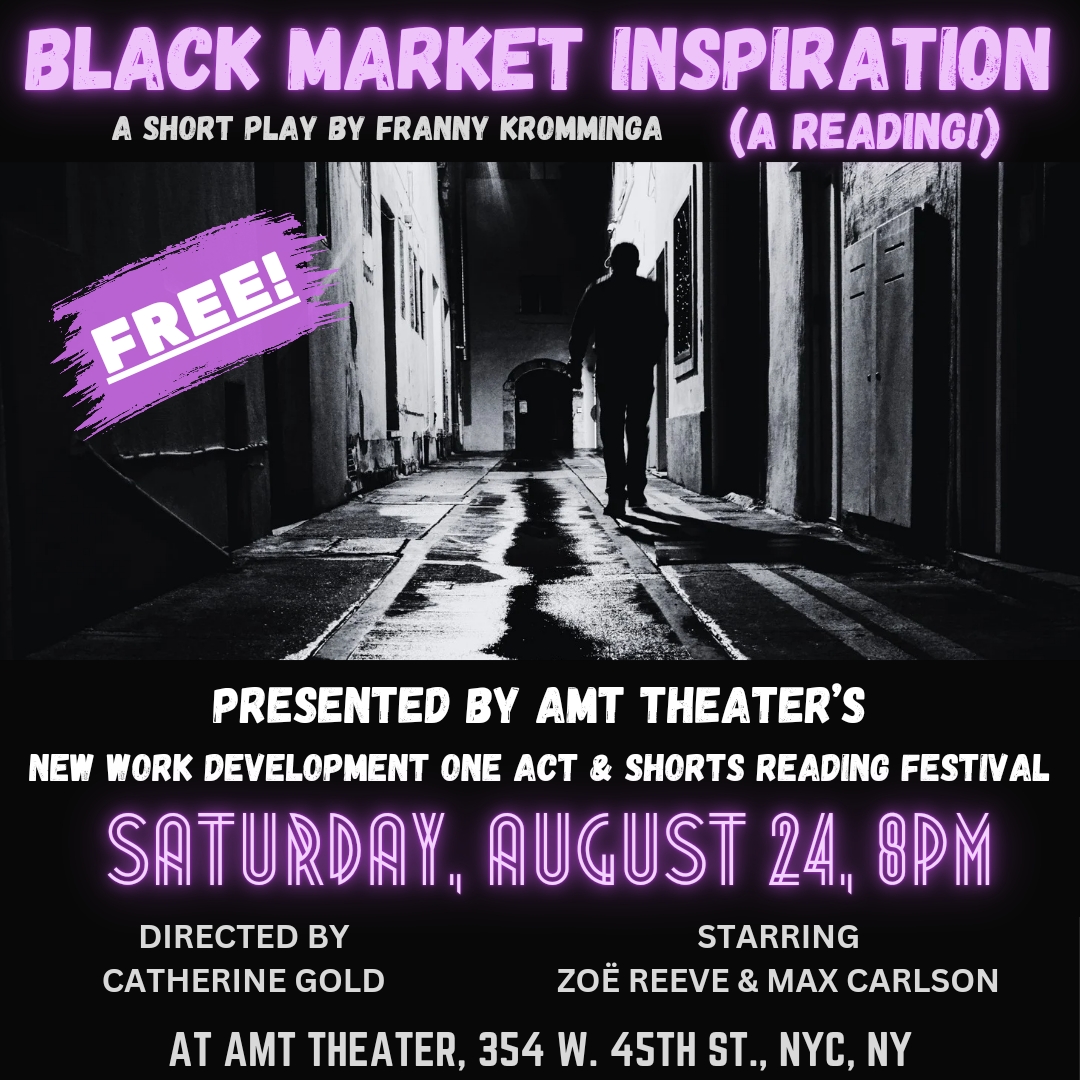
“Black Market Inspiration,” a Short Play

In January of 2020 (I know, right?) I was suddenly possessed by a weird little idea.

This happens to me fairly often, but the various ideas are rarely similar to one another. It’s always a moment of zingy clarity, like taking the first sip of an icy lemonade. It’s like a chilled refreshment arriving to solve a nagging thirst you weren’t even quite aware of yet.

In any case, this idea was a script. A snappy 10-minute two-hander of a play, in which the dialogue changes every performance–and no, it’s not improvised.

It was a typical late January day in Denver, Colorado: shallow drifts of tired snow draped the landscape, and nobody felt like doing just about anything, myself included. As a long-time Pinterest devotee, I was scrolling my feed, swiping away the crafts and clothes in favor of something a little less tangible: motivation. The wise and successful among us have published plenty of pithy proverbs over the years, and I was in dire need of inspiration. No quote quite encapsulated what I needed to feel in order to get going, however, and I kept searching, searching, searching for more.

That escalation of need, in which nothing you encounter is quite enough for you, and where there is a sort of substance that acts a substitute for genuine meaning… that reminded me of something else, which perhaps you might buy in a back alley somewhere. Stereotypically speaking.

Thus was born Black Market Inspiration, a play about the moment between inspiration and action, about when motivational quotes are just chronic avoidance in a pretty, prose-y package. There are two characters, a seller and a buyer, and lots of little plastic baggies full of white stuff–you know, little scrolls of white paper with quotes printed on them!

I wrote the whole thing in a day (admittedly… it is only 10 minutes long). And while the initial idea was the driving force, I’m equally delighted by what I would call the script mechanics of the piece: the script is made up of about 60% attributed quotes, and only a few of those are designed to remain static in every production of this play. The rest of the play can (and in my opinion, should) be memorized in terms of structure. This means the actor can then organically, in the moment, pull and read random quotes that are on the prop scrolls, and still be able to maintain the rising and falling action of the play. The script notes how to accomplish this, in context, via staging directions.

I chose to incorporate this element of unpredictability specifically because this is a PLAY, intended to be performed live. Sure, there’s a polished version that could be an excellent short film, and maybe I’ll experiment in that direction sometime, but the final product would lose all the charm of idiosyncratic experience, which is what live theater is all about. What an audience deserves is consistency, but what it wants is something one-of-a-kind, unrepeatable. This is why so many people love when something goes just a little bit wrong onstage, or why concert-goers collect set lists. There is magic (and marketability, now that you mention it) when you can combine consistent performance with a little bit of controlled mystery.

I have always loved when shows are able to tap into this unique energy; two examples from my musical-theatre-brain are The 25th Annual Putnam County Spelling Bee, and The Mystery of Edwin Drood. Both of these pieces utilize planned chaos: Spelling Bee brings up audience members to “compete,” and Drood, with the original novel left unfinished by author Charles Dickens, allows the audience to vote between several possible endings. This is by no means a new strategy, but I find it’s an important and delightful way to distinguish the value of live performance separately from recorded media.

So, I mentioned I wrote this in 2020, and it’s currently 2025… you may be wondering what happened between then and now.

I submitted it to a few short play competitions, and then the pandemic hit, and I let my nicely formatted document slumber in my Dropbox for four years. Then, in the summer of ’24, my director friend Catherine posted on Instagram, looking for playwright collaborators to submit to a competition/festival at AMT Theater in NYC. I happened to see her post, nearly submitted my script too late, and completely forgot about it afterwards, expecting another rejection. I was totally surprised to be informed that it had been selected after all, for the New Works Development Festival at AMT. My little kindergarten-age script would finally learn to read receive a reading.

That reading took place in August 2024, and I actually had the wherewithal to record it. The chutzpah to edit and publish, however, only arrived last week. Enjoy!

With enormous thanks to AMT Theater and my terrific team:
DIRECTOR: Catherine Gold
PERSON 1: Zoë Reeve
PERSON 2: Max Carlson
Standard

Social Media, the Attention Economy, Art, and Ethics

I have a fraught relationship with Social Media.

It’s wonderful to be able to keep tabs on long-distance friends and relatives, to be able to share thoughts and photos instantly… but it also feels like a moral failing, contributing my labor (however minuscule) to the Attention Economy: allowing Meta, or TikTok, or Twitter, to profit from my ability and desire to communicate and connect with others.

I certainly haven’t always felt this way. I was in 8th grade in 2008, and I vividly remember borrowing my mom’s work BlackBerry for hours after school, sorting through the mobile-incompatible pages to look at Facebook “flair.” We didn’t have regular internet in our home until after I had gone to college, but I still somehow managed to post a LOT of unfiltered, deliciously cringy Millennial-era content on Facebook, which I’m slowly deleting even now. Instagram followed thereafter, and I joyously posted grainy food pics and selfies along with some of the earliest adopters. Twitter was, controversially, my favorite, because I loved reading everyone’s quippy “live-tweeted” thoughts.

This was before those platforms changed, removing chronological feeds, and monetizing via (even more) ads, shopping, and subscription “verification.” This was before I knew what an algorithm was. This was before “meta” was Meta, before Elon Musk bought Twitter, before ChatGPT and Sora, before I had read Digital Minimalism by Cal Newport, before doomscrolling.

The fact of the matter is, Social Media has led us into a new economic model: the Attention Economy. Just like how printed newspapers sell ad space inside, based on their readership, so too can online platforms; the difference is that a newspaper ends on a daily basis, and a website can be endless. Social Media sites earn more money the more time that viewers spend perusing them, and so they are financially incentivized to make those platforms as time-absorbingly addictive as possible–and they do. These platforms have increasingly homogenized, and these days they all operate exactly like slot machines: you never know what each swipe or scroll may bring, and you’ll never get the same page curated twice. Personalized algorithms create bubbles of feedback which uncritically reinforce our views and increase social divisions. The barrier of the internet lets some people feel safe to bully and harass, protected by distance and anonymity. Bot farms produce hundreds of thousands of comments, which can be inflammatory, misleading, or both. Now AI muddles our perception of reality, throwing additional confusion into a time period where “Truth” is both a Social Media platform and a vicious debate. Perhaps worst of all, the Attention Economy steals our time, energy, motivation, dreams, while we barely notice it.

In a society where the average person already makes too little money, the Attention Economy preys upon the last possible resource we have to give: our time. We freely contribute to this maelstrom, in the hopes of getting a tiny fraction of that attention back–in the form of business traffic, outside validation, or internet fame–but there’s no guaranteed return on investment, and the cost is steep. In recent years, more and more studies on Social Media’s effects on us have come out: we know that our attention spans are shortening, our tolerance for mental discomfort is lessening, our memories are suffering, and our collective social stress is through the roof. Unsurprisingly, the same billionaires who head these platforms keep screens away from their own children, sending them to analog schools and keeping their faces offline. Through Social Media use, our self-perception warps, leading to decreased self-esteem, body image issues, and such dystopian trends as “Instagram face.” The popularity of AI has made all of these issues exponentially worse, from the spread of misinformation and scams to increasingly unattainable self-expectations.

“So, Franny, it sounds like you just hate Social Media.”

Well, no. On the bright side, Social Media is in many ways a great equalizer in terms of connection and opportunity, and has completely changed the game when it comes to operating a business and generating publicity. It has enabled thousands of ordinary voices to be heard, artworks to be shared, and vital news and information to be transferred, all faster than ever before.

Herein lies the personal conflict: I’m an artist. I write, paint, take photos, sing, perform. An artist’s job is to share their art, therefore, I must publish my work: moreover, I believe in increasing access to art as a whole. Because of the way the world has developed, these platforms continue to be the most accessible way to share a message or image with others, and to grow a community. If you are hoping to communicate an idea quickly and/or internationally, Social Media is perhaps the poor communicator’s only option.

This instant globalizing prowess has always been the charm and value of Social Media, but as it currently stands, when I myself am trying to cut down on a doomscrolling habit that I’m sure has negatively impacted my life, is it reasonable to ask others to keep scrolling for MY content? It’s the same reason I was a terrible salesperson back when I worked on commission at the makeup counter at Kohl’s: how could I possibly ethically persuade someone to buy a product, when I couldn’t afford it, myself? I may not have known a customer’s financial situation, but I know for sure they didn’t need a $50 eyeshadow palette… and it has always felt predatory to pretend otherwise.

I stopped posting as actively on Social Media back in November 2020, when that USA election cycle, combined with the COVID-19 pandemic, proved that every online disagreement was fruitless (at least at that time). I deleted Twitter the day it was sold. I wiped my TikTok profile earlier this year. And yet, despite my own choices, I am still scrolling, and still susceptible to twinges of envy when I see others freely, seemingly guiltlessly, sharing.

This blog, The Franifesto, is in part a manifestation of this frustration: I wanted a place of my own, where my opinions are less likely to be subject to censorship and algorithm, where I can post any amount of any kind of media, structure it any way I like, and control my narrative… but, of course, it completely lacks that magical element of community. It seems I must share more consistently on those flawed, established, popular, annoying platforms, but I worry about the hypocrisy of doing so. Posting there seems to puncture my points.

In the end, I know it’s not my job to make the choice for others whether and what they consume, and how much. Why not my work? Has my microscopic protest withheld anything from those in power? Or just from myself?

Paradoxically, the ability to incite change in this unsatisfactory system will almost certainly require participating within it.

Perhaps it’s enough to be aware of the conflict, acknowledge it, and make a post to talk about it. Perhaps it’s enough to ask other artists, and other doomscrollers, what they think. Perhaps it’s enough to simply use what tools we have, while they exist.

So: what are you doing, about/with/for/against/because of Social Media?

Lately, I’ve been:

  1. Implementing a weekly no-scroll day (Wednesdays for me. If I accidentally start, I just stop as soon as I realize.)
  2. Trying to limit my scrolling to ~2 hours or less a day. (Shamefully difficult.)
  3. Trying to engage with Social Media intentionally (such as actively liking my friends’ content, amplifying speakers from historically underrepresented groups, sharing important information, advocating for causes).
  4. Engaging in long-form attention habits (meditation, studying a new language, reading books, creative hobbies).
  5. “Create more than consume.” Of course the creative cycle requires consuming new media, knowledge, connections, inspiration, but it’s easy to get out of balance if you never synthesize what you’re consuming into something new. (Digest it, if you will, or you’ll end up creatively… blocked.)

All this to say… take a scroll break. Unless you like my work. In that case, I guess, take a break after you’re done reading. 🖤

Standard

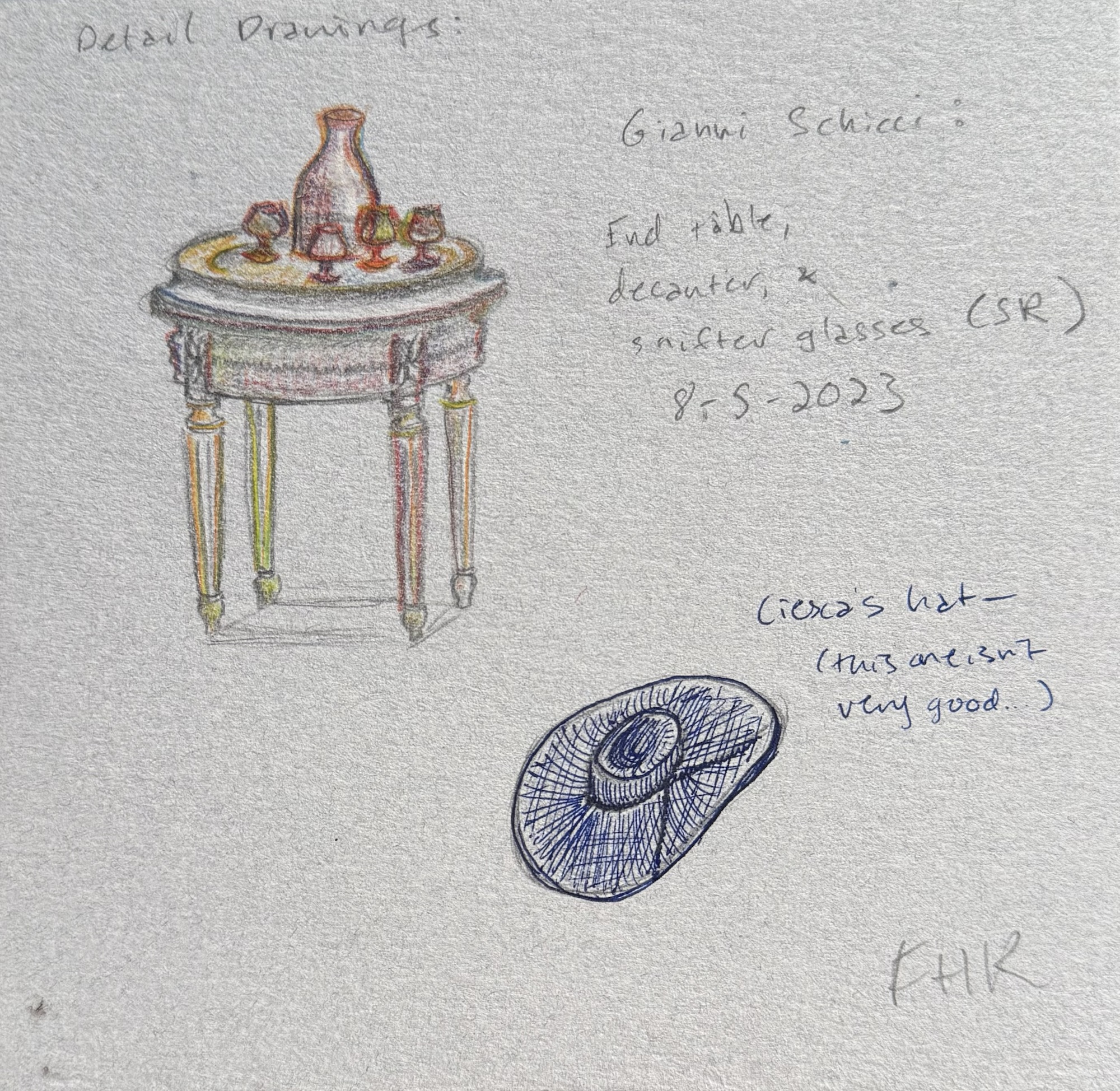
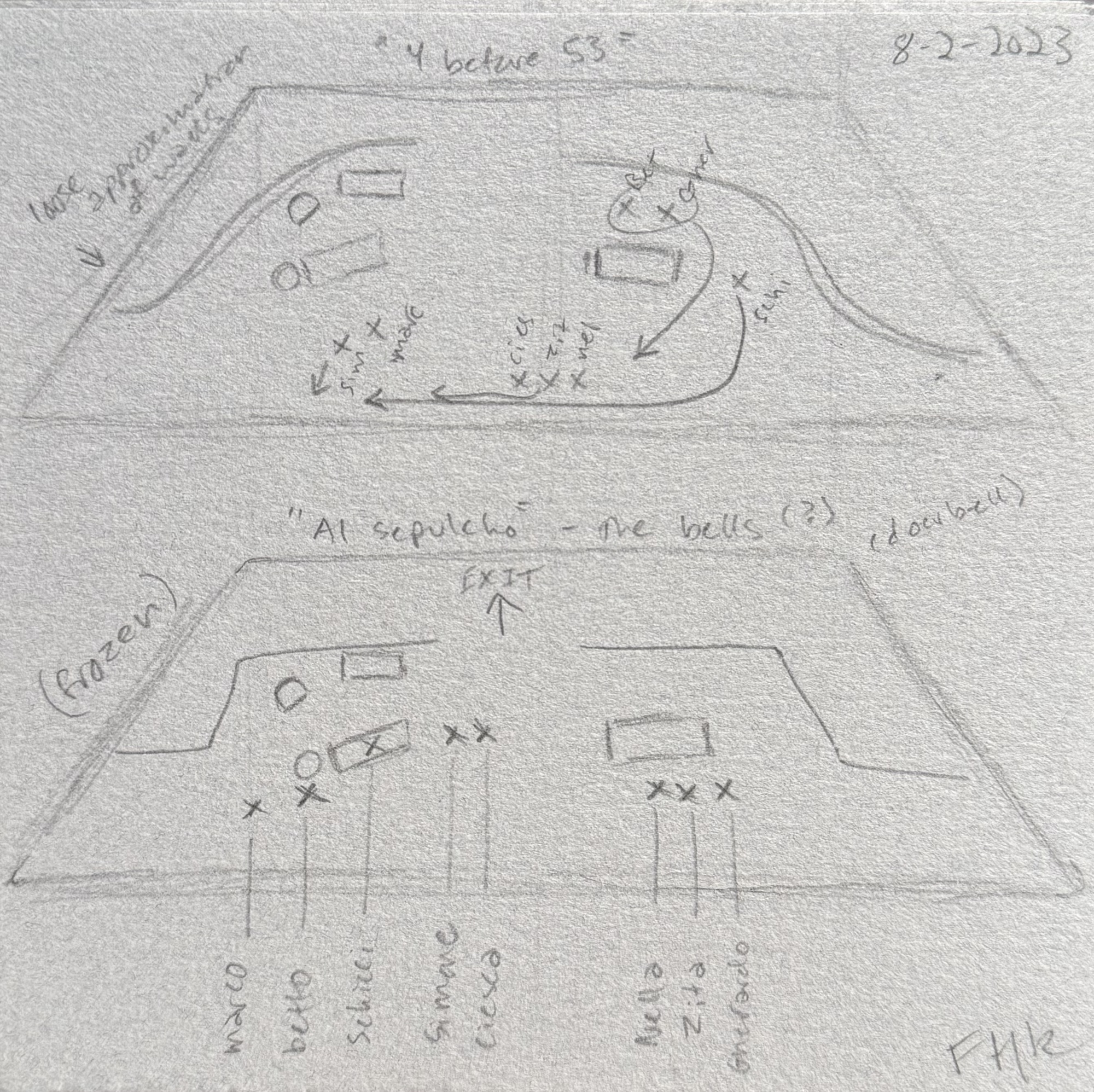
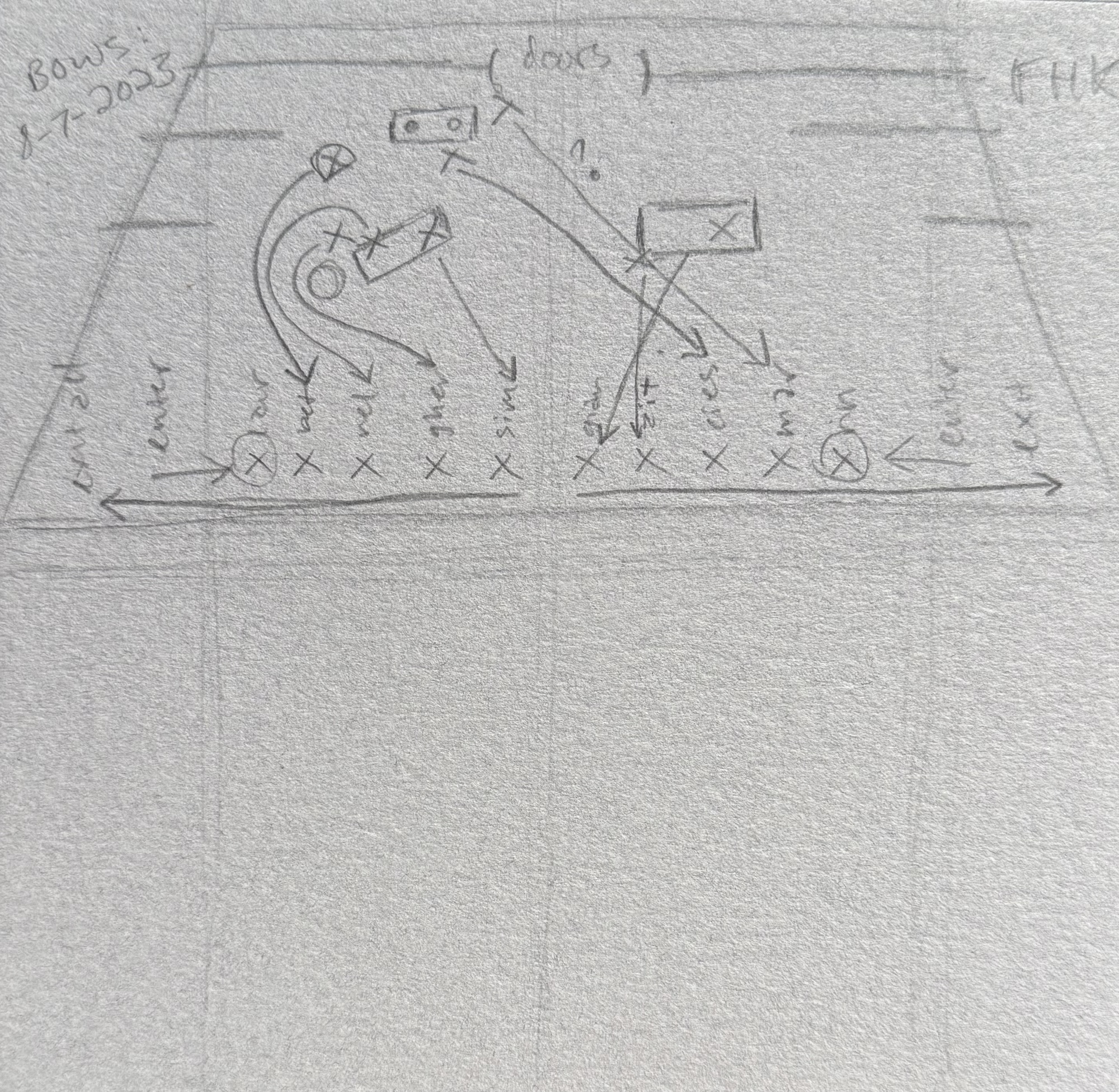
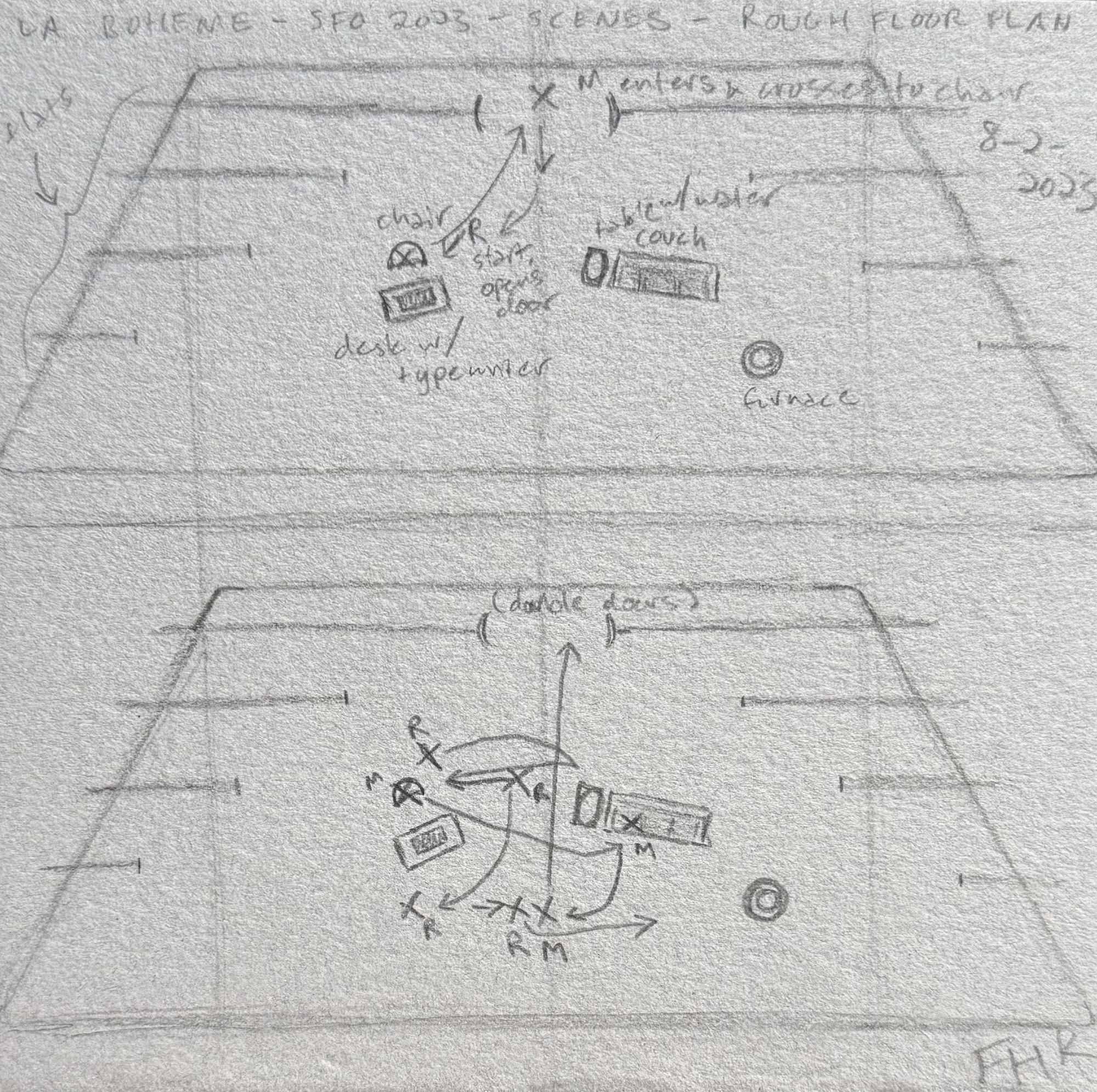
Rehearsal Sketches from Santa Fe Opera Apprentice Scenes, Summer 2023

One thing I enjoy doing at rehearsals is sketching.

Whether it’s during my 15 minute break, or throughout a long day of observation, there’s usually a convenient opportunity to pull out my little sketchbook, at least for a few minutes. It’s a perfect activity for rehearsals: it’s nearly silent, it keeps me engaged with the onstage happenings, and it can be instantly plopped on the ground if my cue comes up. Plus, the actors who are actually occupying the stage at the moment are often staying in the same or similar positions for long durations of time–an ideal setup to practice gestural sketches.

The publication of this collection of sketches is much delayed! They’re from my most recent summer at the Santa Fe Opera, where I performed as a supernumerary (the “Mélisande doppelgänger”) in the Debussy opera Pelléas et Mélisande, and observed rehearsals for the Apprentice Scenes Program. These sketches are all from the scenes directed by the wonderful Crystal Manich that summer, who so kindly let me sit in and watch! I am always grateful to be invited into a rehearsal room; there are skills to be learned and practiced every time, and I try to make the most of it.

In these sketches, I had a few goals:
-practice quickly sketching objects from life
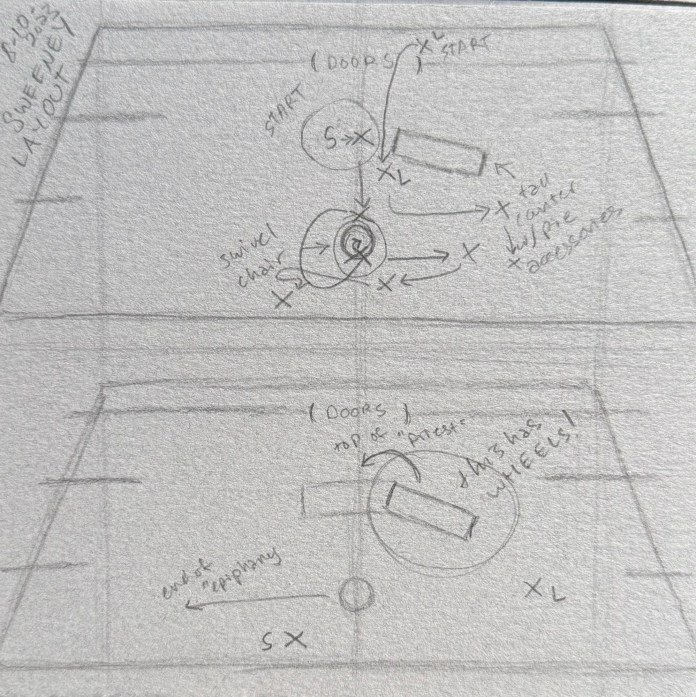
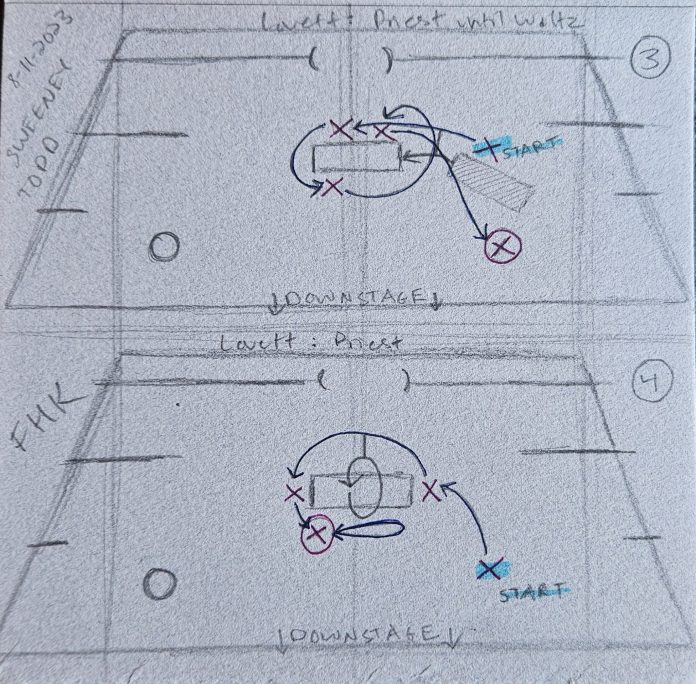
-practice taking multi-character blocking notation on the same page
-practice proportional representation of a stage area

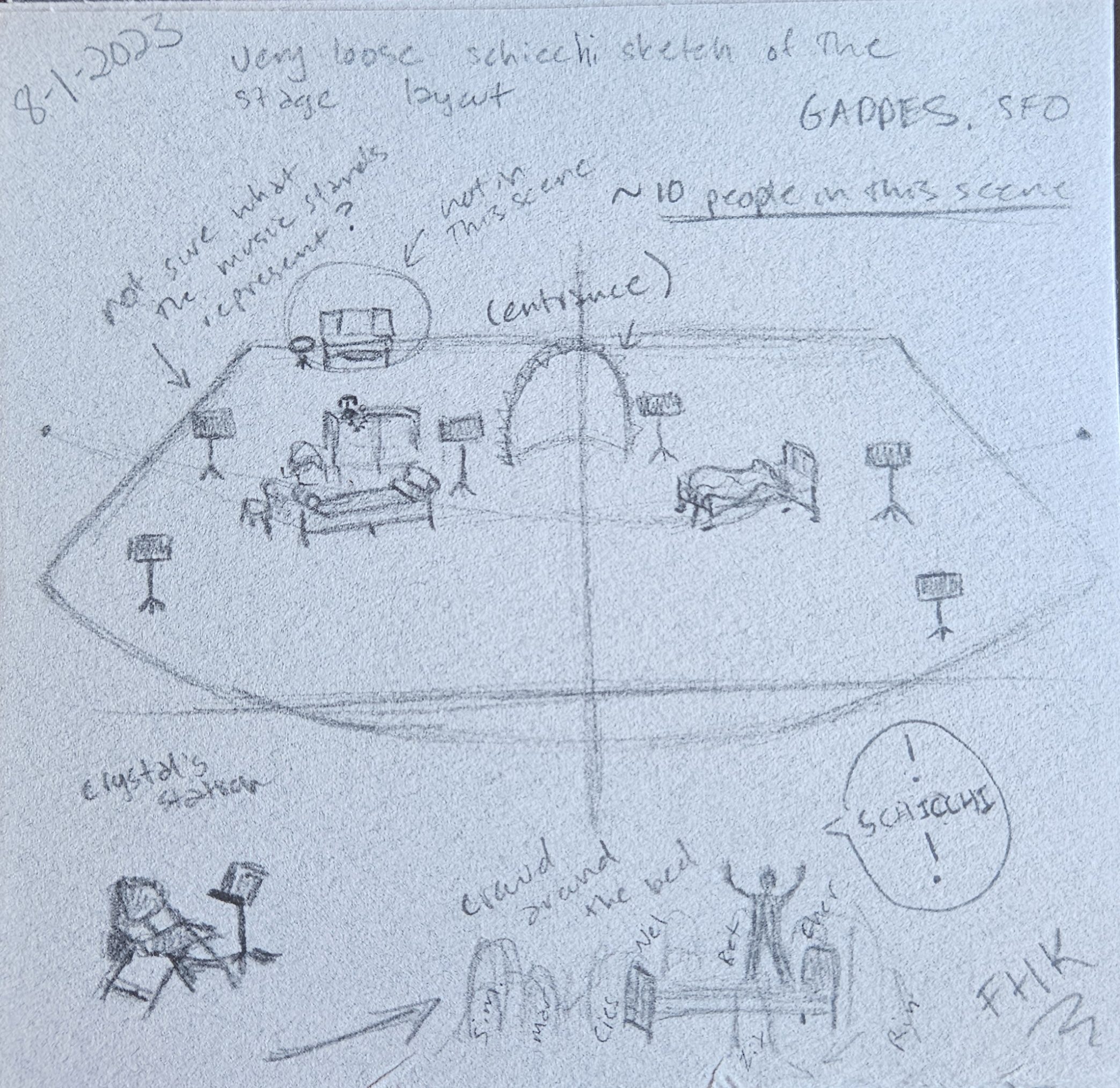
While these sketches are quick, informal, and use quite a bit of shorthand, I believe I accomplished my goals–further, I believe I could easily recreate the staging of these scenes based on the sketches alone, two years later (precise stage business and use of props may be another story, however).

Each slideshow gallery contains the sketches from one scene, and is accompanied by information on the collaborators whose work or physical image contributed to sketch source material. The programs for all the Apprentice Scenes that year can be found here as well. Some of the physical drawings have been gifted away, but some remain in my records, and so the photos weren’t all taken at once, and may have some variation in lighting and quality. I also like to sketch on a non-white base paper when possible, but I’ve discovered this doesn’t always provide starkly visible contrast to pencil markings, unfortunately! All caveats aside, I’m glad to finally share them.

Enjoy!


Gianni Schicchi

Giacomo Puccini | Giovacchino Forzano
“Era uguale la voce…Addio, Firenze”

Gianni Schicchi | Joel Balzun
Lauretta | Lydia Grindatto
Zita | Michelle Mariposa
Ciesca | Emma Rose Sorenson
Nella | Nicole Elyse Keeling
Rinuccio | Lawrence Barasa
Gherardo | Garrett Evers
Marco | Brandon Bell
Simone | Luke Harnish
Betto | Younggwang Park

Conductor | Mark Morash
Stage Director | Crystal Manich
Pianist/Coach | Blair Salter
Costume Designer | Azaria Jade Rubio
Assistant Costume Designer | Matthew Palacios
Wigs & Make-Up Designer | Court Winterborne
Lighting Designer | Will Loconto

The stage from a tilted front perspective, with two sketches of the rehearsal atmosphere.
Detail drawings of furniture and rehearsal costumes.
Top of the scene: the family discusses Gianni Schicchi.
The scene progresses; Schicchi arrives and the plan unhatches.
The scene continues; the family and Schicchi anticipate success.
Bows!

La bohème

Detail drawings of a moment of staging and some furniture.
The scene begins; Rodolfo’s life is changed when Mimi walks in.
We move through two arias and a duet; the scene ends with the lovers leaving, full of hope.

Giacomo Puccini | Luigi Illica and Giuseppe Giacosa
End of Act I

Mimì | Caitlin Gotimer
Rodolfo | Daniel O’Hearn (Guest Artist)
Schaunard | Spencer Reichman (Off Stage)
Coline | Christian Simmons (Off Stage)
Marcello | Sam Dhobhany (Off Stage)

Conductor | Robert Tweten
Stage Director | Crystal Manich
Pianist/Coach | Anna Smigelskaya
Costume Designer | Aurora Azbill
Wigs & Make-Up Designer | Joshua N. Wisham
Lighting Designer | Eric Dahlgren


Boris Godunov

Modest Mussorgsky | Modest Mussorgsky
Quintet

Innkeeper | Gretchen Krupp
Varlaam | Le Bu
Misail | Spencer Hamlin
False Prince | Samuel White
Nikitic | Dylan Gregg

Conductor | Alden Gatt
Stage Director | Crystal Manich
Pianist/Coach | Anna Smigelskaya
Costume Designer | Gray Covert
Wigs & Make-Up Designer | Braxton Cooper
Lighting Designer | Brianna Maruco

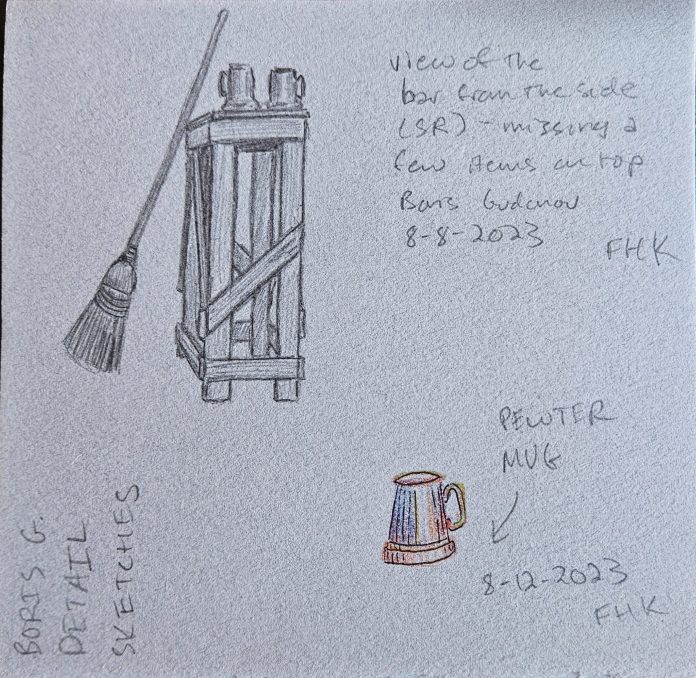
Detail drawings of props and furniture.
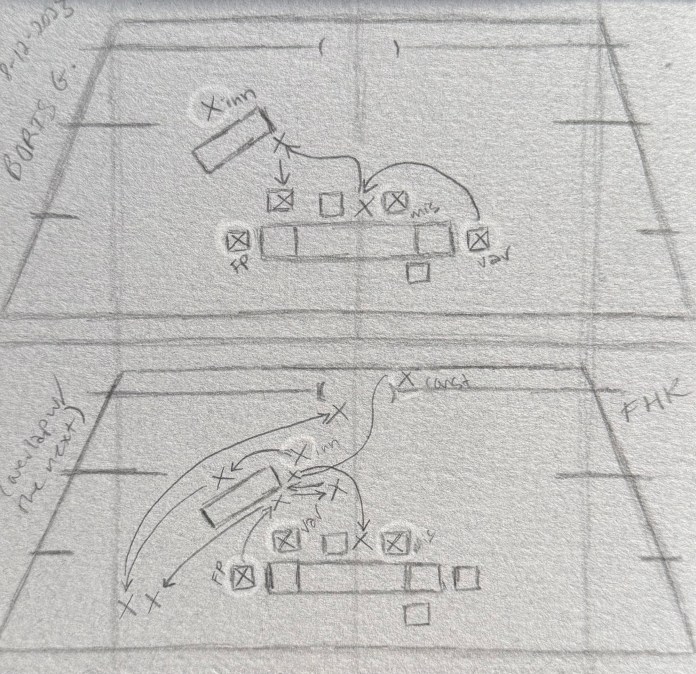
The initial layout of the scene.
The scene begins; the innkeeper starts opening up shop.
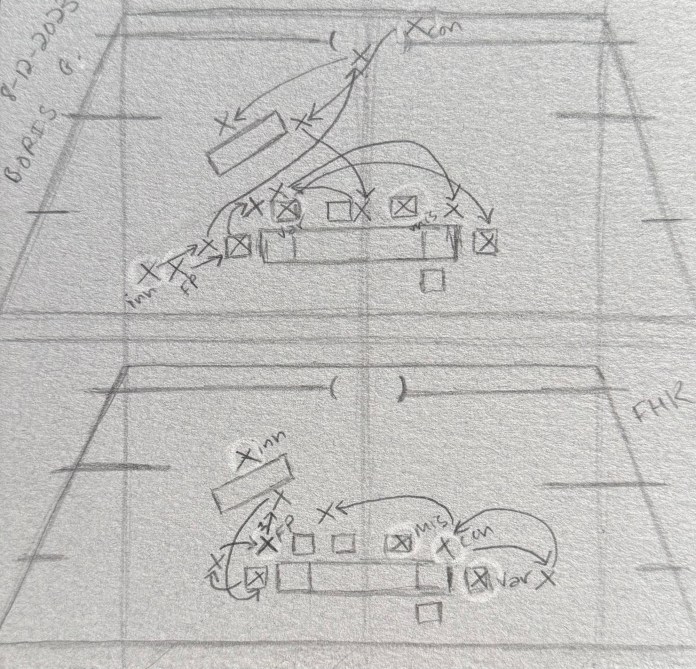
The scene continues; different folks start to mingle around the table.
The scene progresses; some of the visitors are harboring secrets.
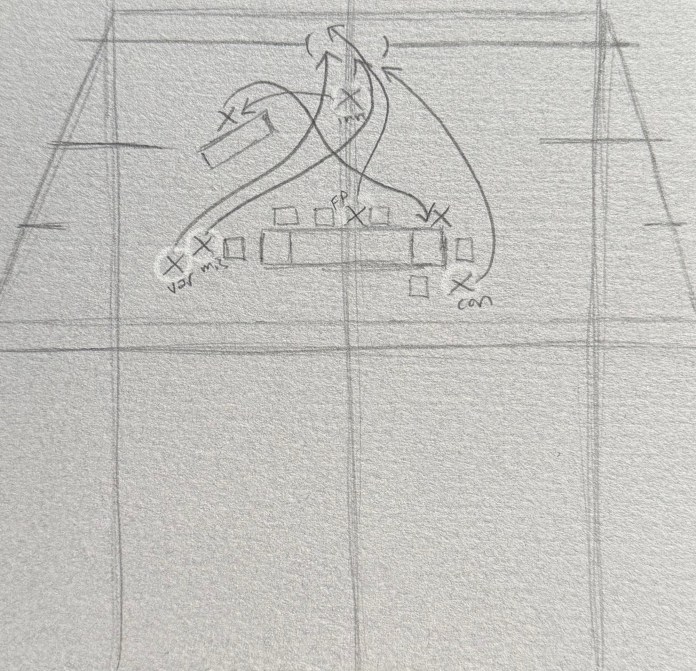
Chaos and confusion as someone is not who he says he is!

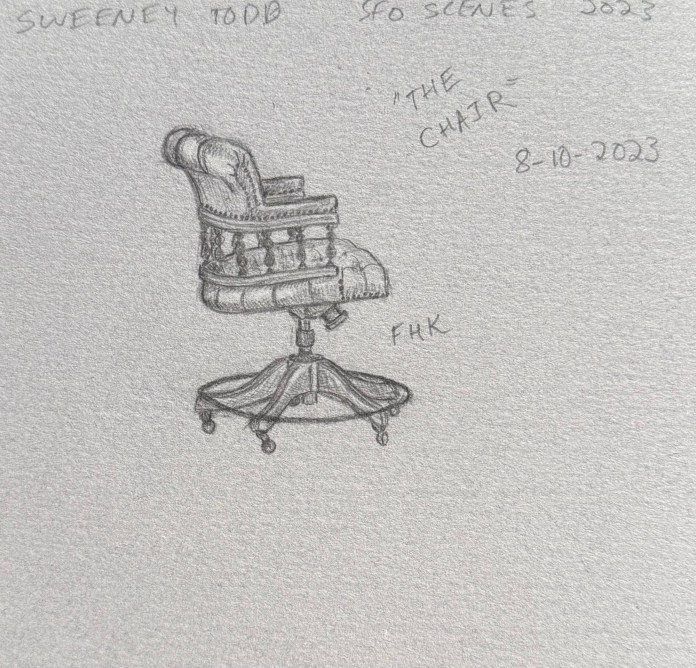
Sweeney Todd

Detail drawing of Sweeney’s barber chair.
The layout of the set and start of “Epiphany.”
Mrs. Lovett’s brilliant idea turns into a playfully violent duet.
Solo Lovett track, starting with “Epiphany.”
Solo Lovett track continues, starting “A Little Priest.”
Solo Lovett track, finishing the scene.

Stephen Sondheim | Stephen Sondheim
Epiphany and A Little Priest

Sweeney Todd | Spencer Reichman
Mrs. Lovett | Rebekah Daly

Conductor | Robert Tweten
Stage Director | Crystal Manich
Pianist/Coach | Carol Anderson
Costume Designer | Emma Rose Harrison
Wigs & Make-Up | Designer Jax Cornett
Lighting Designer | Brianna Maruco


And if you made it this far… consider asking me to be a part of your theatrical team; you’ll get sketches out of it, for sure.

Standard

The 2024 Summary, and 2025 Aims

New Year’s Eve (and subsequently, Day) is my favorite holiday, and has been for some time, ever since my close hometown friends and I started a many-years-long tradition of throwing NYE parties. I can’t remember exactly when it started, but in something like 6th or 7th grade, we drank our fill of sparkling grape juice, threw handfuls of confetti all over someone’s carpeted Michigan basement, and that was the beginning of everything.

Aside from the parties with friends and enjoying a good secular holiday, I love celebrating the New Year because I love transitional moments; I love reflecting on the year that has passed, thinking through the long list of surprises, lessons, and achievements, and anticipating more to come in the next year… and there will be so much!

Last year was honestly wild, and I’ll show you what I mean–

In 2024, I:
-Visited 4 Countries: USA, Denmark, Germany, Italy (and flew through 4 more: Iceland, Switzerland, Netherlands, and Ireland). 🧳
-Moved from NYC, NY to Berlin, Germany! 🇩🇪
-Visited my home state, Michigan, twice. 🍒
-Got a bilateral salpingectomy. 🎉
-Designed and shot my short film, Venus Retrospectives (currently in the editing process). 🎬
-Debuted my short play, “Black Market Inspiration,” at AMT Theater off-broadway, as part of their New Works Development Program. 🎭
-Completed 2 German courses with the Goethe Institut, and started a third (which will complete my A2 level learning). ✅
-Worked on 15 different productions/shows/events with Chelsea Factory NYC, usually as the Venue Coordinator. 📋
-Worked as the Assistant Production Manager for SUMO, with Ma-Yi Theatre Company (to be performed at The Public in March 2025)! 📅
-Saw a TON of plays, musicals, operas, dance pieces, concerts, and performances of all varieties! 🎵
-Visited a bunch of museums, and sketched at le Gallerie degli Uffizi and la Galleria dell’Accademia in Florence, Italy! 🎨
-Read several books, including physical copies, kindle editions, and good old library books. 📚
-Turned 30!!! 🥳
-Celebrated 1 year of marriage, and 9 of togetherness, with Tom (and we got new ear piercings to mark the occasion)! 💕

… And that’s just about all that I have the patience to tally up right now.

For the new year, I of course have equally ambitious aims (though I would prefer to avoid moving again for a while). I usually don’t share my goals, instead choosing to conceal any failures I might experience along the way… but this year, I want to be seen trying, whether I reach my aims or not. (Aside–did anyone else get called a “try-hard” in high school, as an insult? Can we unpack that together?)

So, here are the 2025 Aims!
-Create something every day (take creative action: make something that was not there before, even if it is small, or part of a larger project).
-Do either a sun or moon salutation every day, with a few minutes of meditation.
-Update or work on my professional website (frannykromminga.com) once a month.
-Fully finish Venus Retrospectives!
-Complete B1 level German training (via the Goethe Institut).
-Travel somewhere new!
-Read 25 books.
-Visit 25 museums (different collections on separate visits to the same museum are allowed).
-See 25 live performances (in-person).
-Get 25 rejections from applications/auditions/submissions… then double it to 50 in the second half of the year!
-Make 25 posts on The Franifesto.

Ambitious! But certainly achievable, and many of the goals overlap. For example, this post here is my “create something” for day 5 of the new year, and one of the 25 intended posts. The number 25 also seemed perfect for many of the aims, both because of the reference to the year 2025, and because it means I will need to accomplish one of each of those categories roughly every ~2 weeks. So far, so good: four days in, I am especially loving the creativity goal, because it’s often hard for me to prioritize something that is coded as “frivolous” in our capitalistic western society, even when I know it’s actually deeply important.

I’ll be tracking all of these, attempting to record them all in my little notes app; I plan to mark down what books and shows I experience, list when I write my posts, sketch at all the museums, and even count how many sun-versus-moon salutations I do. So, if you’re curious about how it all shakes out, meet me here next year: same time, same place!

In the meantime–enjoy a video I edited with some of my favorite little clips of 2024~

Happy New Year, and may you have a healthy, joyful, and prosperous 2025!

Standard

Recently, I’ve been trying to be less “precious” about using my hoard of art supplies. I don’t really have much squirreled away, but what I do have includes some interesting fossils from previous eras: stained watercolor paper from college, a stockpile of fractured drawing utensils of all kinds, even a few sparsely filled sketchbooks dating back to high school.

There was a moment in July—after spending painstaking hours on the details of a meticulous, perfectly-composed painting—when I was looking through my stash, wondering what to create next… and the thought struck me: all these supplies do me no good on a shelf. I don’t need to plan something perfect; creating anything will be better than letting these tools (and myself) languish, unused.

I know why I’ve let them accumulate. Like many kids who grew up with money anxieties, art supplies were like rare jewels. I’ve long held an obsession with the inherent potential in blank pages, new notebooks, and empty canvas; for almost as long, I’ve feared this potential, holding an iron grip on my self-control, knowing that $10 here and there really does add up, and thinking that I needed a “good enough reason” to use what I had. I was afraid of “waste,” and so I unconsciously wasted time and the opportunity to gain experience instead. (Why yes, I am a recovering perfectionist.)

But, these days, art is part of my living. It isn’t a luxury; it’s a life. Not only does it allow me to express myself, but it also allows me to eat. Everything I put into art has an official name now: investment. Moreover, the one who determines the return on my investment is… me! Through using the tools I have given myself!

Doing nothing is the worst thing I could do. So, why hesitate?

This thought process led to a burst of creation. I painted abstracts. I painted figures. I painted terrible works, mediocre works, commercial works, avant-garde works, and maybe even a good work or two. I often had three or four in simultaneous rotation, so I would never be stuck waiting for paint to dry, because I could pick up something else. It felt wonderful.

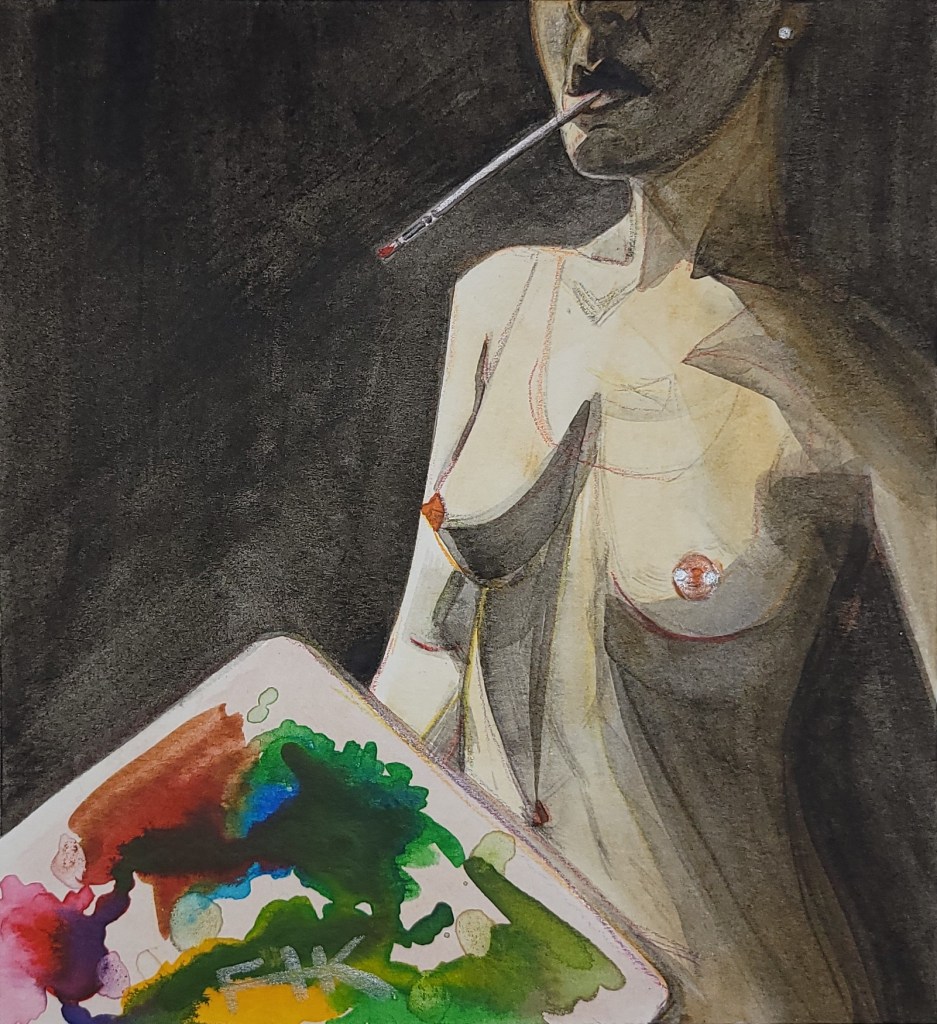
This post’s image is perhaps my favorite of these creations, and certainly the most personal. It is watercolor and colored pencil, only about 6” by 7”, and is based on a photo I took of myself in summer of 2017; this was when I had just started taking commissions, a year after being gifted my first oil painting supplies. Now, four years later, I look almost the same, but nearly every other aspect of my life has changed.

I had no aspirations for this as I was creating it. It was free to be another bit of bad art, but I kept liking where my hand led the brush. What began as a modest sketch kept growing until, hours later, I glowed with pride and recognition. With this painting, I reach back through the years between my current self and who I was, and give her a glimpse of what’s to come. Painting is an apt metaphor for the passage of time; layer after layer, we build ourselves up—highlighting this and obscuring that, refining details and smoothing edges—until we decide that, for the moment, this is who I think I am.

Self-Portrait, 2017/2021

Image