
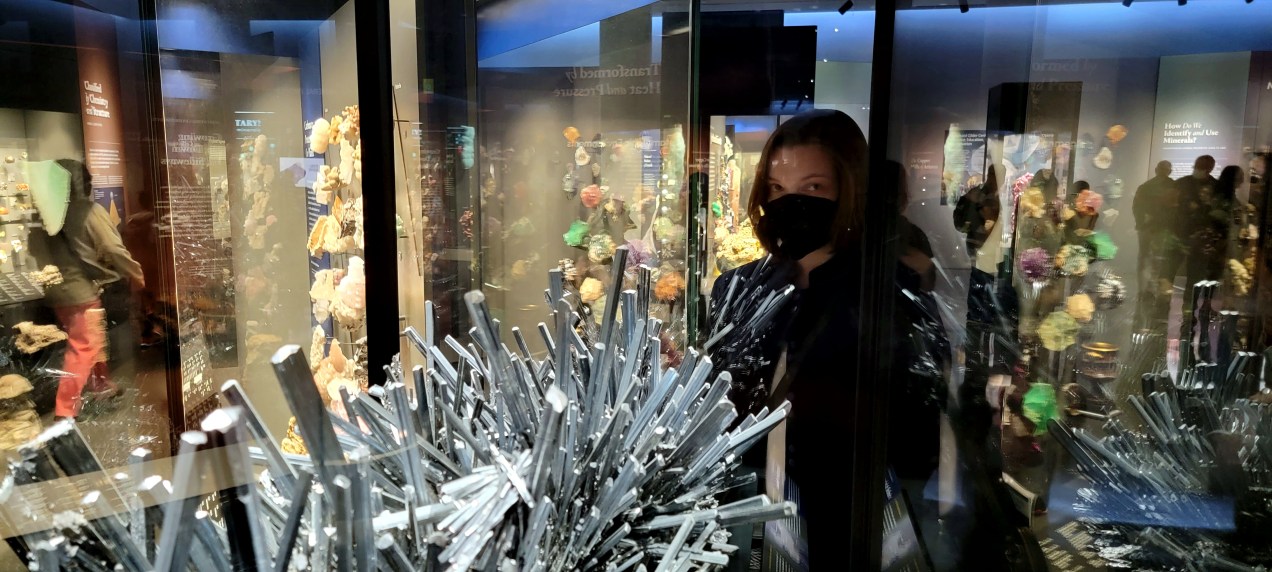
I love rocks. Anyone who knows me can tell you this. I have loved them since I was a small child, poring over the geology pages of my children’s encyclopedia, lingering over the glossy images of fluorite, quartz, and sapphire. I remember studying field guides for fun, and effortlessly acing my science quizzes on volcanoes and tectonics. As an adult, I have a tiny gem collection of my own, and have become a bit of a connoisseur of gem and mineral displays of both the educational and commercial variety. I have seen the Smithsonian’s dazzling array, looked at every booth at the Denver Gem & Rock Show, combed Oregon beaches for loose agates, devotedly searched for a rare color-change garnet suitable for my engagement ring, and more. I always enjoy a gem & mineral display, but at this point it takes some real oomph to stand out.

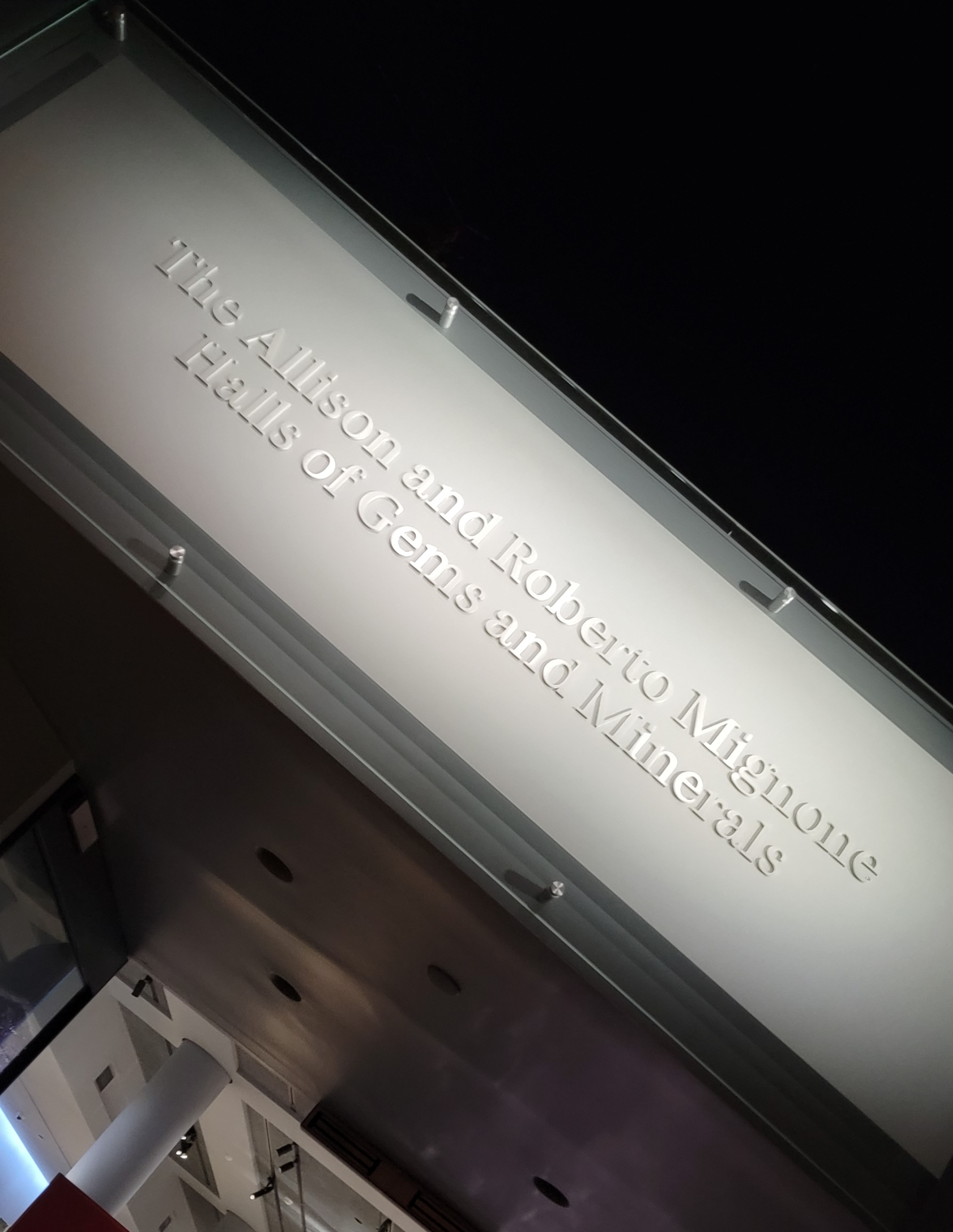
The new Mignone Halls of Gems and Minerals at the American Museum of Natural History did not disappoint.
I and my partner chose to visit on April 22, 2022, which happened to be Earth Day—a fact we’d forgotten would mean attending the museum with dozens of school field trips and science-minded families. The added crowd turned out to be pleasant, however, as we got to see how people of all ages, particularly impressionable ages, interacted with the new exhibit. I couldn’t help but grin at each child’s reverent ”ooooooh,” uttered upon seeing a spectacular sparkle. Gems, ever fascinating, were very popular on Earth Day.
When you enter the exhibit as it currently stands, you’re immediately greeted by a colossal pair of amethyst geodes, cracked open and glittering deep violet. It’s a charming photo opportunity and serves as a bold welcome, showing visitors what is to be expected ahead.

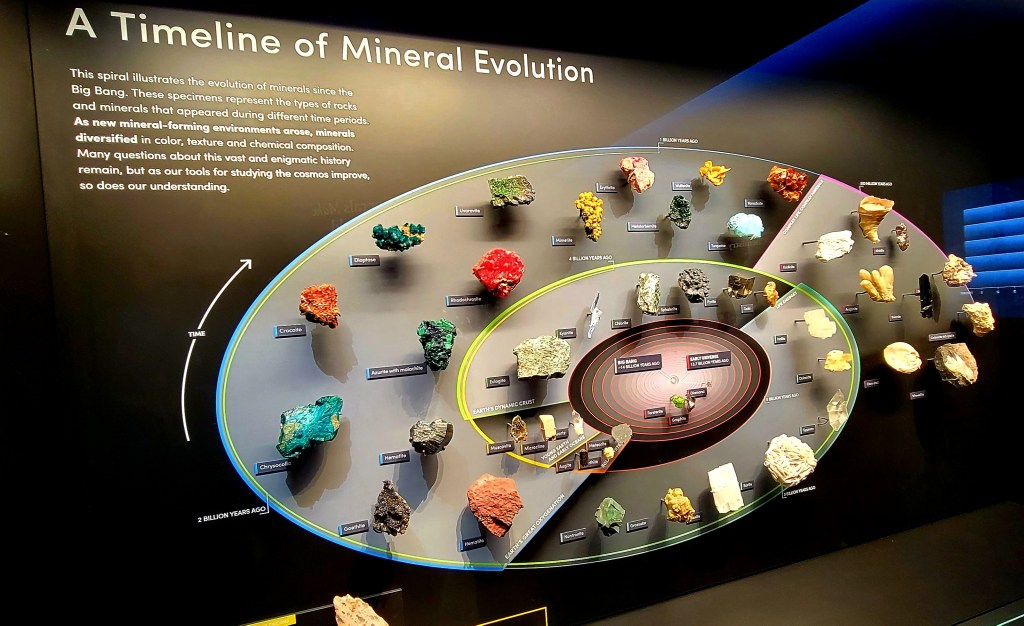
After the geode entrance display, we turned to the left, and it’s there that my great opinion began to form; the Mignone Halls are the only exhibit I have seen to include the concept of Mineral Evolution, which describes the changes through time from the Big Bang to now that chemically allowed new minerals to form. This provides a fantastic context for understanding what minerals really are and how they came to be, and I haven’t seen it so clearly laid out in any other setting.
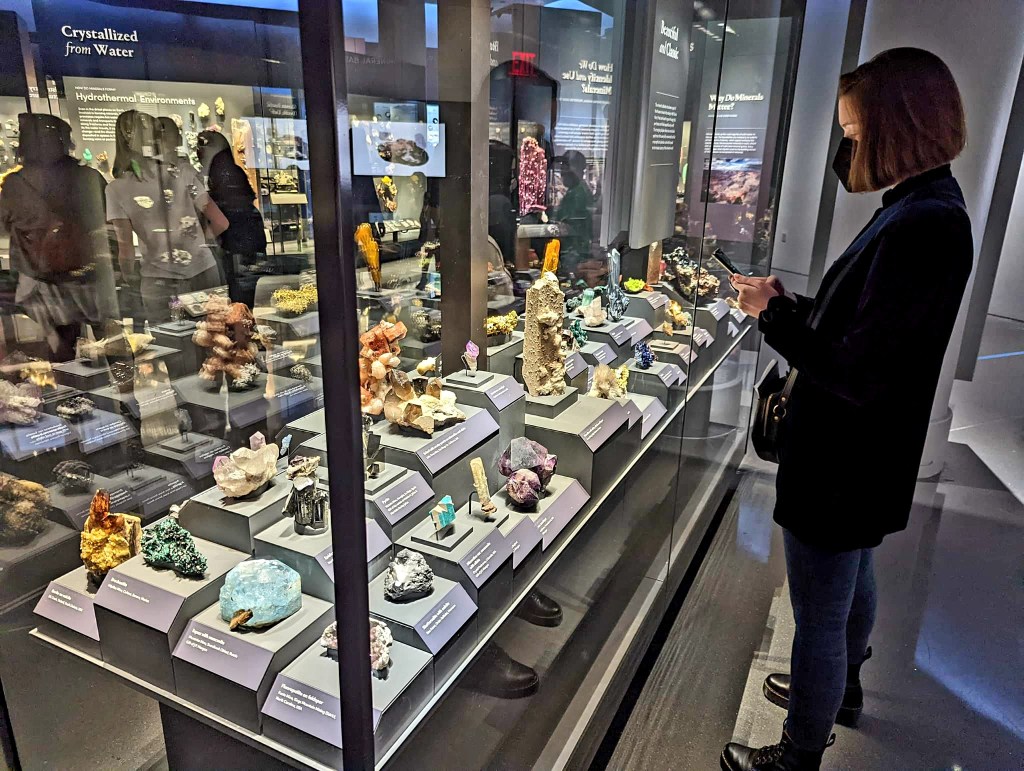
The exhibit is also sure to point out the necessity of minerals to the existence of life, and how some minerals only exist because of life. I have rarely seen the vitality of minerals demonstrated so concisely, and of course accompanied by twinkling specimens and memorable anecdotes.
Further, the Halls outline the industrial, historical, and cultural importance of minerals and gems. Rocks and minerals are inseparable from human history, and gems have been objects of desire and fascination since before recorded history. Something I admired was that these displays professed the importance of function and form equally; self-adornment has held just as much value, culturally, as making tools.

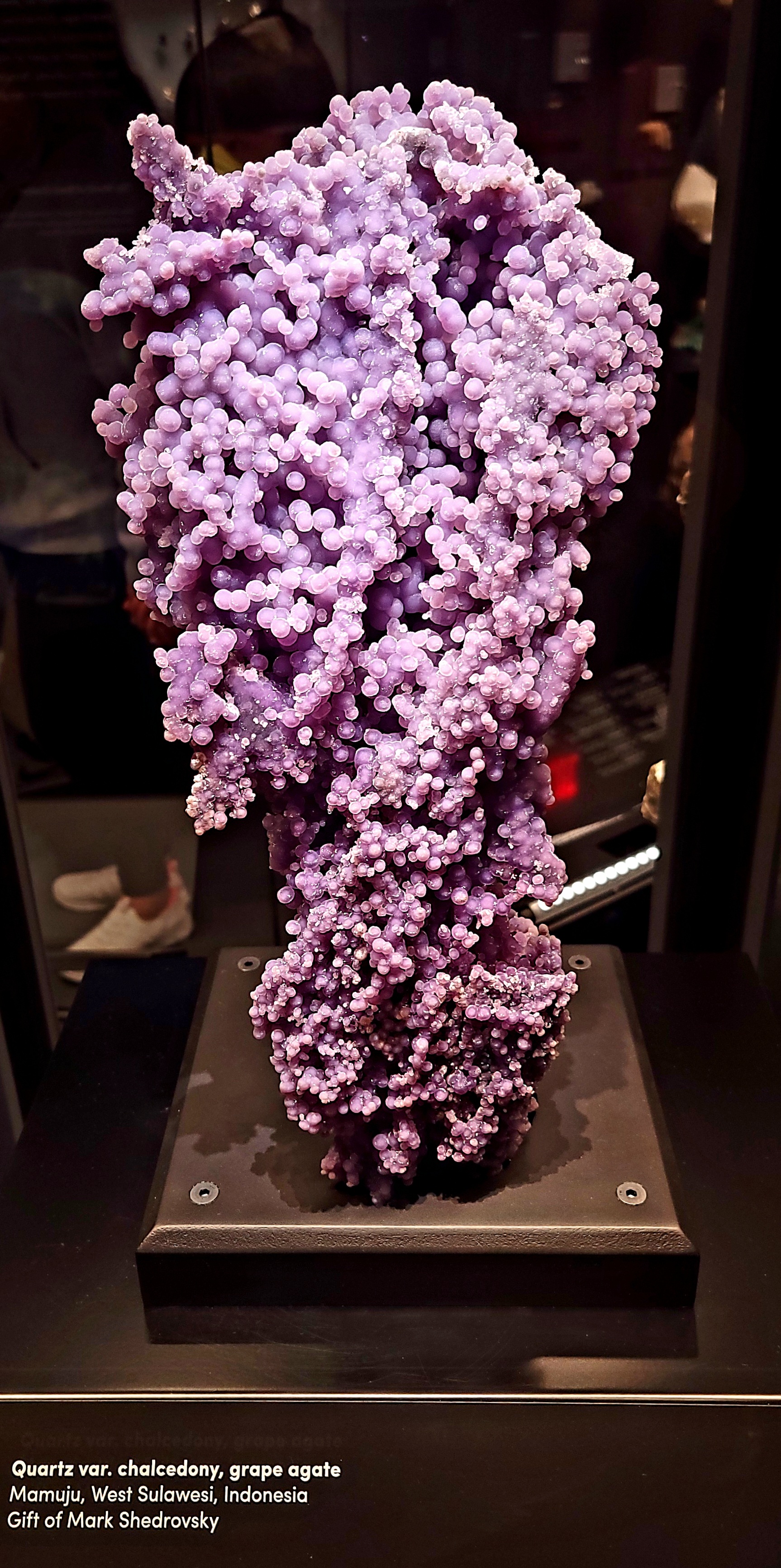
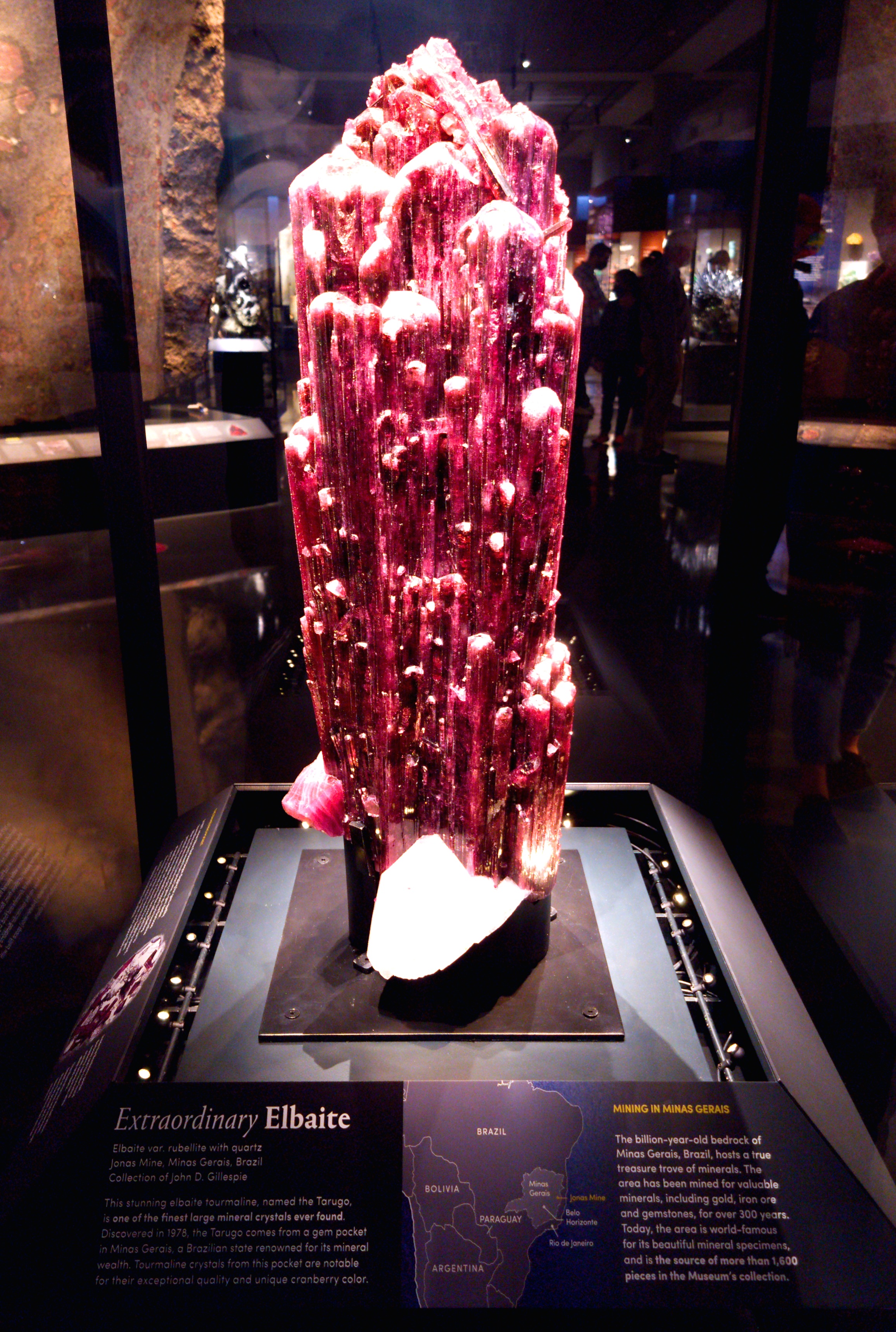
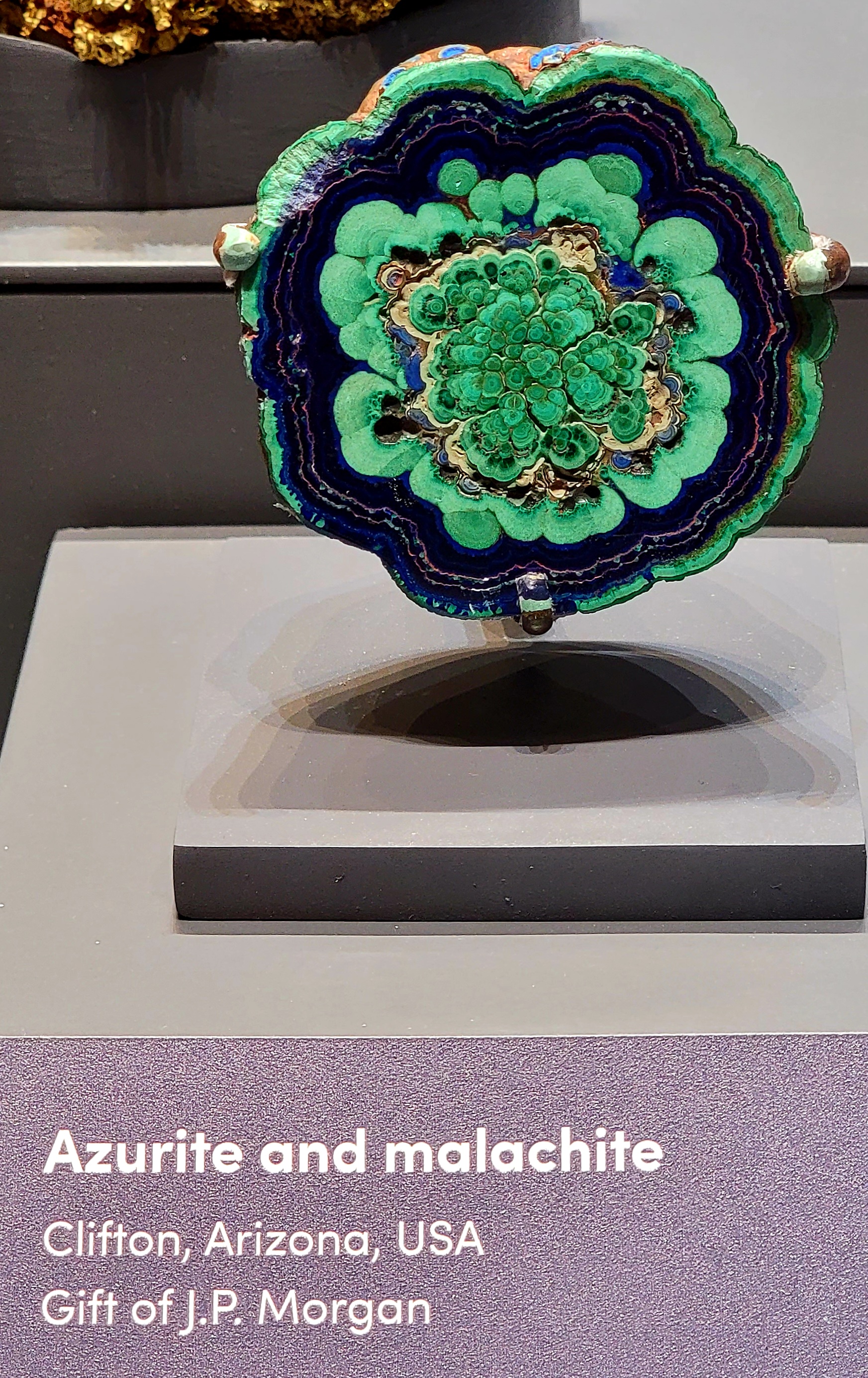
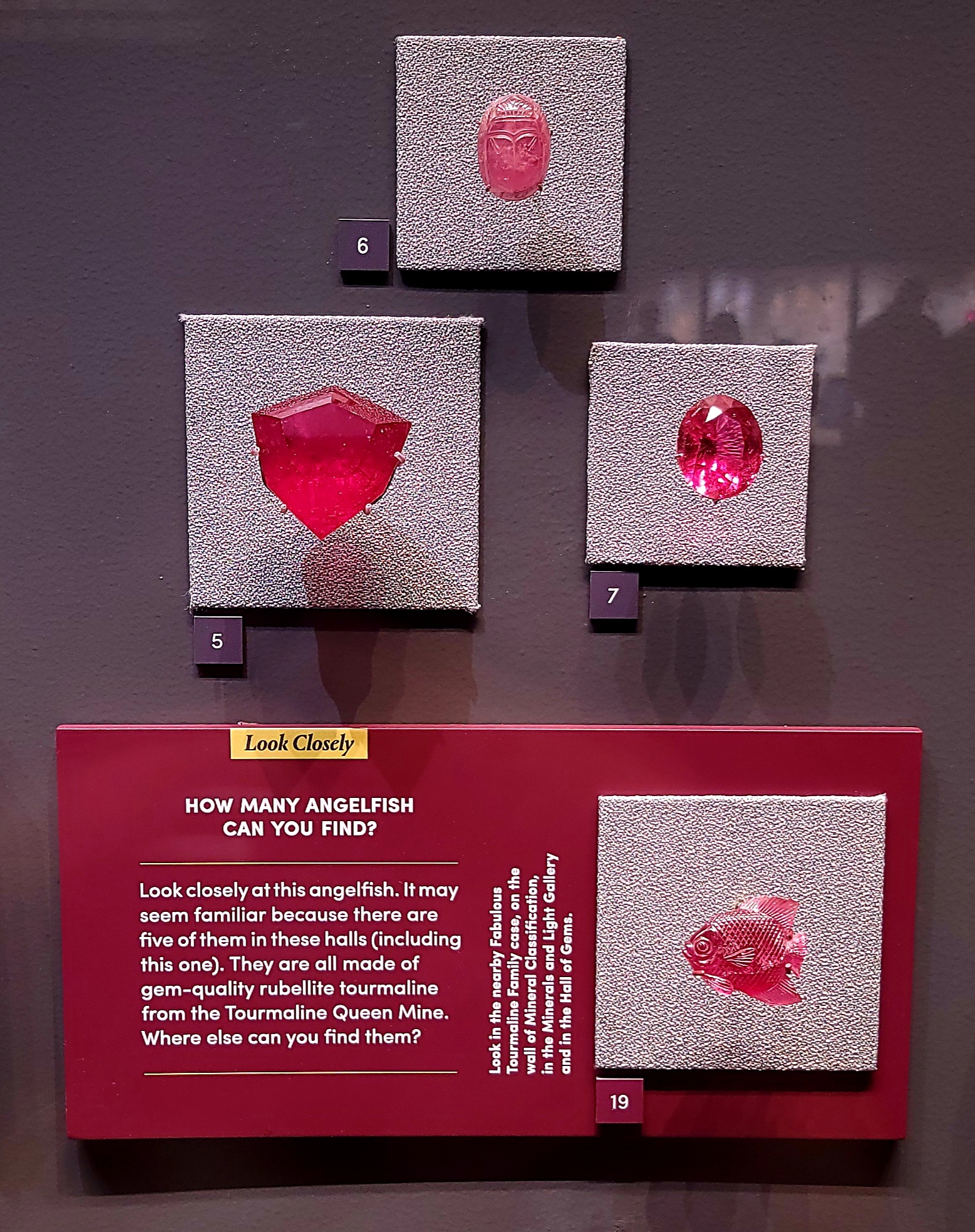
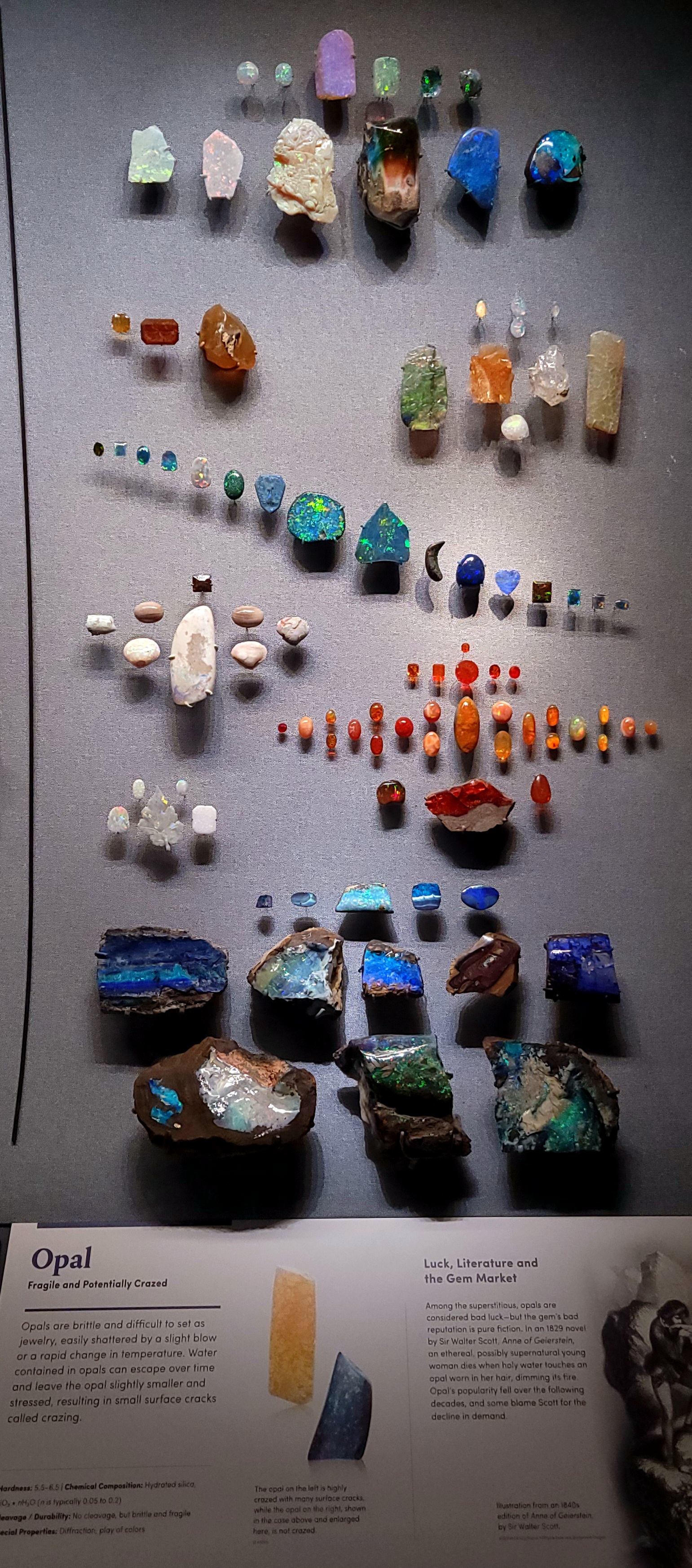
Throughout the Halls, we learn enough for a college course in geology; I would know, I took one. This includes but is not limited to: chemical classification of minerals, how to identify different minerals in the field, crystal growth & structure, social & environmental costs of gem mining, erosion & weathering, fluorescence, organic & synthetic gems, light & refraction, minerals local to the NYC area, Moh’s hardness, history of salt and its uses, plate tectonics, etc. This is all delightfully accessorized with enormous specimens, some of which we are even encouraged to touch. Interactive displays help to cement the day’s learning and add a playful element to it, and seemed to be enjoyed by kids and adults alike. Lastly, we are treated to a fully-stocked jewel-box alcove simply clustered with some of the finest gemstones ever found and faceted.
Entrance to the Mignone Halls of Gems and Minerals is included with general admission to the museum, and I highly recommend a visit. We wandered the space for about three hours, having fun admiring the specimens and trying to guess what they were before checking their information on the placards below. The whole exhibit is thick with information, some of it easier to absorb if you’ve had prior introduction to scientific concepts, particularly chemistry. A visitor can easily spend hours reading up on rocks, or enjoy a gleaming stroll through the treasure hoard; if gemstones happen to hypnotize you, you’ll be a happy visitor indeed.


 The Franifesto